Welcome to the Kids Korner! This special section is designed for young bird enthusiasts who want to learn about the amazing world of birds through stories, fun facts, and beautiful photographs.
I knew I should've worn my blue suit!
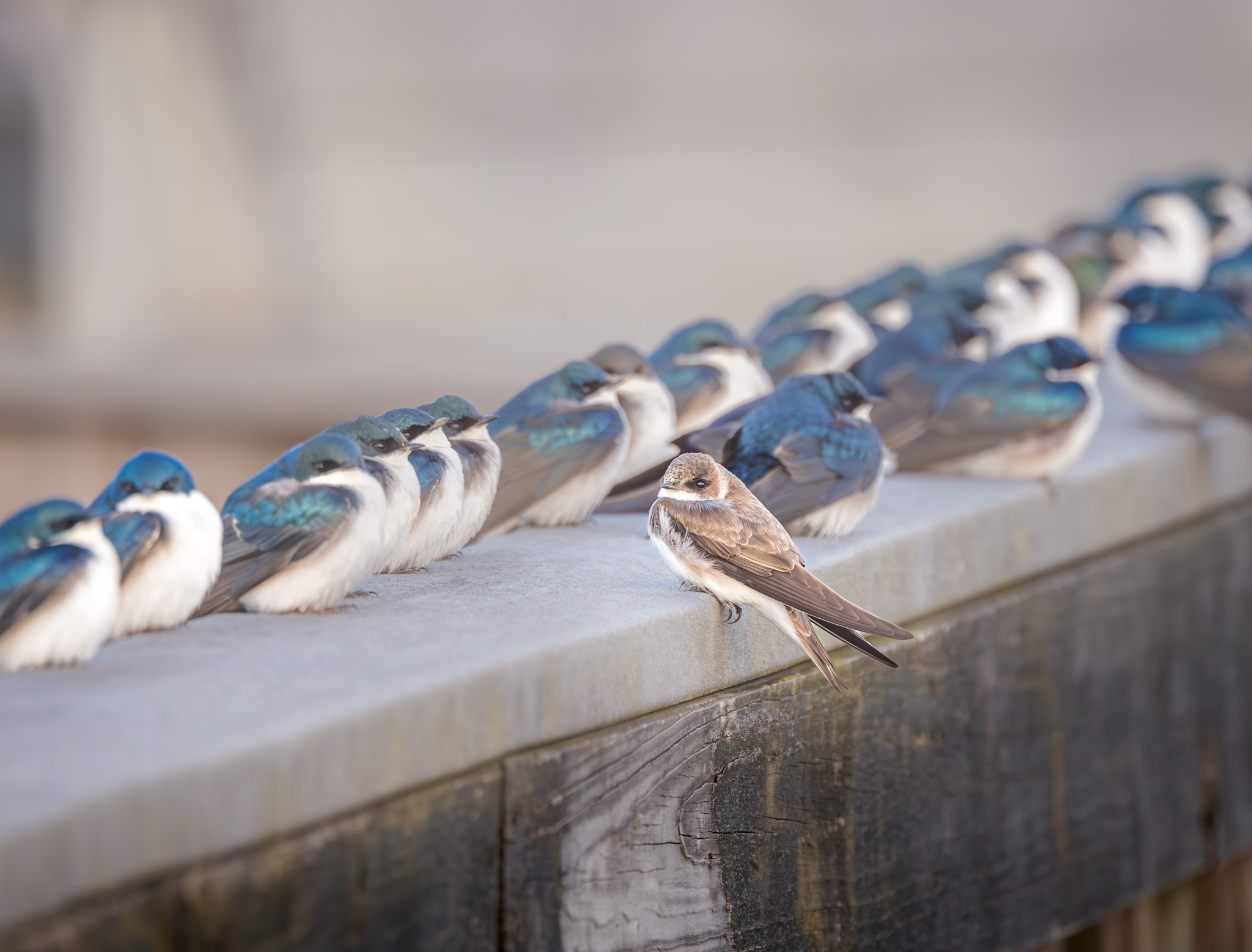
Wasn't It Blue Day?
Bank Swallow
A brown Bank Swallow sat among a row of shiny blue Tree Swallows, wondering why no one told him today's dress code was blue.
- Different cousins! Bank Swallows and Tree Swallows are related, but they look different — Tree Swallows are shiny blue, while Bank Swallows are brown.
- Cliff builders! Bank Swallows dig tunnels in sandy banks to build their nests.
- Air acrobats! Swallows catch insects while flying — they're like tiny sky superheroes!
Just Wondering......
If birds had dress-up days, what colors would you choose? Do you think the other birds notice the difference?
My bottom beak does all the work!
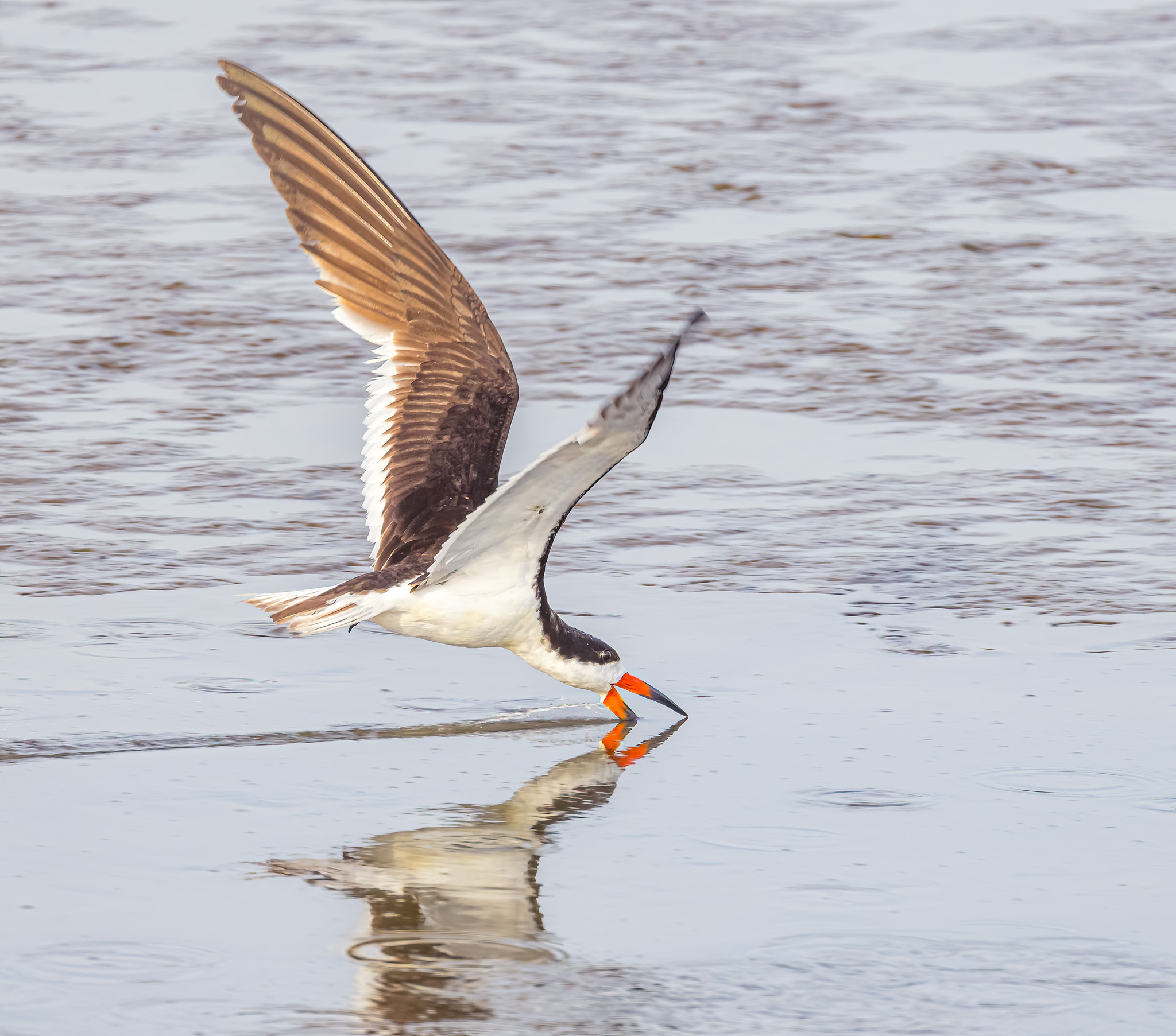
Fishing With My Face!
Black Skimmer
A Black Skimmer flew low over the water, dragging its long lower bill through the surface to scoop up fish in a splashy surprise attack.
- Built-in scoop! A Black Skimmer's lower bill is longer than its upper bill — that's super unusual for birds!
- Surface fishing! They fly just inches above the water and drag their lower bill through it to catch small fish.
- Night hunters! Skimmers often feed at dawn, dusk, or even at night.
Just Wondering......
Why do you think the bottom part of the beak is longer than the top?
Check out my red belly!

Bird Gym Champion!
Red-bellied Woodpecker
A Red-bellied Woodpecker hung from a branch doing pull-ups, proudly showing off the splash of red on his belly that we don't always get to see.
- Hidden red! Even though they're called Red-bellied Woodpeckers, the red on their belly is small and often hard to see.
- Tree climbers! Woodpeckers have strong feet and stiff tail feathers that help them cling to tree trunks.
- Drum roll! Instead of singing like other birds, woodpeckers often drum on trees to communicate.
Just Wondering......
Why might the red belly be hard to notice most of the time?
Look! I can hang with just ONE toe!
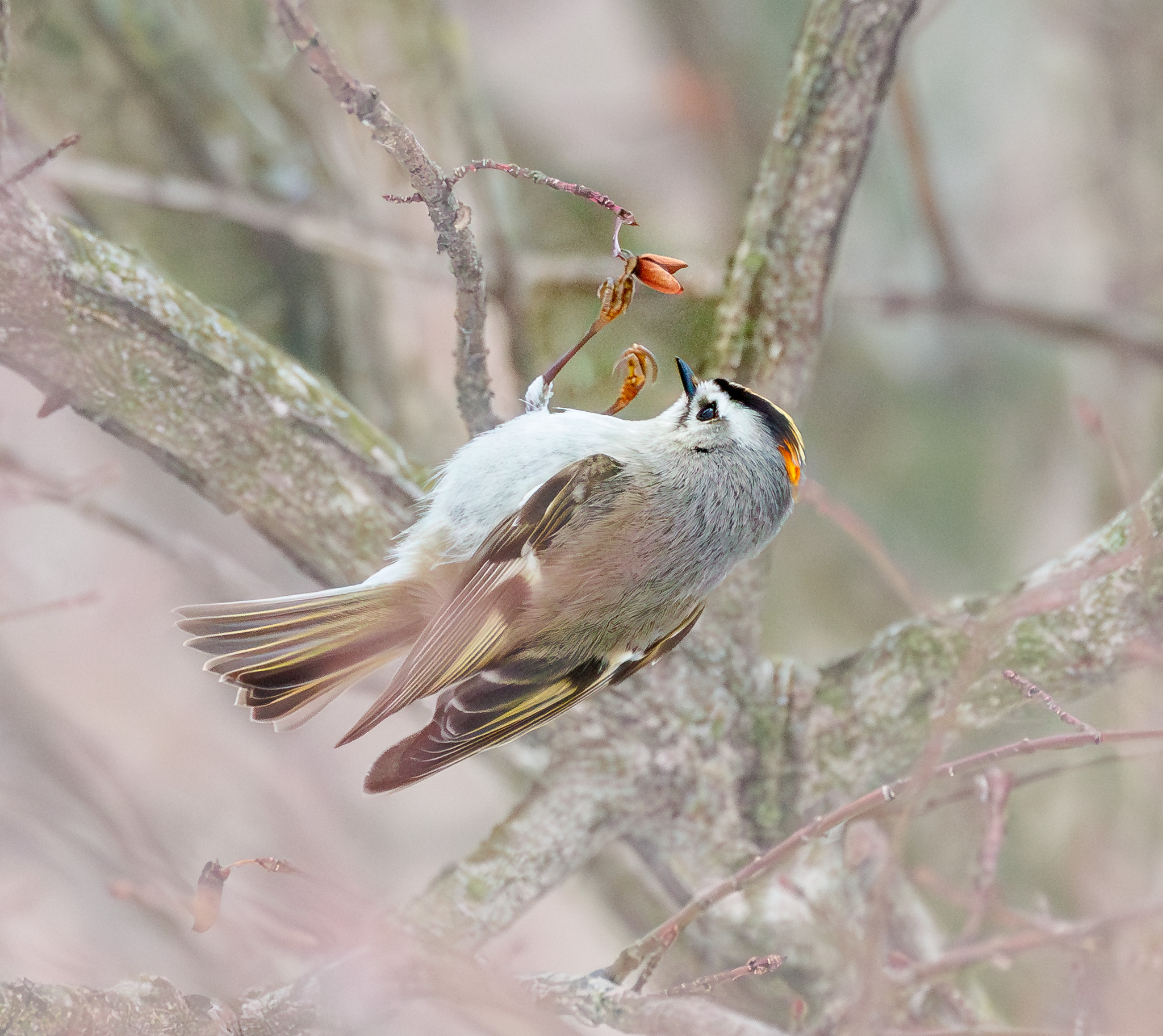

The One-Toe Wonder!
Golden-crowned Kinglet
A tiny Golden-crowned Kinglet dangled from a branch by just one toe, showing off its amazing balancing skills in the winter woods.
- Super tiny! Golden-crowned Kinglets are one of the smallest birds in North America — they weigh less than a stack of coins!
- Golden surprise! When excited, they lift the bright golden feathers on their head like a tiny crown.
- Winter tough! Even though they're tiny, they survive very cold weather by constantly moving and eating insects hidden in bark.
Just Wondering......
Why might small birds need strong feet? Can you believe this bird is so light that it didn't break the tiny branch it's hanging from?
Wait for me! My legs are longer!
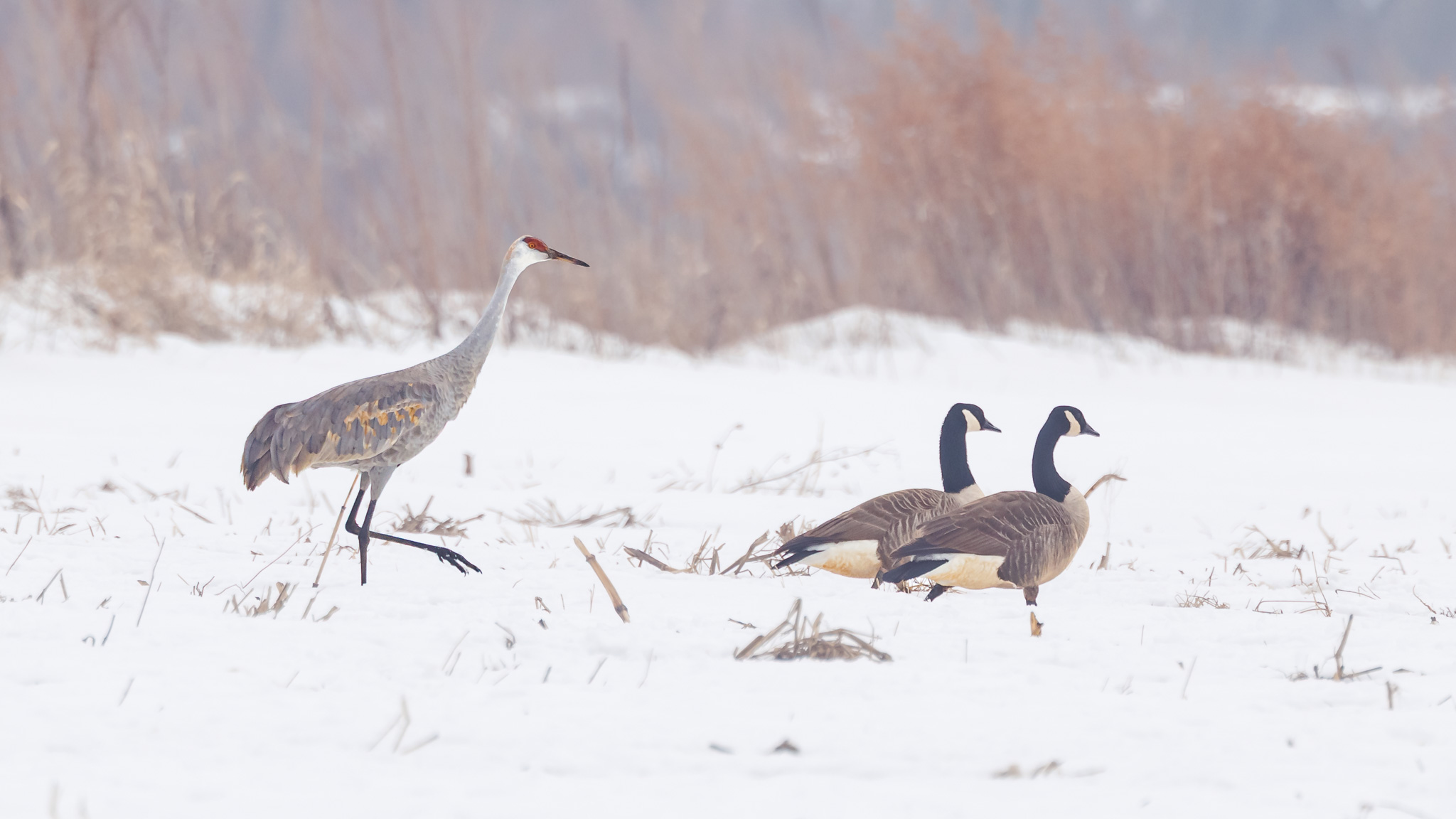
The Snowy Speed Race!
Sandhill Crane & Canada Geese
A tall Sandhill Crane hurried across the snowy field, trying to catch up with two speedy Canada Geese racing toward the finish line.
- Super-long legs! Sandhill Cranes have very long legs that help them walk through wetlands and tall grasses.
- Flying in formation! Canada Geese fly in a big V-shape in the sky to help save energy.
- Loud voices! Sandhill Cranes make a loud rattling call that can be heard from far away!
Just Wondering......
Who do you think will win the snow race — the tall crane or the speedy geese? Why might birds still walk around in snowy fields instead of flying?
Hey! I see a snack down there!

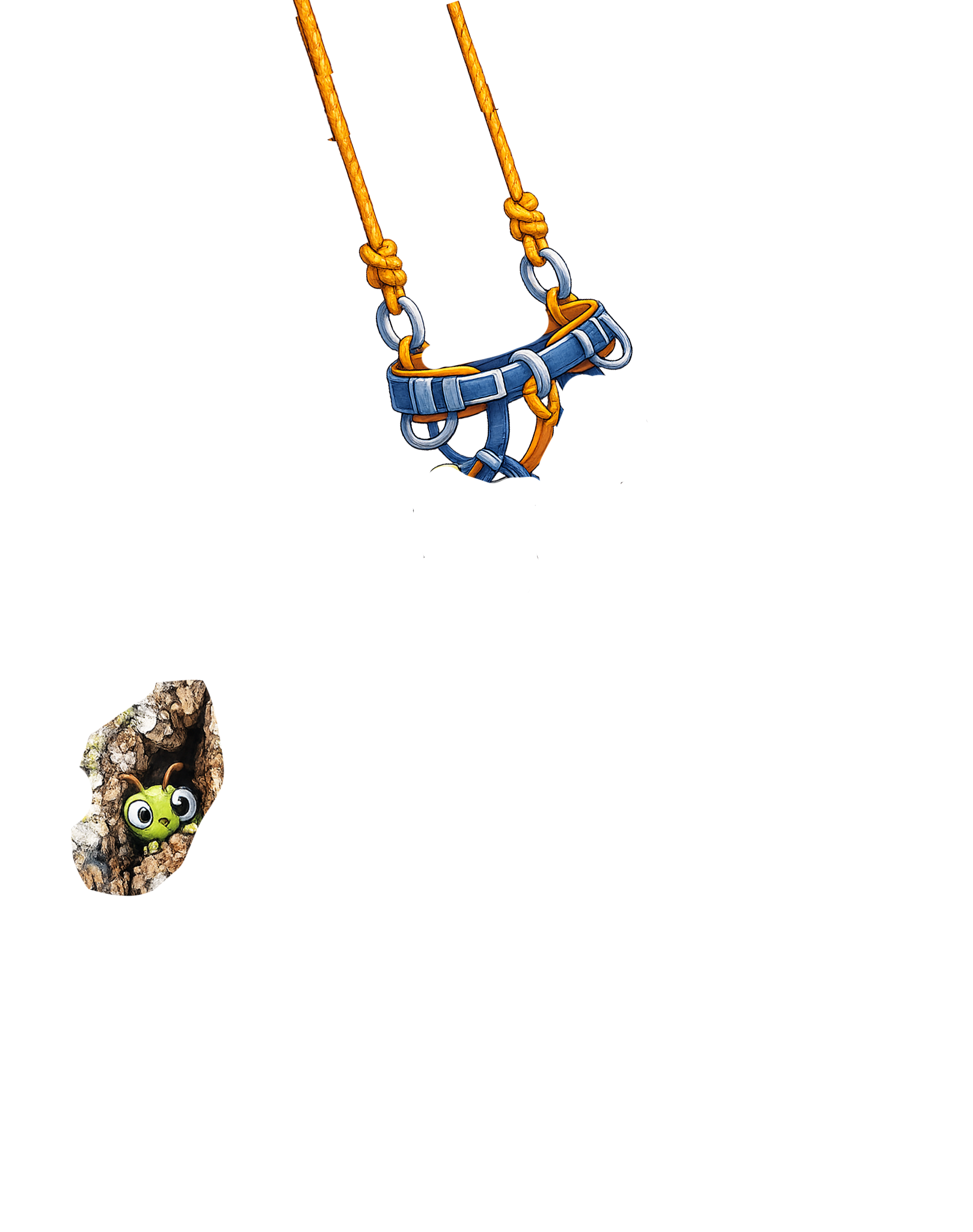
The Upside-Down Explorer!
White-breasted Nuthatch
I watched this White-breasted Nuthatch climb headfirst down a tree trunk, searching for tasty insects hiding in the bark.
- Upside-down expert: White-breasted Nuthatches are one of the only birds that can walk down a tree headfirst.
- Strong grip: They use their strong toes and sharp claws to grip the bark tightly.
- Sneaky storage: They often hide seeds in tree cracks and come back later to eat them!
Just Wondering......
Have you ever seen a bird walk down a tree before? How do you think it keeps from falling?
Is it nap time already?
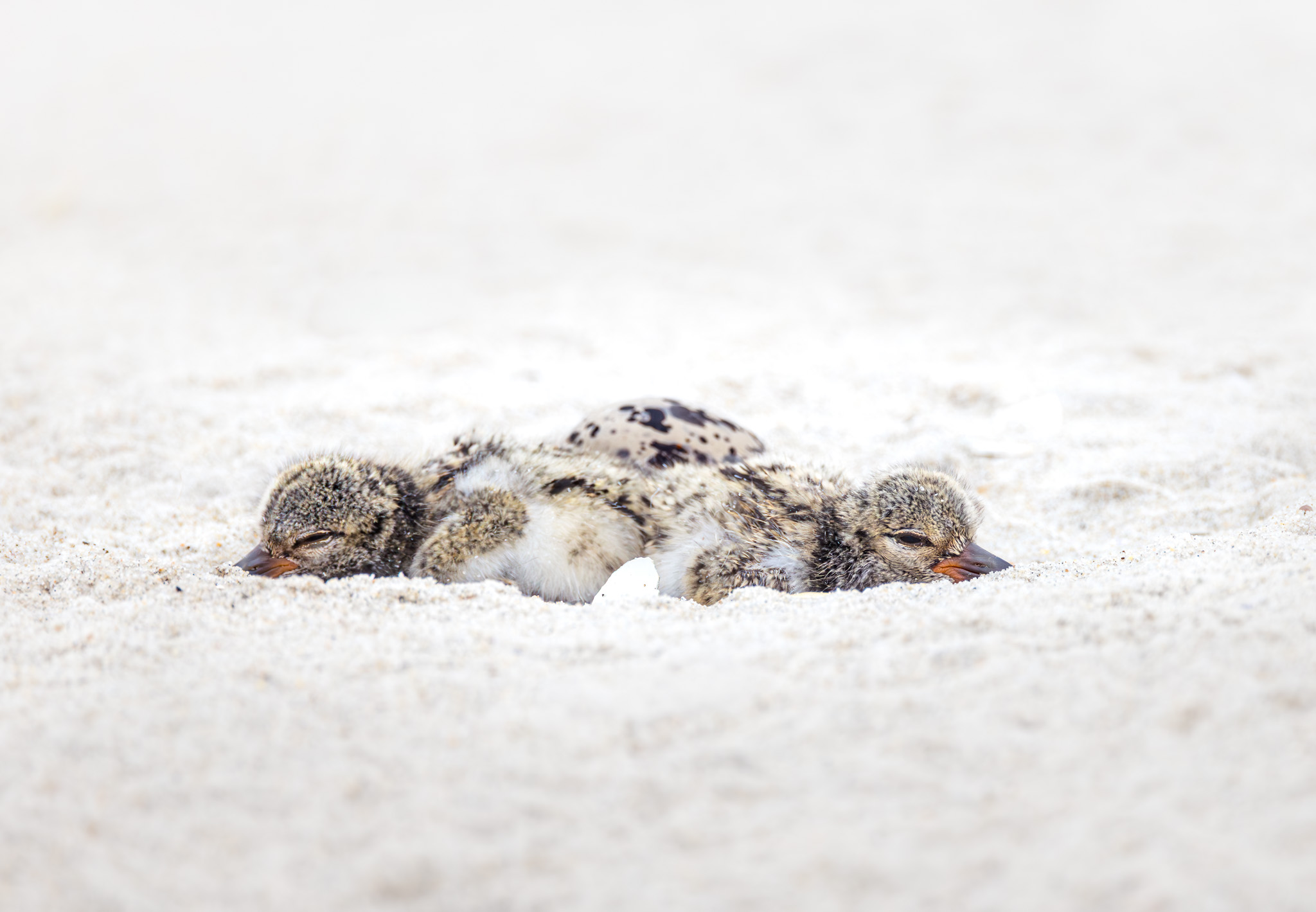
Born on the Beach
American Oystercatchers
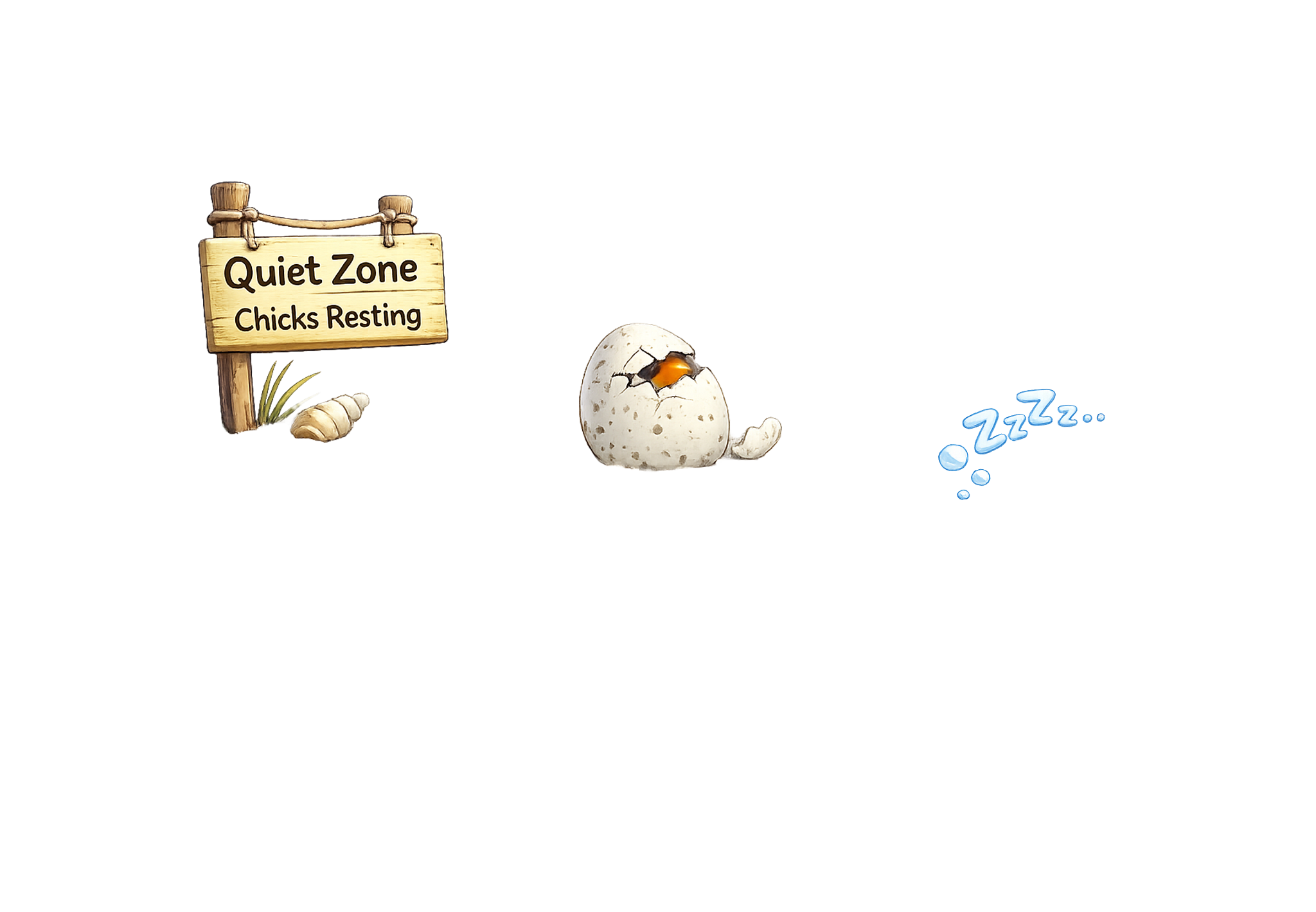
On a quiet stretch of beach, two brand-new American Oystercatcher chicks rested in the sand while their sibling was still finishing its journey out of the egg.
- Quick walkers: American Oystercatcher chicks can walk just a few hours after they hatch!
- Hidden in the sand: Their speckled feathers help them blend into the sand to stay safe.
- Future shellfish experts: Even though they're tiny now, they'll grow strong orange beaks that can open shellfish like oysters and clams.
Just Wondering......
How many babies do you see? Can you spot the one still in the egg? What do you think their parents are doing nearby?
Wings ready… GO!

Ready… Set… Splash!
Atlantic Puffin
I watched this Atlantic Puffin sprint across the water, flapping its wings as fast as it could before lifting off into the sky.
- Running takeoff: Puffins can't just jump into the air — they have to run across the water first to gain speed for takeoff.
- Super fast wings: They flap their wings super fast — up to 400 times per minute when flying!
- Underwater flippers: Puffins are excellent swimmers and use their wings underwater like flippers to chase fish.
Just Wondering......
If you could be a bird that swims underwater, would you be a puffin or a penguin?
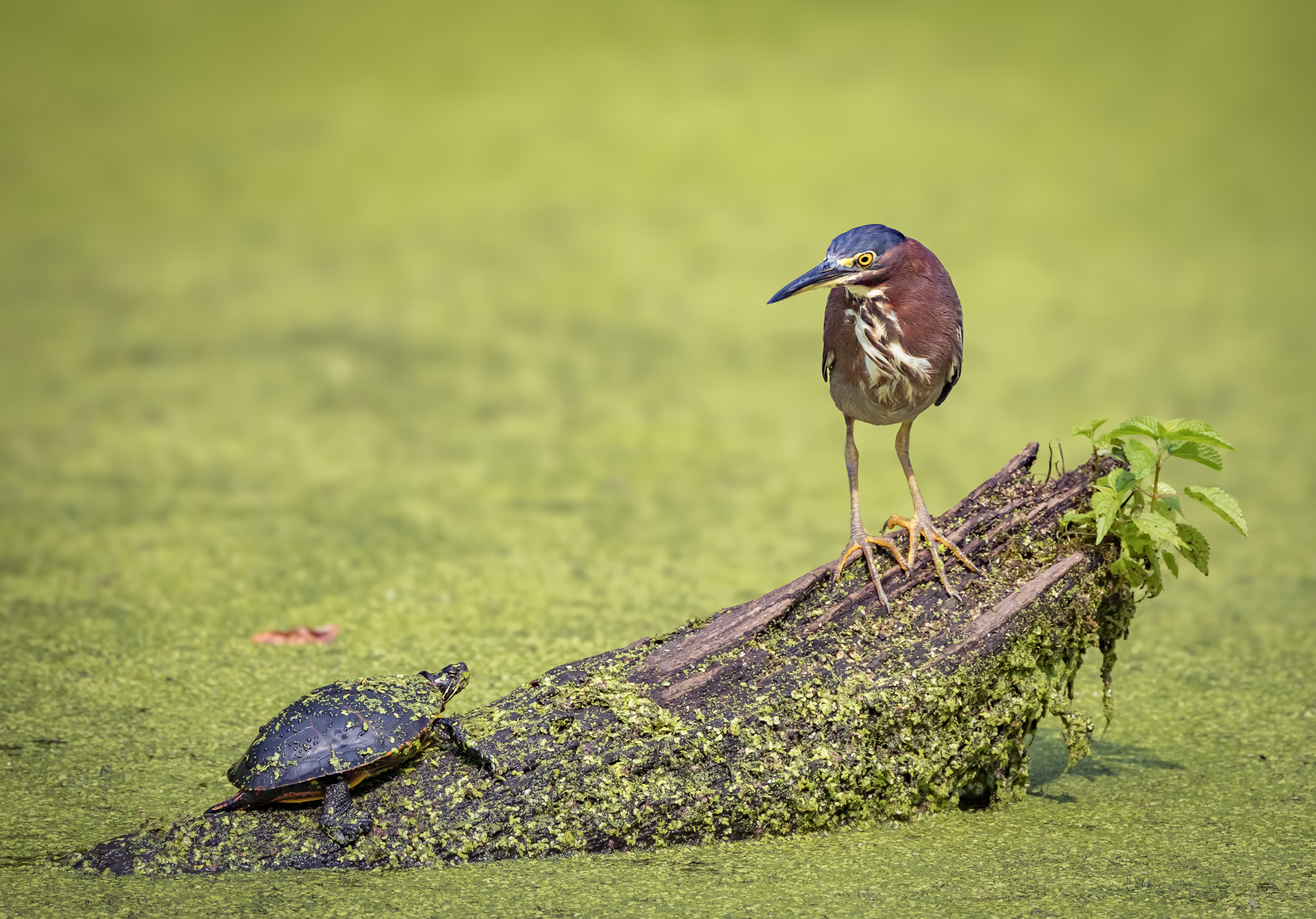
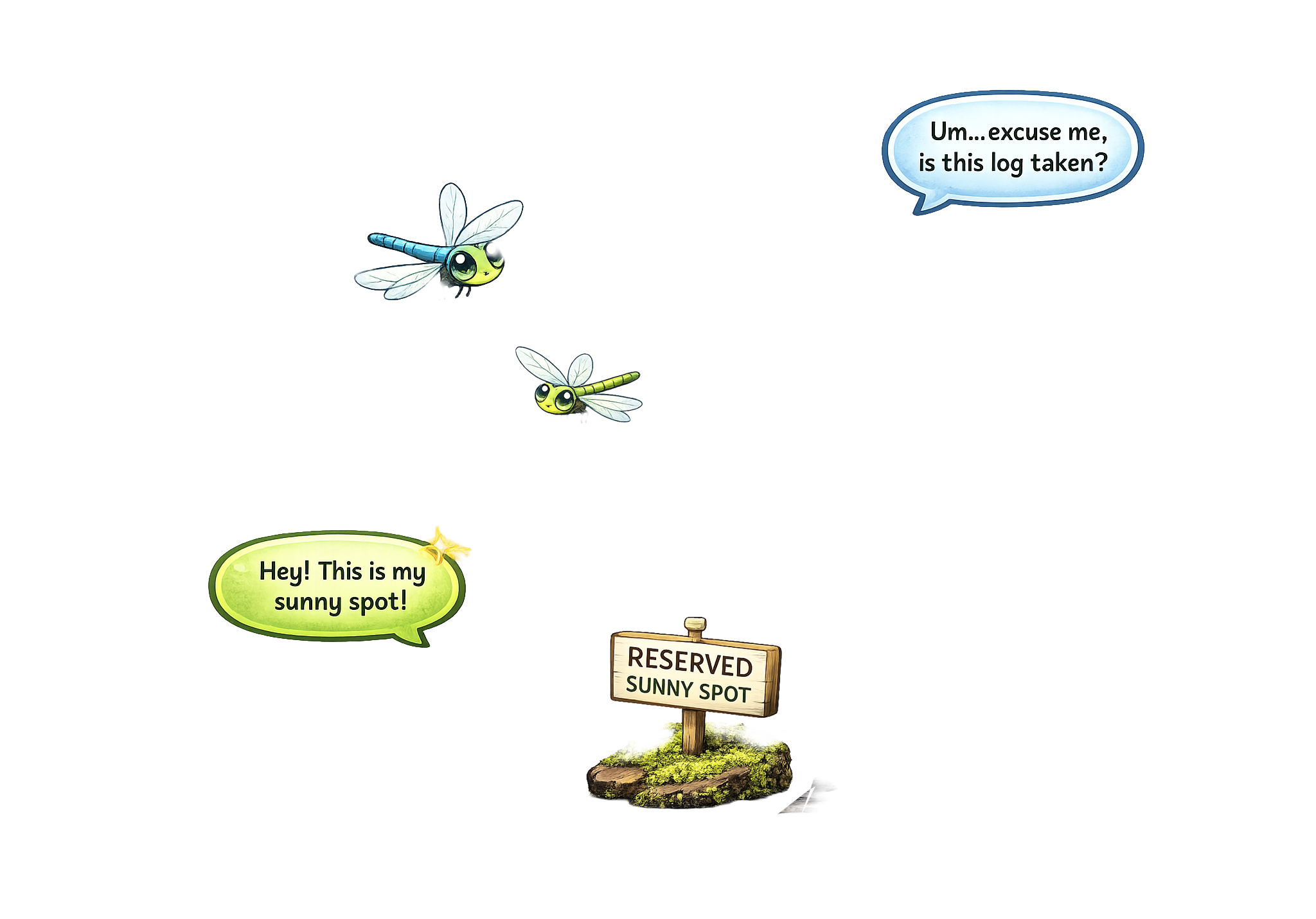
Nice day for a log walk!
Marsh Meeting on the Log
Green Heron & Turtle
While exploring a marsh, I watched a Green Heron carefully step along a mossy log and pause when it came face-to-face with a Painted Turtle sunning in the green water.
- Clever hunters: Green Herons are clever hunters and sometimes even use bait (like insects or bread crumbs) to catch fish!
- Sunbathing turtles: Painted Turtles love to sunbathe on logs to warm up their bodies.
- Green marsh water: Marsh water can look green because of tiny floating plants called duckweed.
Just Wondering......
If you could walk on a log like a Green Heron, would you stop to say hi to a turtle?
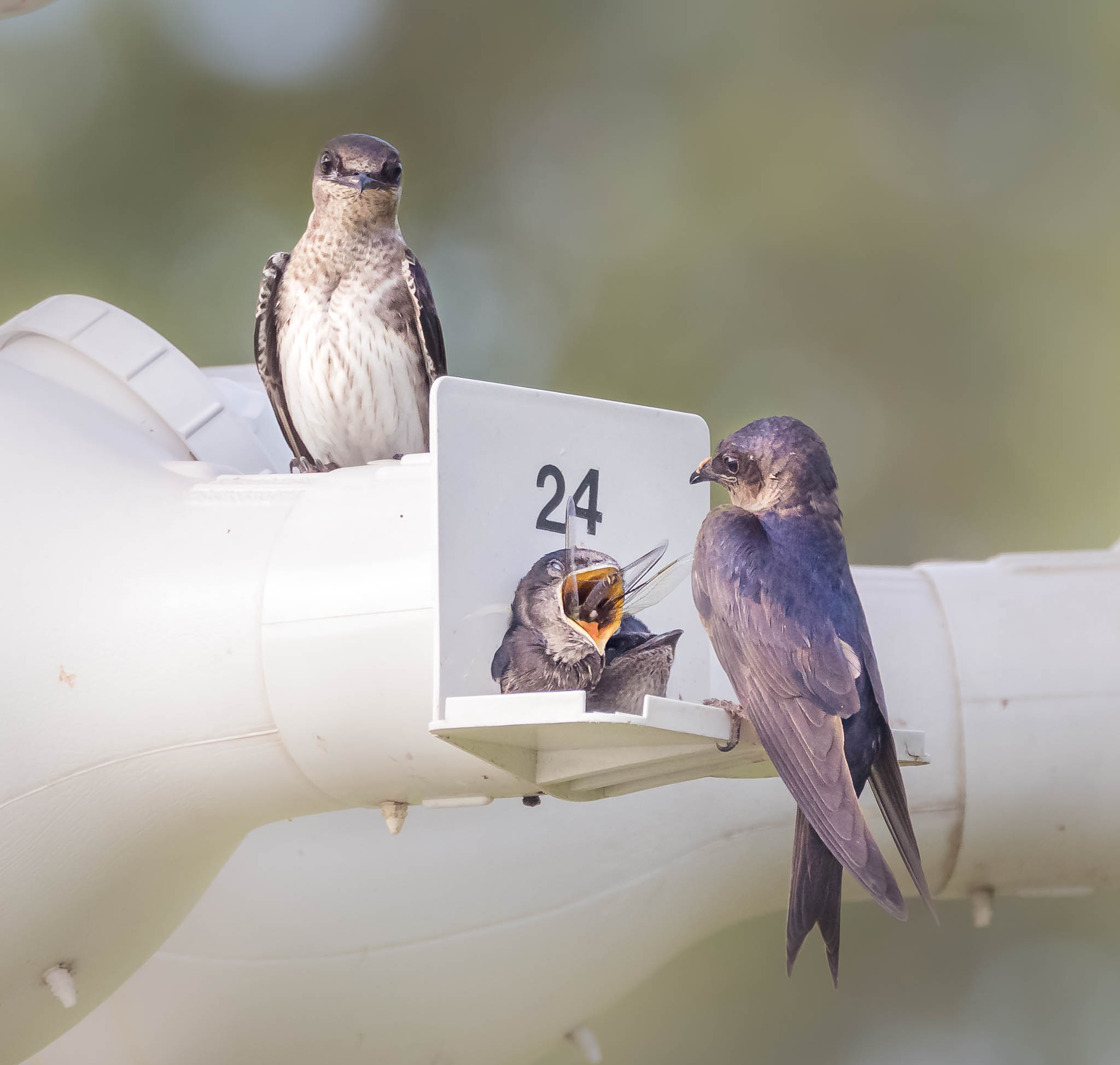
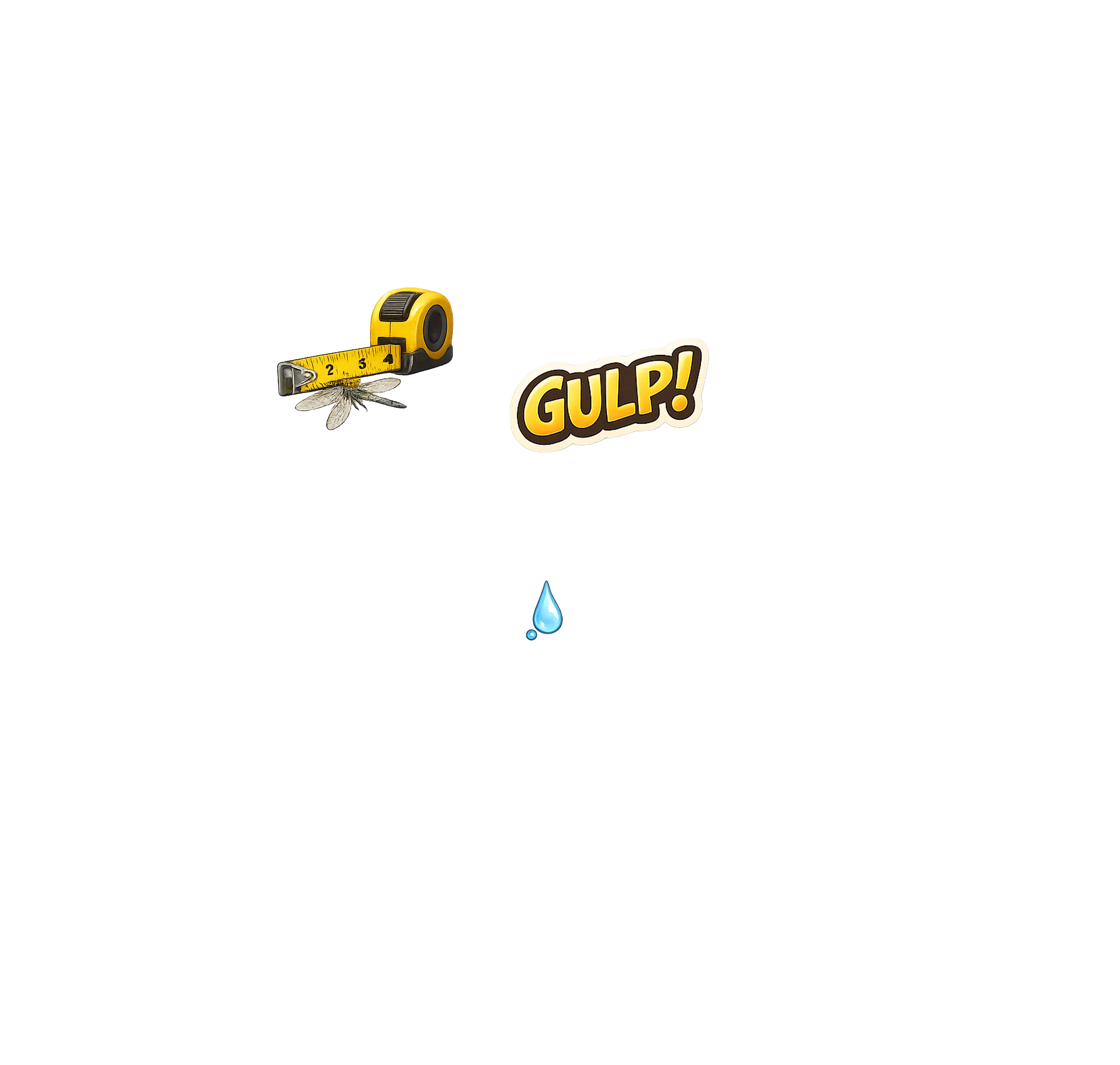
That's HUGE!
That's a Big Bite!
Purple Martin
At a lakeside nesting box, an adult Purple Martin delivers a huge dragonfly to its hungry chick — who looks both excited and a little overwhelmed.
- Flying feast: Purple Martins mostly eat flying insects like dragonflies and beetles.
- Open wide: Baby birds open their mouths wide to show they're hungry.
- Big bite challenge: Even young birds have to learn how to swallow big bites!
Just Wondering......
Have you ever taken a bite that was a little too big? What happened?
Branch Buddies!

Branch Buddies!
Green Herons
Two young Green Herons perch on separate branches over the creek, watching each other as if sharing a quiet adventure together.
- Still learning: Young herons are called juveniles, and they're still learning how to hunt and balance.
- Patient hunters: Green Herons often stand very still before striking at fish.
- Practice time: Even young birds practice perching and jumping to get stronger.
Just Wondering......
If you and your sibling were birds, would you hop from branch to branch together — or see who could balance the longest?
Nice Outfit!
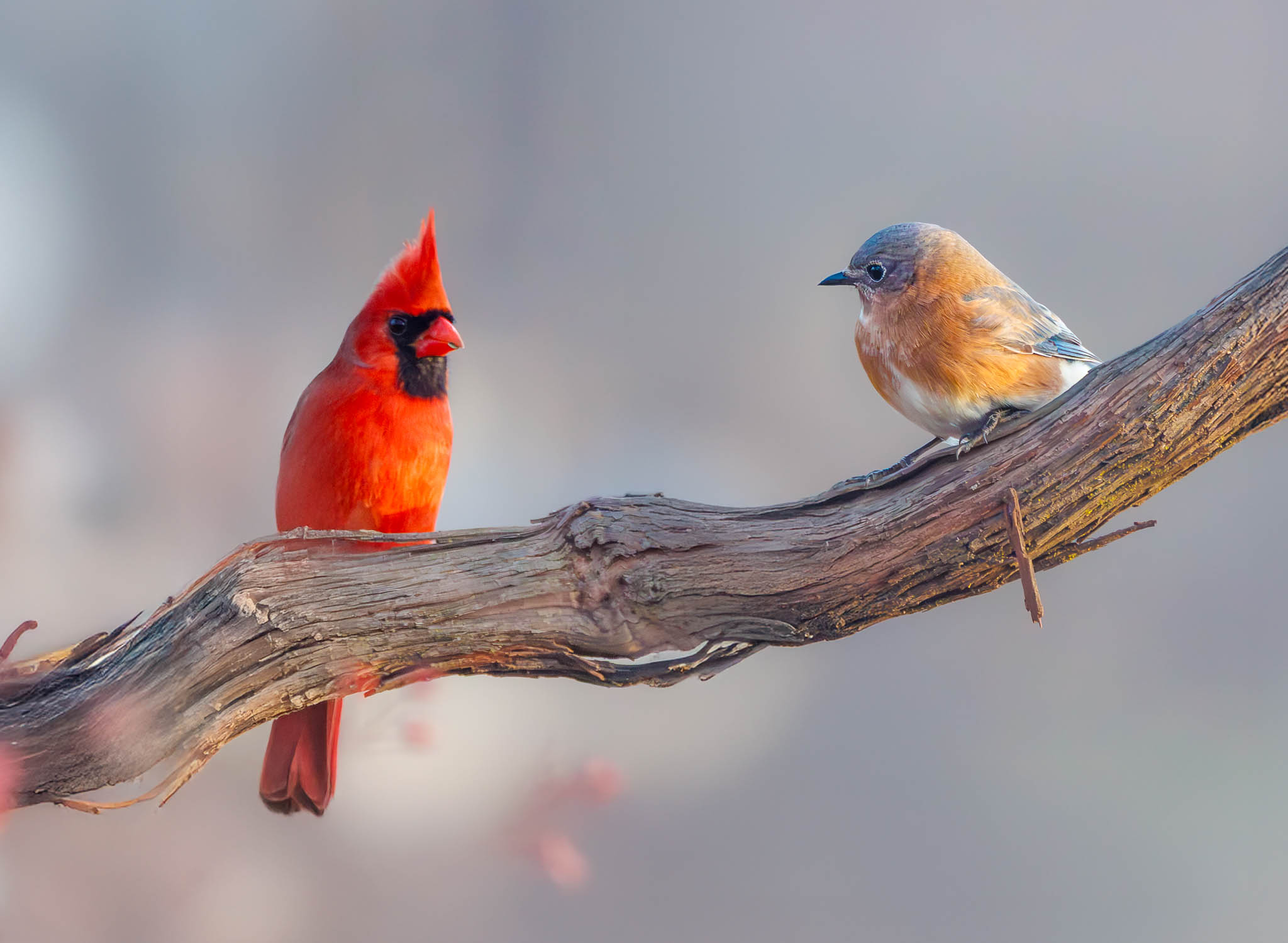
Nice Outfit!
Eastern Bluebird & Northern Cardinal
At a quiet local park, an Eastern Bluebird and a Northern Cardinal paused on the same branch — and it almost looked like they were talking about that bright red outfit.
- Red for romance: Male Northern Cardinals are bright red to help them stand out and attract a mate.
- Blue beauty: Eastern Bluebirds have soft blue feathers that can look extra bright in sunlight.
- Feather communication: Birds don't really wear clothes — their colorful feathers help them communicate!
Just Wondering......
If you were a bird, what color feathers would you want — bright red, soft blue, or something else?
Hey! I'm hungry too!
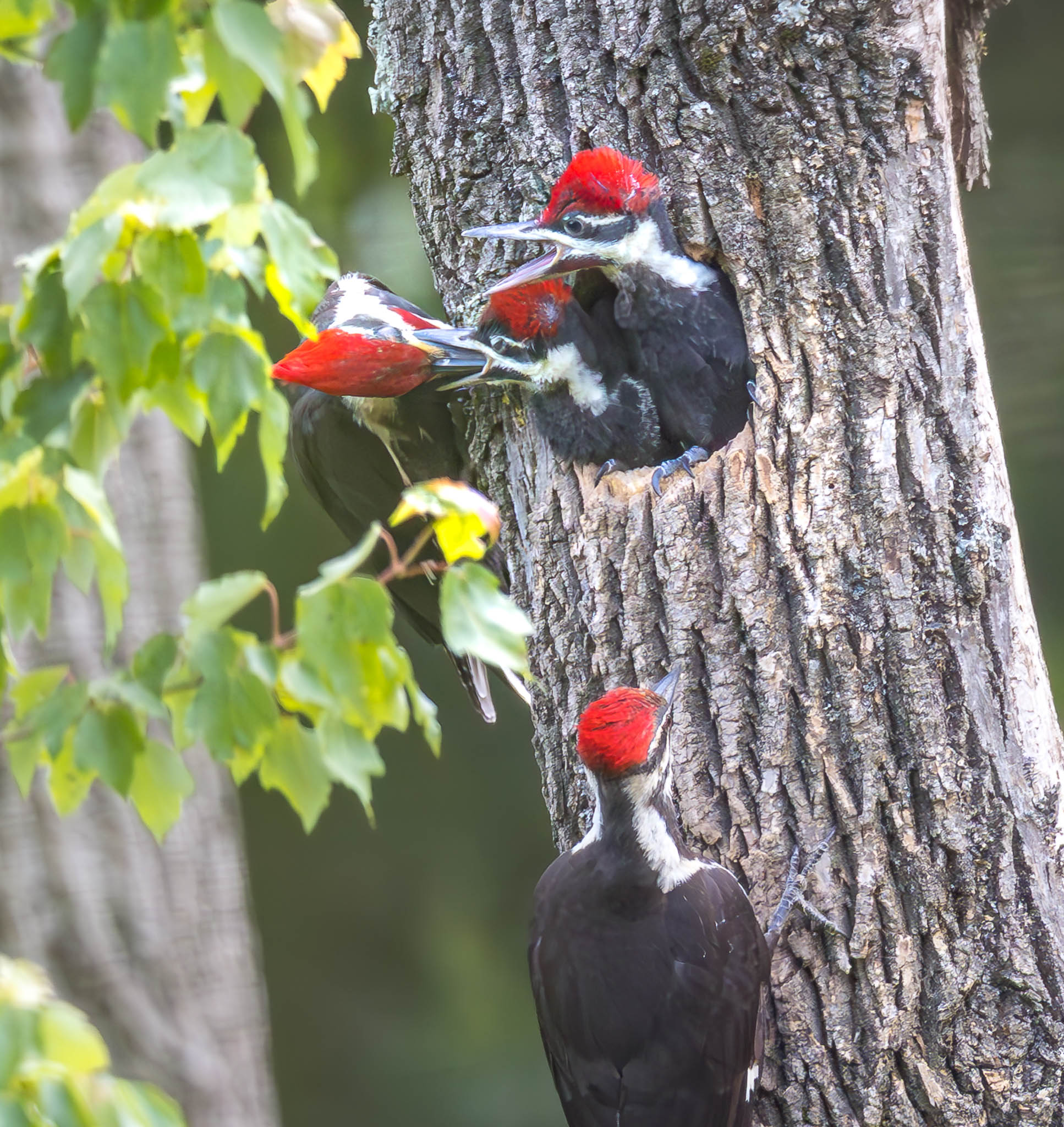
Dinner Time Drama!
Pileated Woodpeckers
At their tree-cavity home, a parent Pileated Woodpecker feeds one hungry chick while another loudly asks, What about me?!
- Loud and hungry: Baby woodpeckers call loudly when they're hungry.
- Big builders: Pileated Woodpeckers make big holes in trees for their nests.
- Team parents: Both parents help bring food to their growing chicks.
Just Wondering......
If you were a baby bird, would you wait your turn… or would you call out loudly for food?
YUM!
Best Snack Ever!
Yellow-throated Warbler
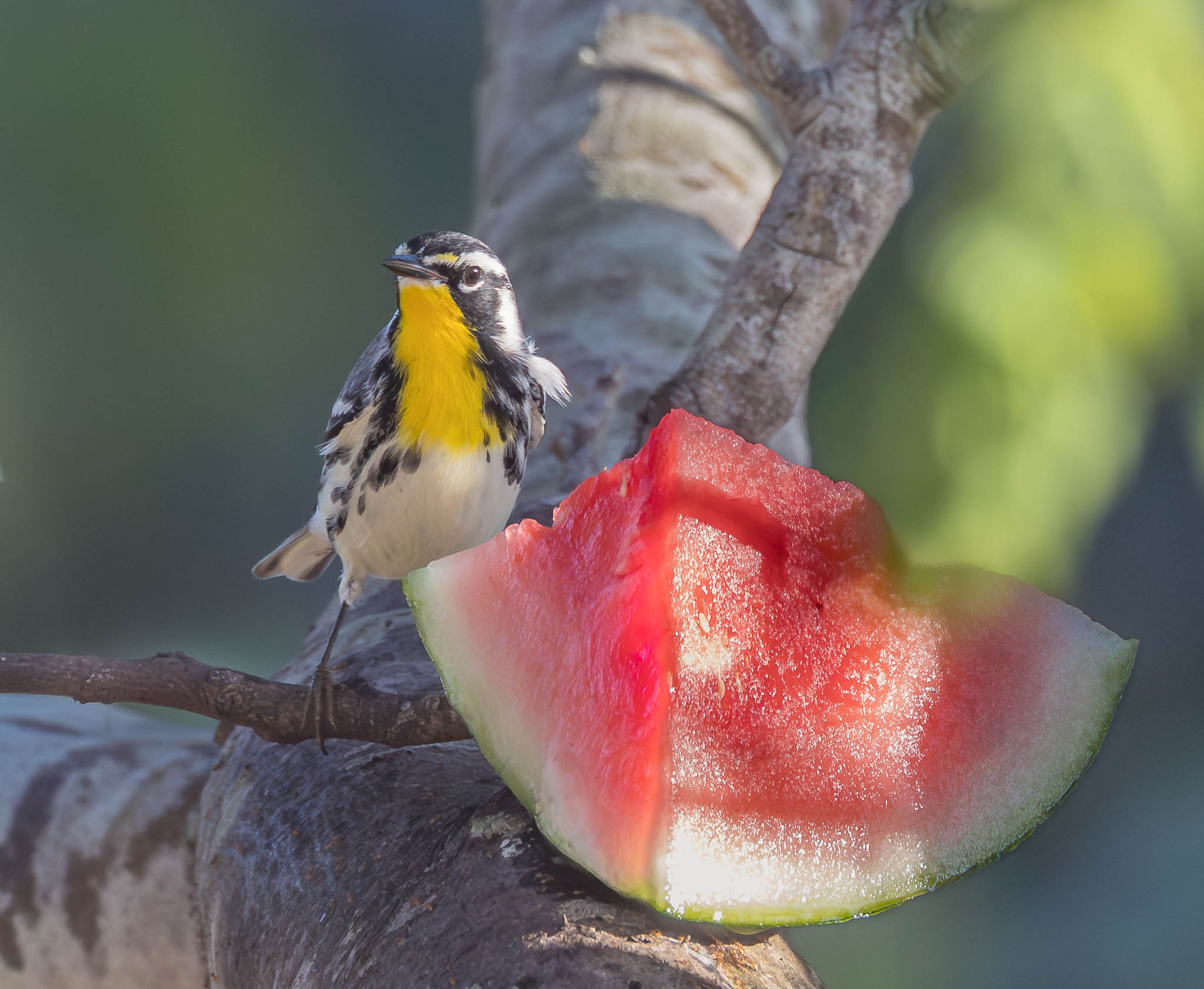
While visiting Texas, I found this Yellow-throated Warbler enjoying a juicy slice of watermelon that someone had placed on a tree branch just for the birds.
- Fruity surprise: Some birds will nibble on fruit, especially when it's hot outside and full of juice.
- Staying hydrated: Watermelon is mostly water, which can help birds stay hydrated in summer heat.
- Special treat: Yellow-throated Warblers usually eat insects — so this was a special treat!
Just Wondering......
If you could share a snack with a bird in your backyard, what would you pick?
Tag! You're It!
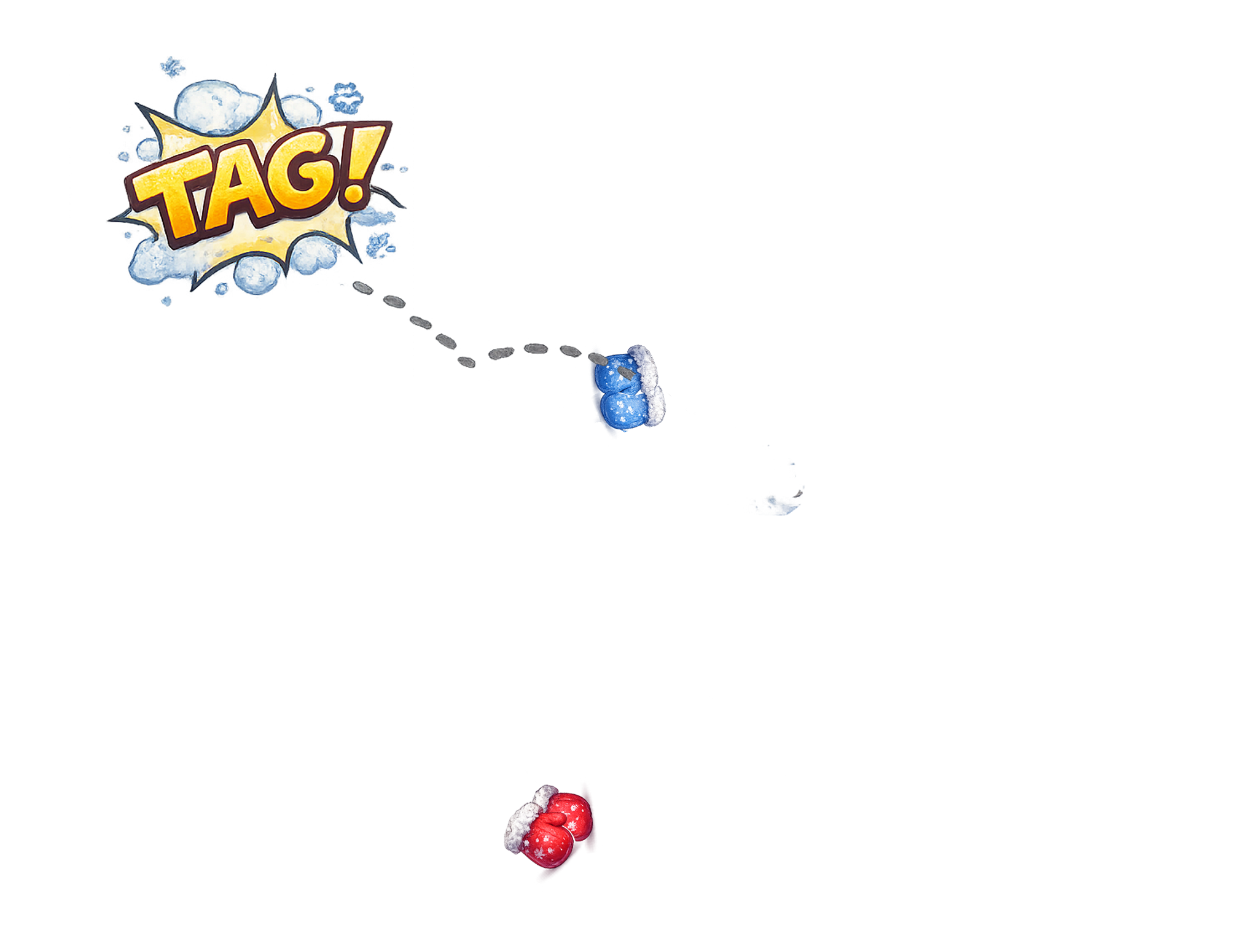
Fun in the Snow!
Horned Larks
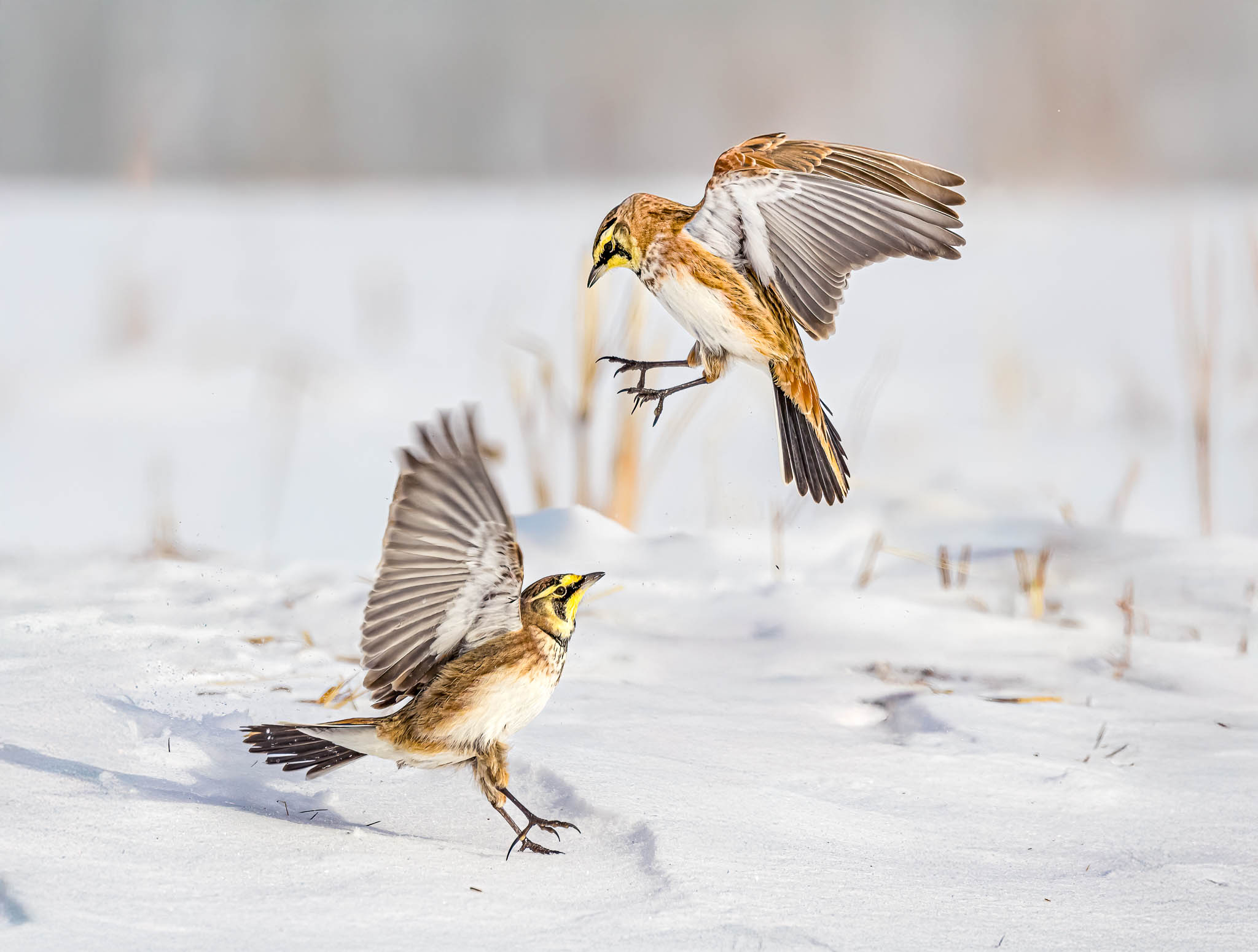
Two Horned Larks leap into the snowy air, flapping their wings as if they're playing a winter game — or having a tiny disagreement.
- Snow runners: Horned Larks can be seen walking and running on the ground, even in cold winter snow.
- Tiny horns: The tiny horns on their heads are actually small black feathers.
- Wing flapping: Birds sometimes flap, hop, or face each other to practice moves or sort things out.
Just Wondering......
Do you think these two birds are playing a game… or having a little argument? What do you see that makes you think that?
Maybe it's my turn to be lookout!
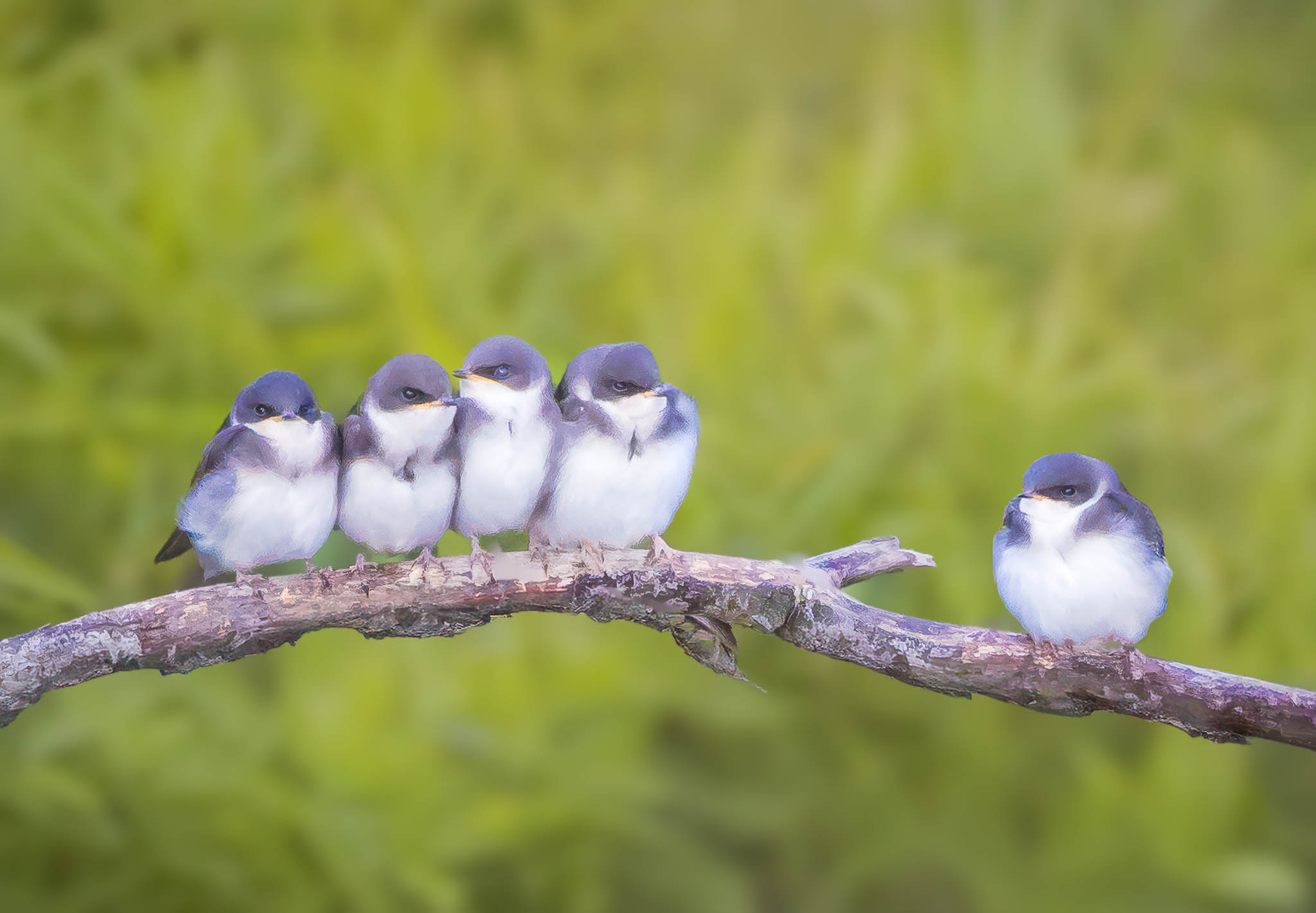
My Turn to Be Lookout!
Tree Swallows
Four young Tree Swallow fledglings huddle together on a branch while one sits a little apart — maybe taking a turn keeping watch.
- Just out of the nest: Tree Swallow babies are called fledglings after they leave the nest but are still learning to fly.
- Sticking together: Brothers and sisters often stay close together while their parents bring them food.
- Practice makes perfect: Even after they can fly, young swallows still practice and get better every day.
Just Wondering......
Do you ever take turns with your friends or family to watch out for each other?
I think I need a towel!
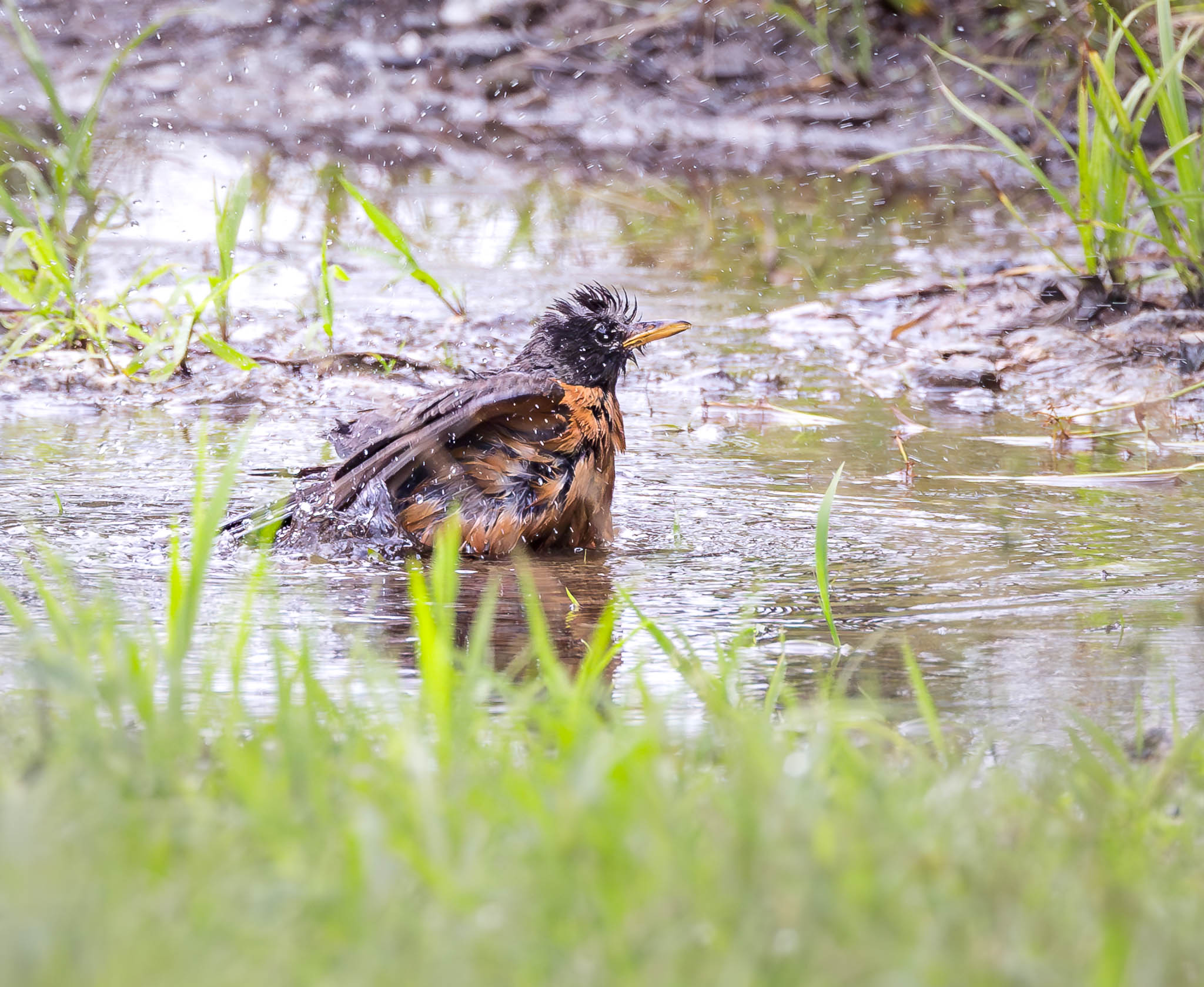
Splish! Splash! Bath Time!
American Robin
This American Robin jumped into a shallow puddle and splashed around, shaking water everywhere and turning its smooth feathers into a funny, shaggy mess.
- Feather care: Robins take baths to keep their feathers clean and healthy.
- Shake it off: After bathing, they fluff up and shake to dry off.
- Flying and staying warm: Clean feathers help birds fly better and stay warm.
Just Wondering......
Have you ever splashed in a puddle or taken a bath that made your hair stick up funny like this robin?
Common Gallinule
- Toe superpowers: Those extra-long toes help gallinules walk on mud and floating plants without sinking.
- Not a duck! Even though it lives near water, a gallinule is more like a rail than a duck.
- Marsh runners: Gallinules can run across squishy marshes where other birds would slip and slide.
When this Common Gallinule floated in for a landing on a Texas marsh, I couldn't stop staring at its super long, skinny toes. They looked nothing like duck feet—and then I watched it run right across the muddy marsh like it was wearing nature's best balance shoes!
Careful..... Long toes, coming through!
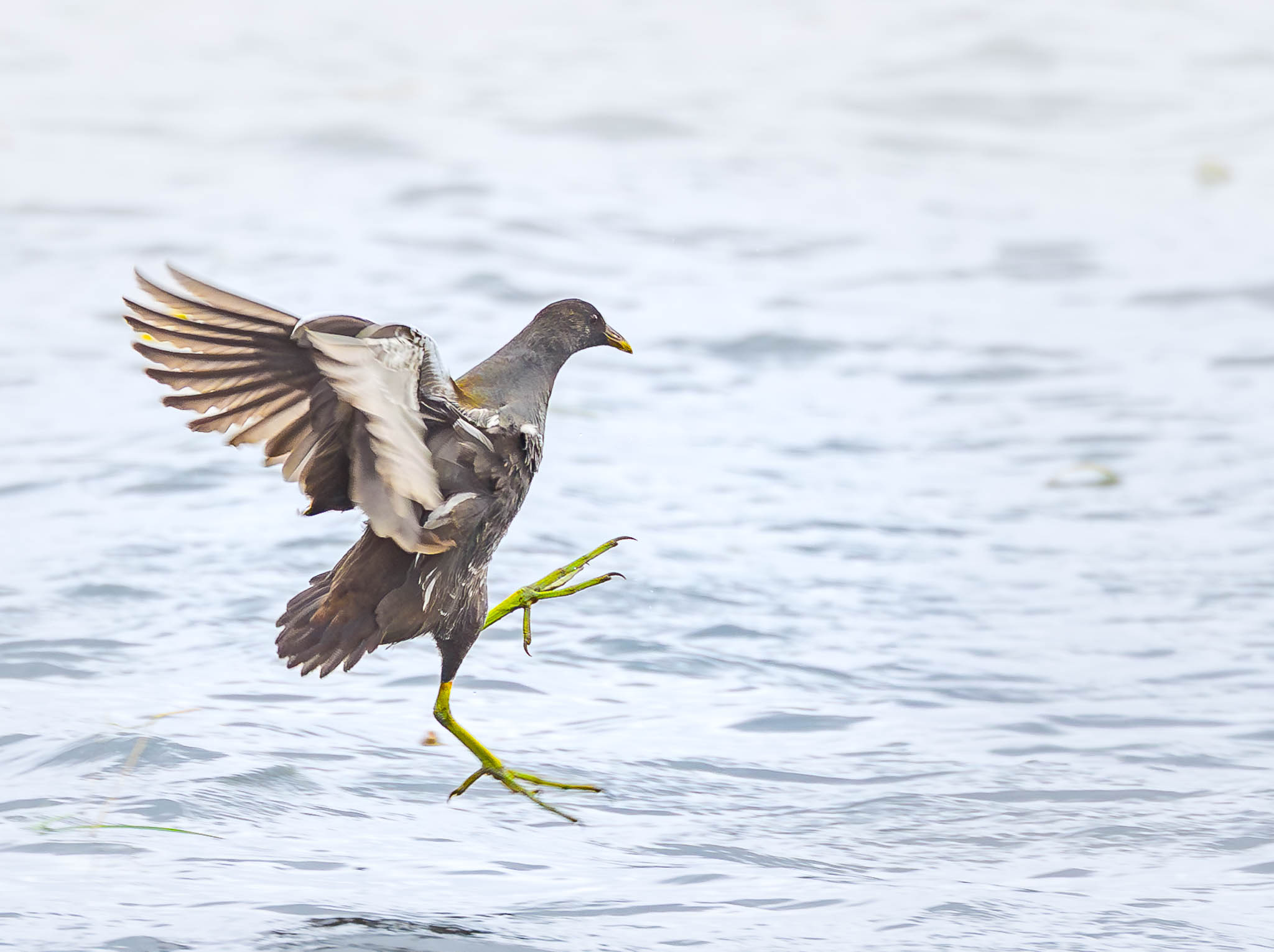
Long Toe Touchdown
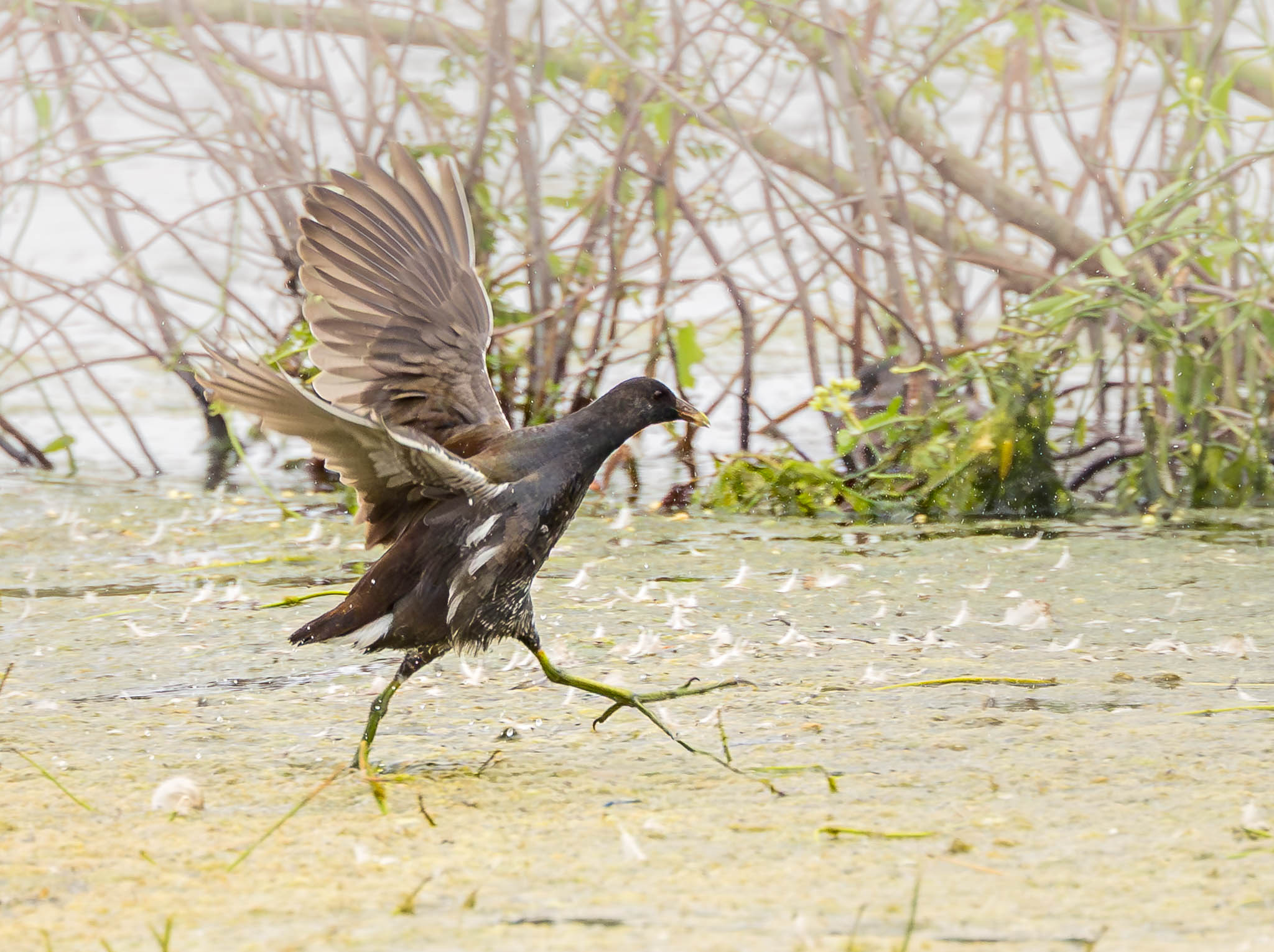
The Marsh Tiptoer
Just Wondering......
Would you like toes that long? What would you do with them?
I spy a photographer!
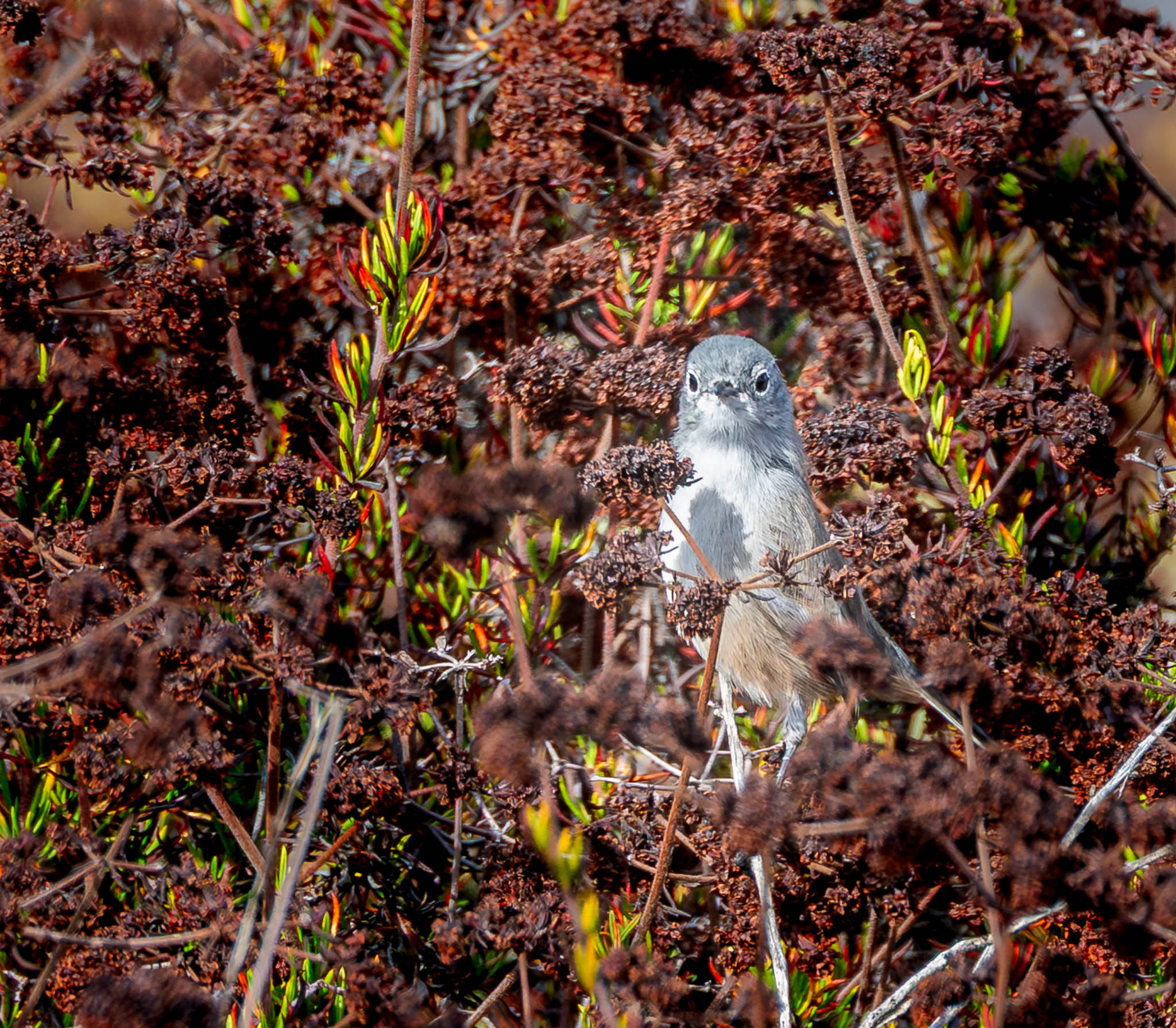
Peekaboo in the Brush
California Gnatcatcher
While walking a dirt path in a California preserve, I was quietly searching for a California Gnatcatcher when it suddenly popped out of the brush for a quick peek.
- California Gnatcatchers are tiny birds that love hiding in low shrubs and bushes.
- They eat insects like gnats, spiders, and tiny beetles.
- Even though they are small, they have big, curious personalities!
Just Wondering......
Do you ever play hide-and-seek? Where's your favorite hiding spot?
Ahhh… much better!

Balance Like a Pro
Great Egret
While walking a trail at a Florida preserve, I watched this Great Egret stand on one leg and scratch an itch like it was the easiest thing in the world.
- One-legged wonders: Great Egrets often stand on one leg to rest and stay balanced.
- Built-in scratchers: Birds use their long toes to scratch hard-to-reach itchy spots.
- Super steady: Even on muddy ground, egrets can balance without falling over.
Just Wondering......
Can you stand on one leg? Try it and see how long you can balance!
Yaaawn… is breakfast ready yet?
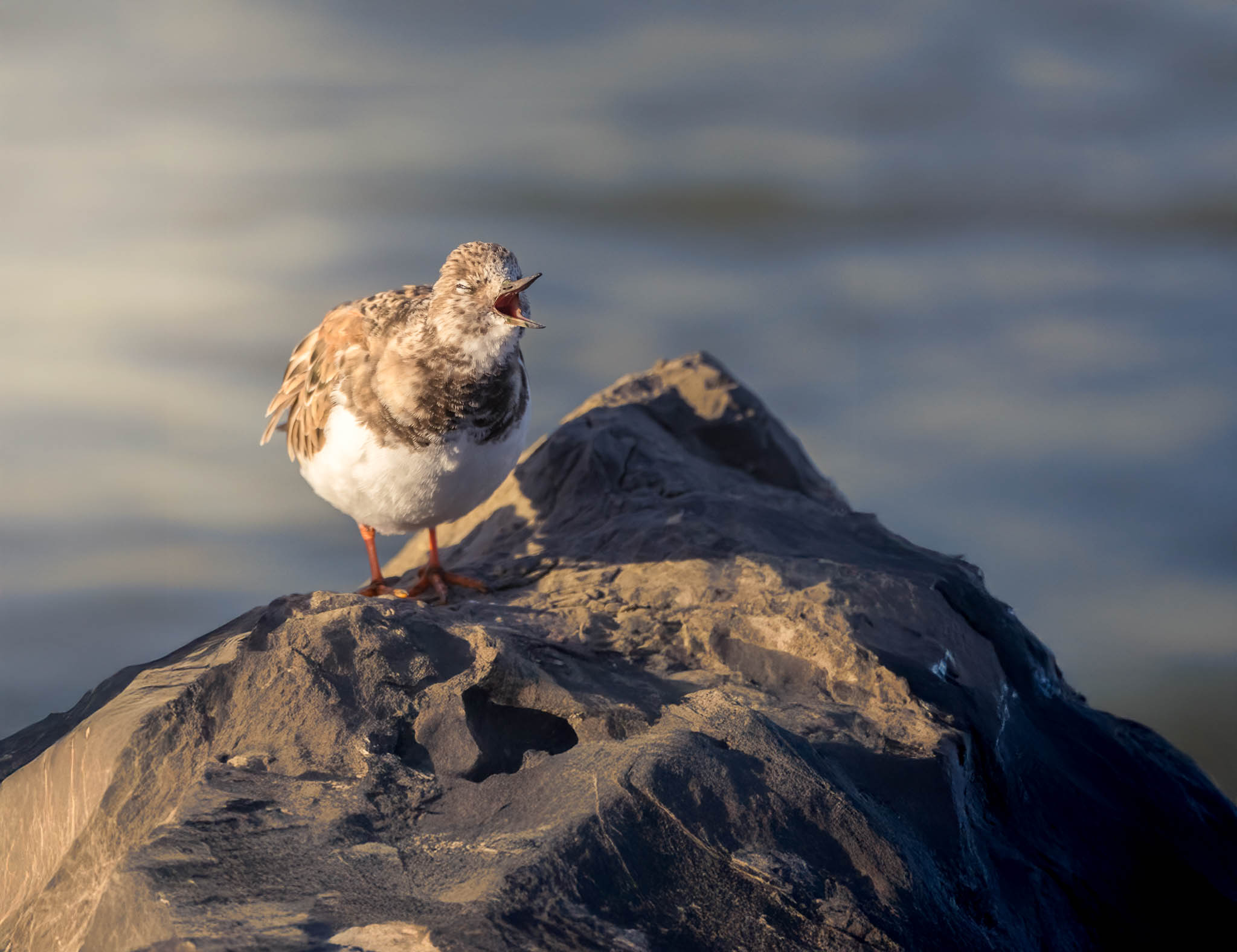
Rise and Shine, Rock Hopper
Ruddy Turnstone
While walking along the jetty at Barnegat Lighthouse, I spotted a Ruddy Turnstone waking up on the rocks, stretching and yawning as the sun began to rise.
- Ruddy Turnstones flip over rocks and shells to look for tasty snacks underneath.
- They love rocky beaches, jetties, and shorelines near the ocean.
- Their funny name comes from their habit of turning stones with their beaks.
Just Wondering......
Have you ever flipped over a rock to see what's underneath?
Hey Mom… am I doing it right?
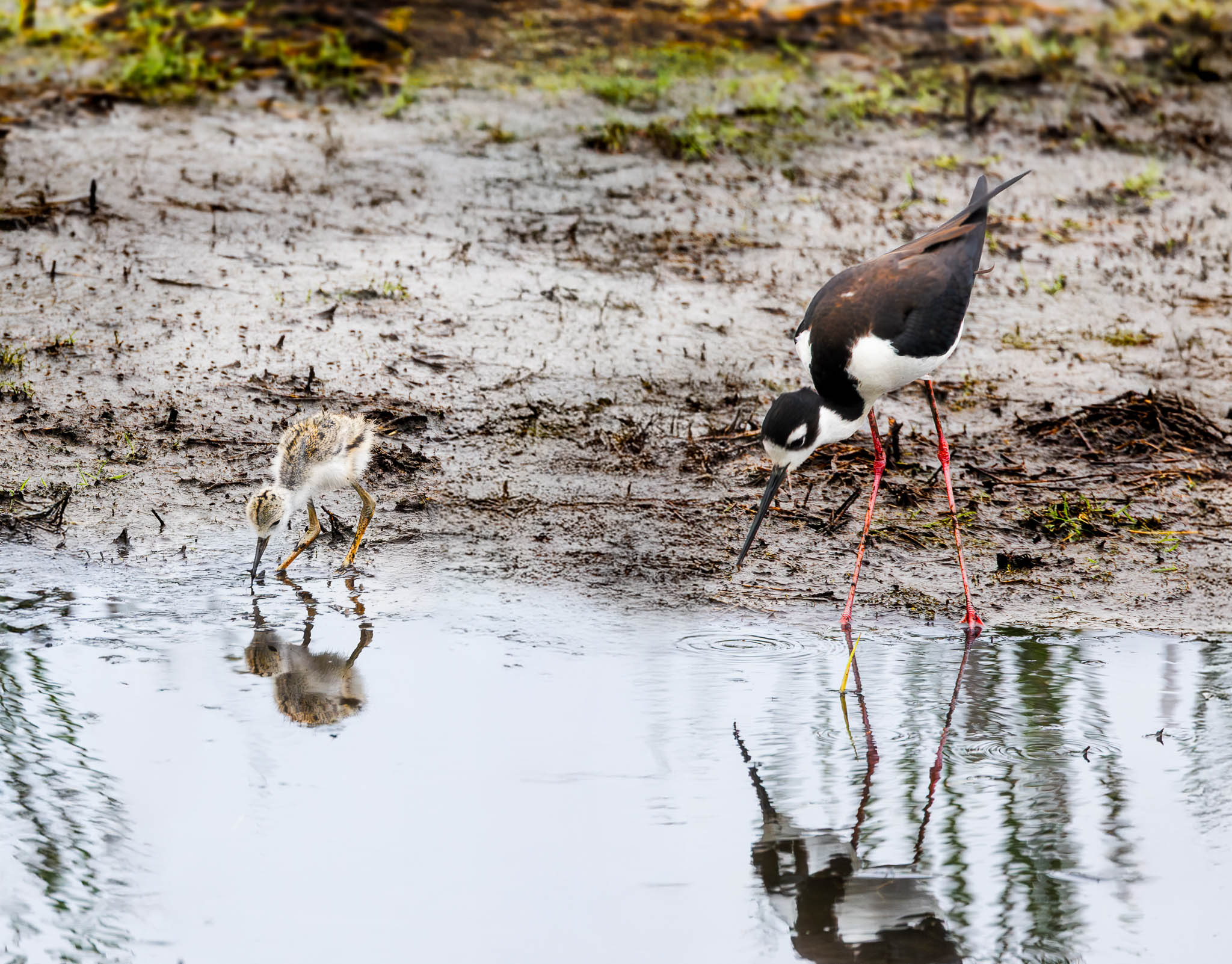
Learning by Watching
Black-necked Stilt
As a Black-necked Stilt and her chick explored the marsh at Forsythe Reserve, the little one dipped its beak into the water just like mom—learning by copying every move.
- Baby stilts learn how to find food by watching their parents closely.
- Black-necked Stilts have super long legs that help them walk in shallow water without getting wet.
- Chicks can feed themselves soon after hatching, but mom and dad stay nearby to teach and protect them.
Just Wondering......
What's something you learned by watching someone else?
Rain can't stop me—I was born to fly!
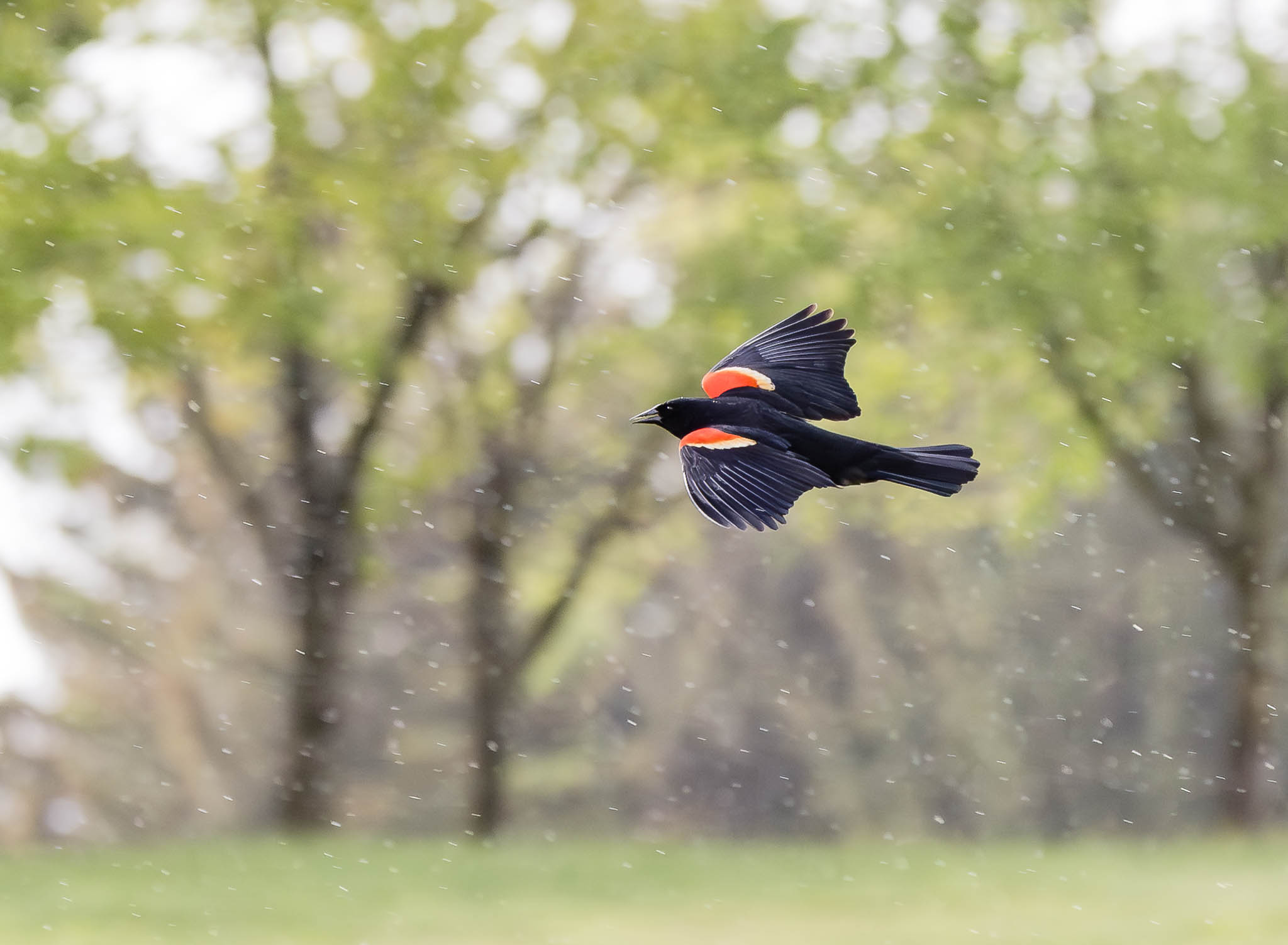
Rainy Day Red Wings
Red-winged Blackbird
As rain began to fall at Memorial Lake, this Red-winged Blackbird zoomed past me, flashing its bright red shoulders like it was showing off in the storm.
- Boy Red-winged Blackbirds have bright red and yellow shoulder patches to help them stand out.
- They love living near water, like marshes, ponds, and wet grassy fields.
- Even rain doesn't stop them from flying, singing, and exploring!
Just Wondering......
Do you like playing outside in the rain?
Ouch! Just kidding… I'm a cactus expert!
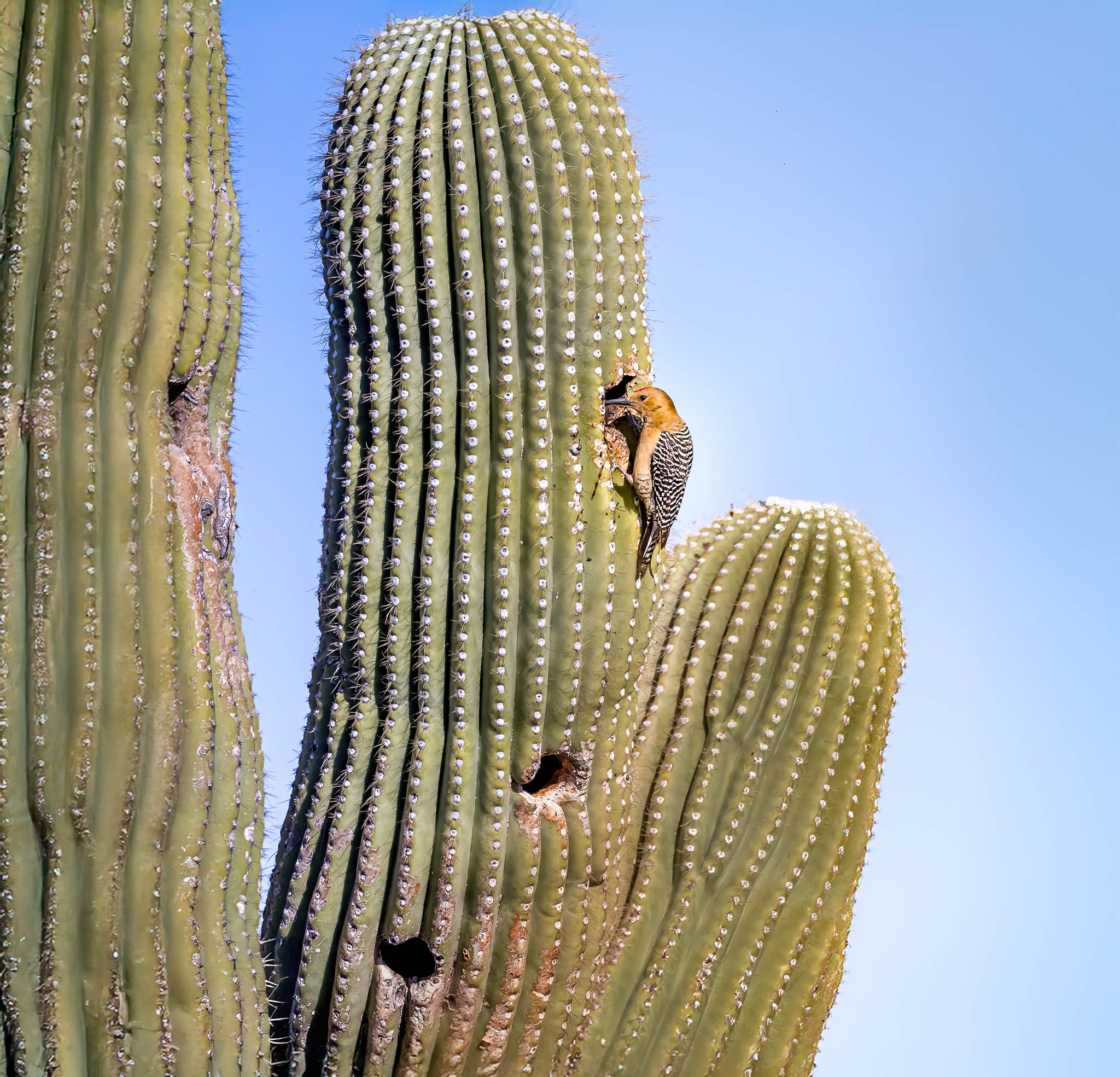

The Brave Bird and the Prickly House
Gila Woodpecker
While walking through the Arizona desert, I watched this Gila Woodpecker pecking a hole right into a giant saguaro cactus to make a home. It looks impossible, but somehow this brave bird knows exactly where to peck without getting poked by the cactus sharp needles!
- No pokes allowed! Gila Woodpeckers peck between the cactus spines, not into them—like a bird playing a careful game of dodge-the-spikes.
- Cactus homes: Saguaros are like apartment buildings for desert birds, and woodpeckers help make the rooms.
- Desert drummers: Instead of trees, these woodpeckers tap on cacti to build nests and find food.
Just Wondering......
Would you want to live in a cactus? What other places do birds build their homes?
Smile! You're looking at the funniest woodpecker ever!
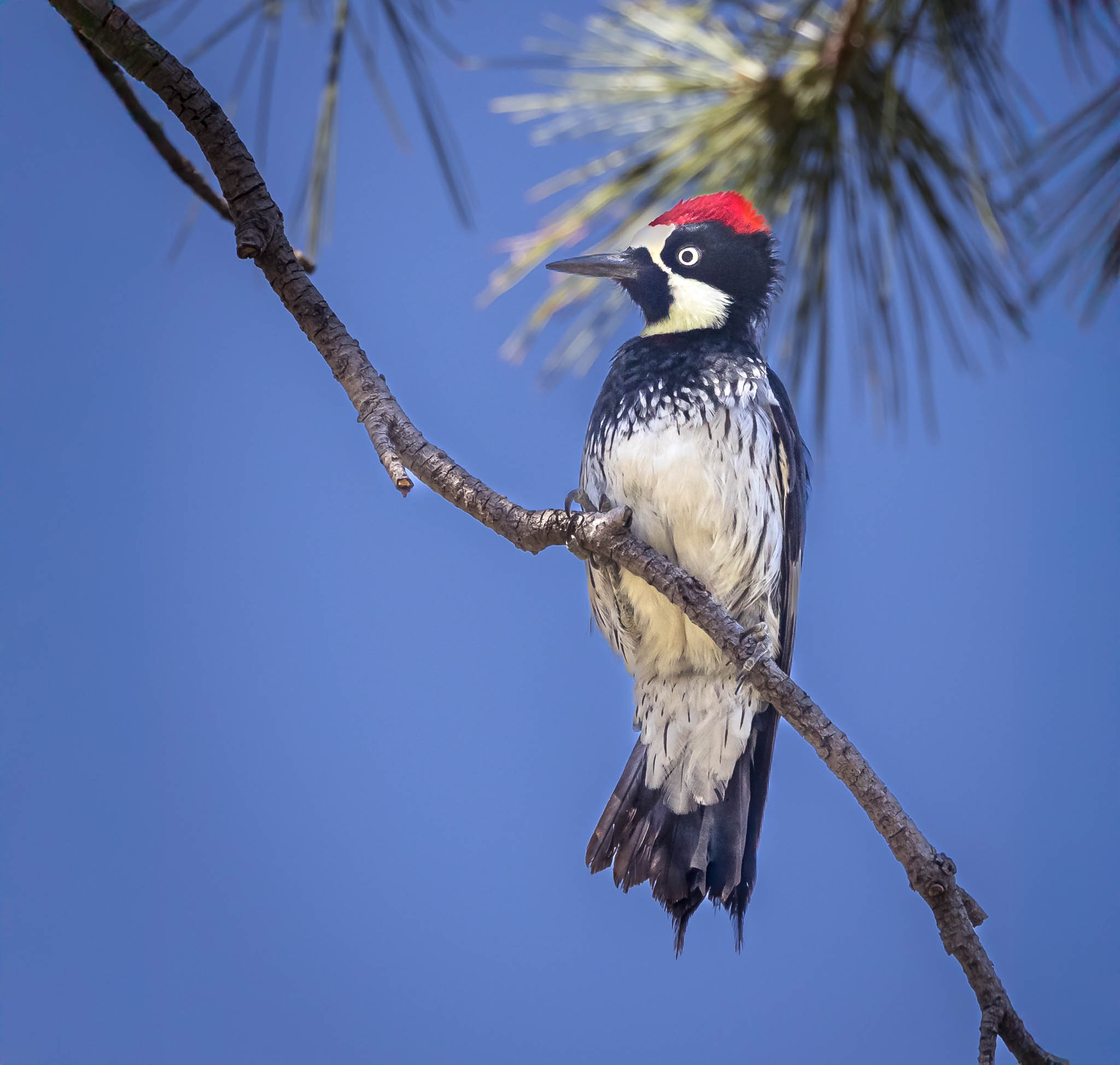
The Clown of the Tree Trunk
Acorn Woodpecker
This Acorn Woodpecker looks like it's wearing clown makeup as it perches proudly on a branch, keeping watch over its forest home in Arizona. With its bright red cap and silly face, it looks ready to tell a joke—or start tapping out a drumbeat on the tree!
- Silly face alert! Acorn Woodpeckers are sometimes called clown woodpeckers because of their funny black-and-white faces and bright red hats.
- Acorn hoarders: They drill holes in trees to store hundreds—even thousands!—of acorns like a bird pantry.
- Tap-tap-tap musicians: Instead of singing, they make loud drumming sounds on trees to talk to other woodpeckers.
Just Wondering......
What do you notice first about this bird's face?
I'm looking for snacks, not horse rides!
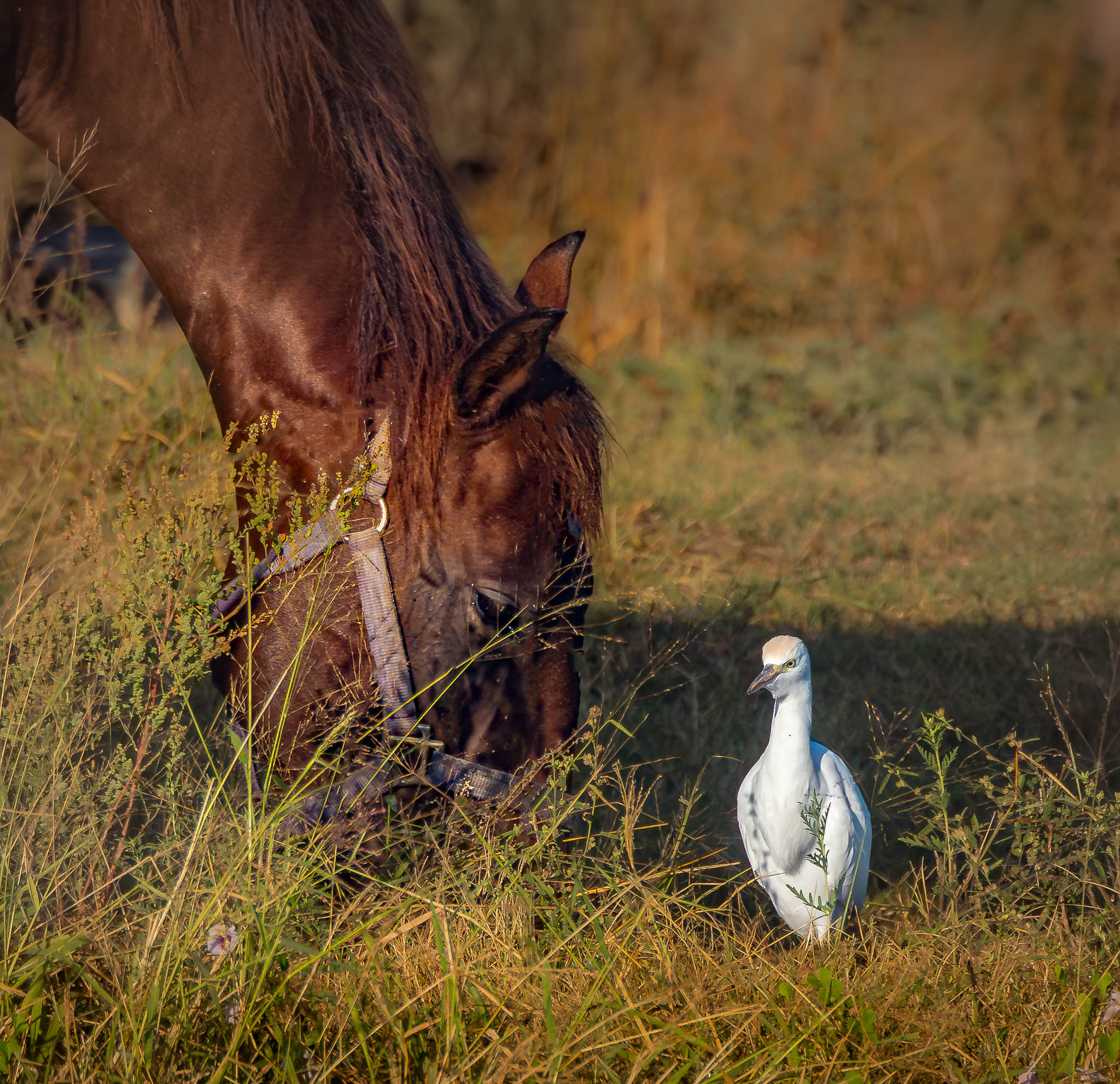
An Unlikely Lunch Buddy
Western Cattle Egret
Along the Rio Grande River, a Western Cattle Egret stands calmly beside a grazing horse, as if they're old friends—neither one paying much attention to the other!
- Cattle Egrets love big animals, like cows and horses, because they stir up bugs for easy snacks.
- They're not scared of hooves! These egrets are very comfortable walking close to much larger animals.
- Cattle Egrets are world travelers and can be found on farms, fields, and riverbanks across many countries.
Just Wondering......
Do you think the bird is scared… or comfortable?
Sandhill Crane
- Baby cranes are called colts, just like baby horses!
- Sandhill Crane babies learn by watching, copying how their parents find food.
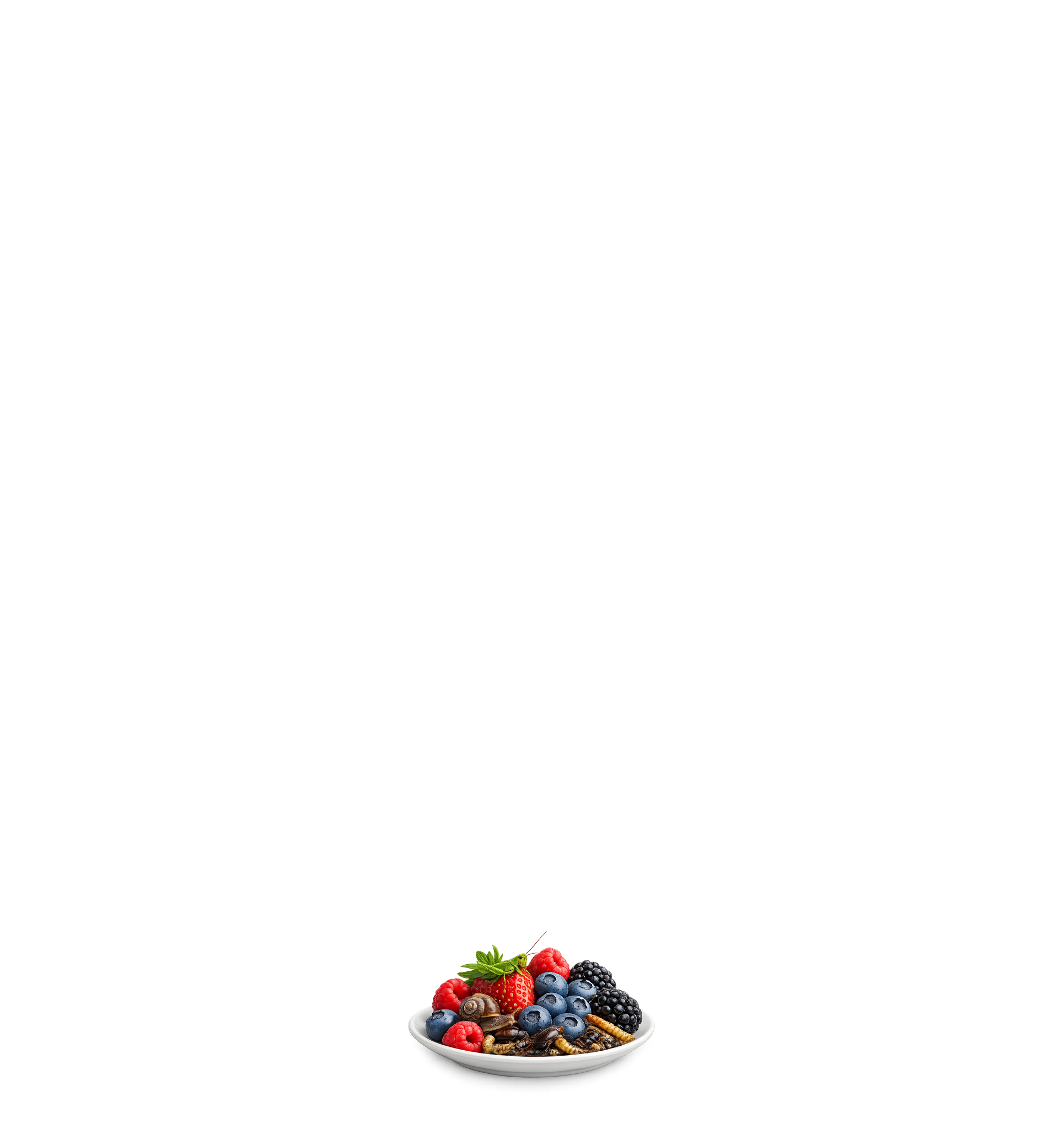
- Cranes eat all kinds of things, including insects, seeds, frogs, and tiny critters in the mud.
- Families stay together for many months, helping the colt grow big and strong.
Along a quiet Florida road, a tall Sandhill Crane stands watch while its fluffy colt toddles along beside it, learning the big world one step at a time. In the marsh, the curious young colt pokes around the water plants while its parent searches for food nearby, turning mealtime into a learning adventure.
Stay close, little one.
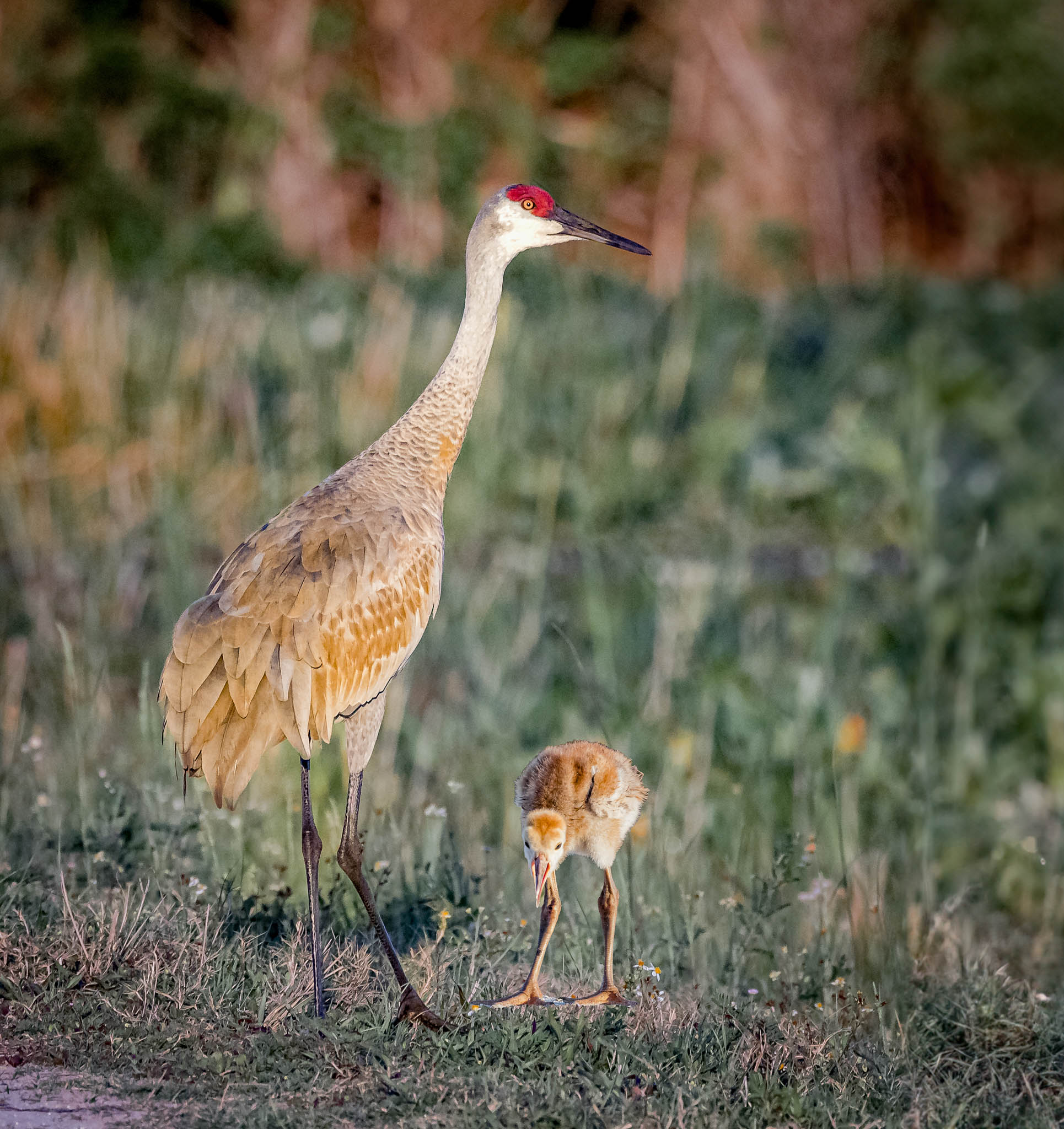
Stick Close Little Legs

Snack Time With Mom
Just Wondering......
Why do you think the baby stays so close to its mom?
I'm up sooo high!
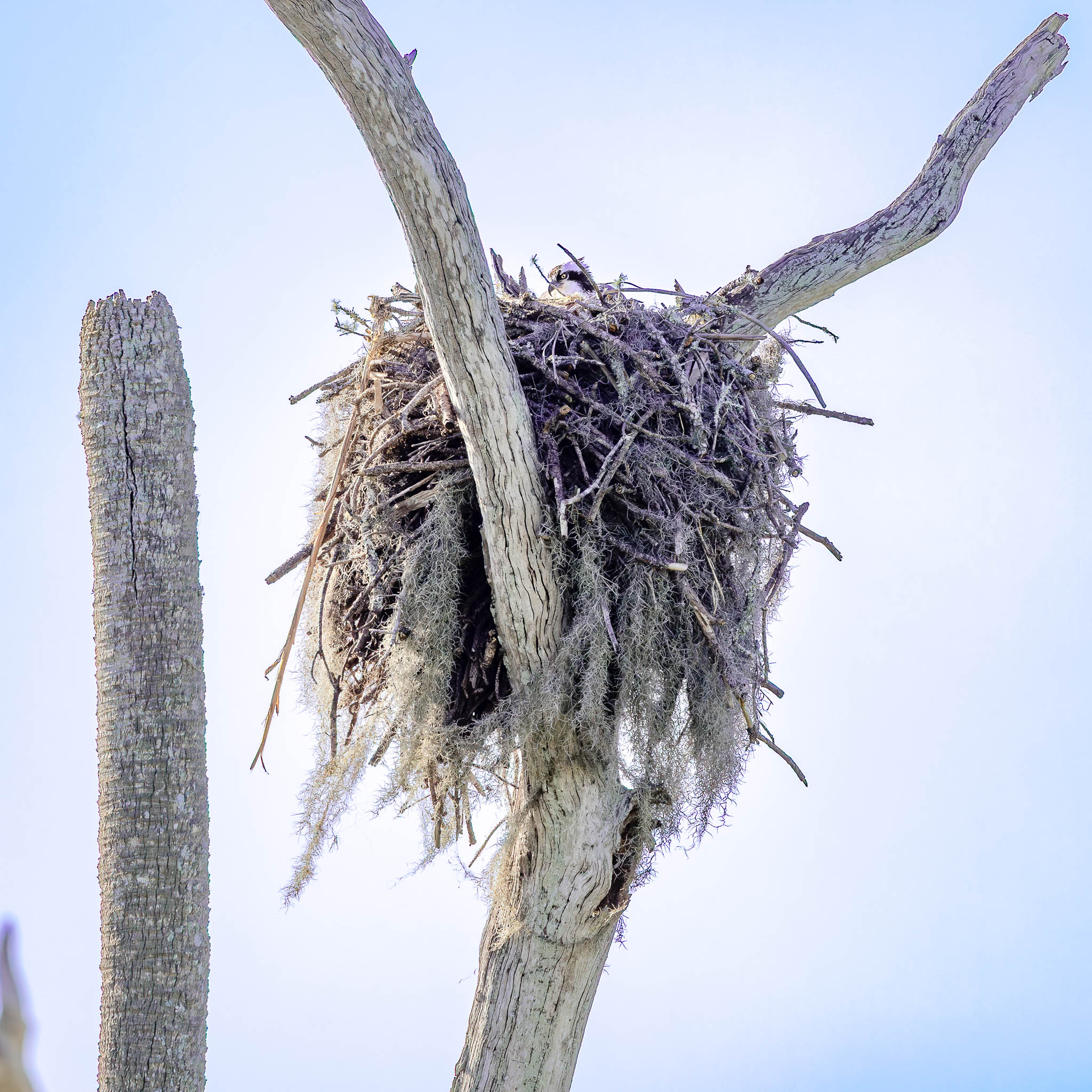
Small Chick Giant Home
Osprey
High above a sunny Florida marsh, a tiny Osprey chick peeks over the edge of an enormous stick nest, looking very small in a home built for sky kings.
- Super-sized homes: Ospreys build some of the biggest bird nests in North America—they can weigh as much as a small car!
- Fish lovers: Ospreys eat almost only fish and can dive feet-first into the water to catch them.
- Growing fast: That little chick will grow quickly and soon need all that space to stretch its wings.
Just Wondering......
Can you spot the baby peeking over the nest? Would you like to live in a nest this big?
Long-billed Curlew
- Straw Bill! The Long-billed Curlew has one of the longest bills of any bird, perfect for slurping snacks out of mud.
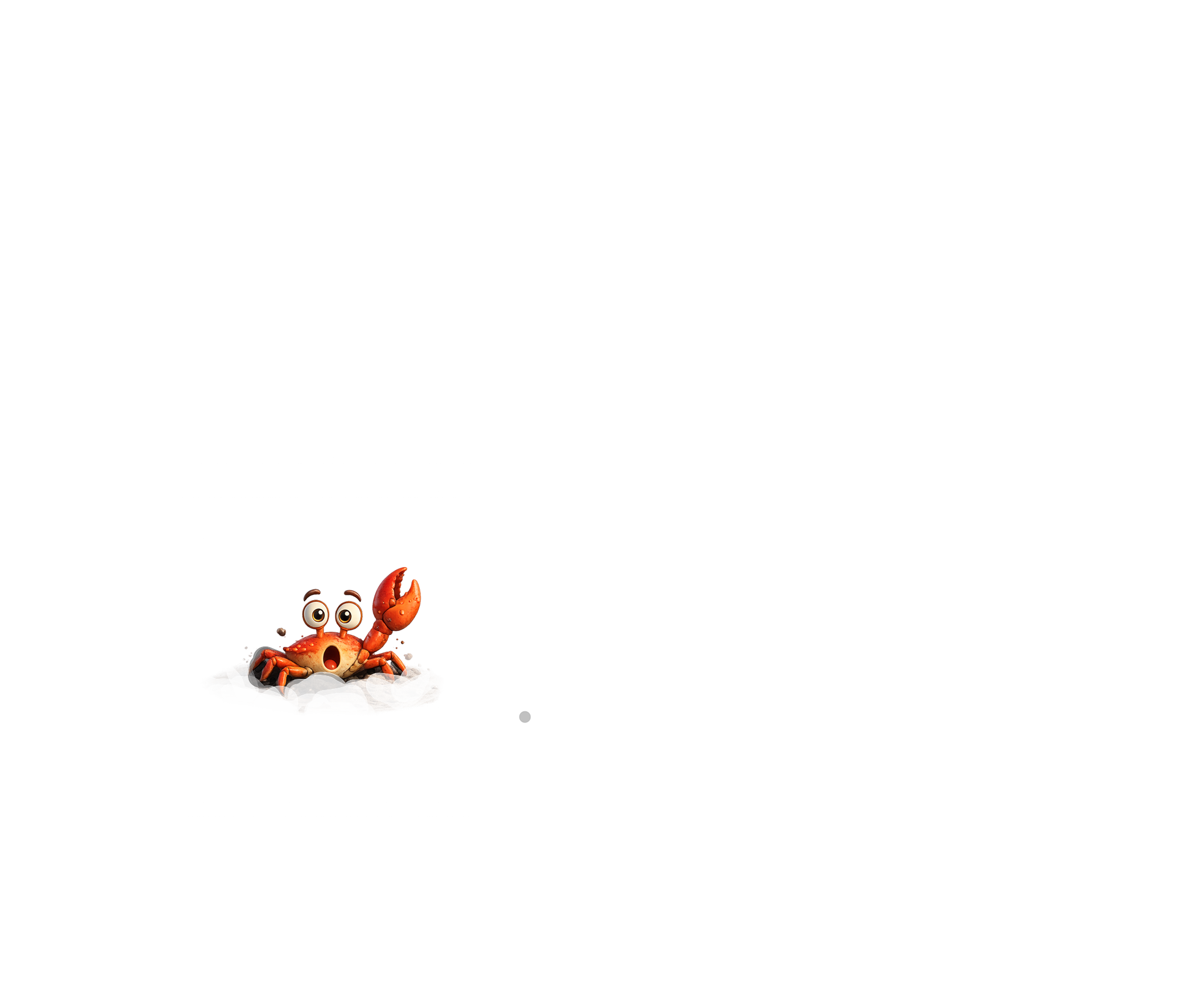
- Mud Detective: It uses its bill to feel for worms and crabs it can't even see.
- Texas Surprise: Seeing one for the first time is unforgettable—they look almost made up!
When I saw this Long-billed Curlew in Texas, I couldn't believe my eyes—it poked its super-long bill deep into the mud like a bendy straw, searching for a tasty snack hidden underground!
My beak goes waaaay down there!
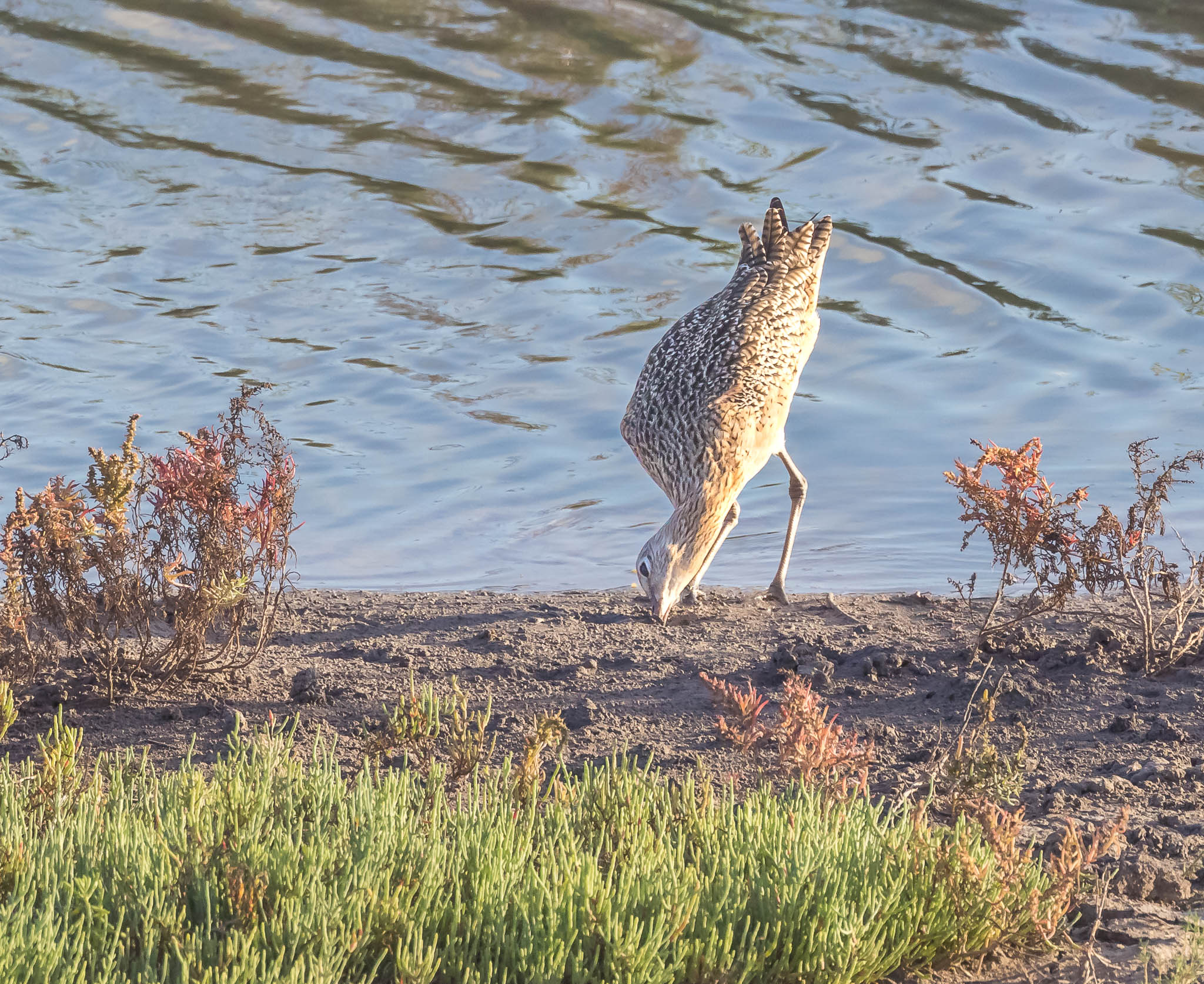
Head First Into Lunch

Look What I Found
Just Wondering......
Why do you think this bird needs such a long beak?
Who Hung the Sock?
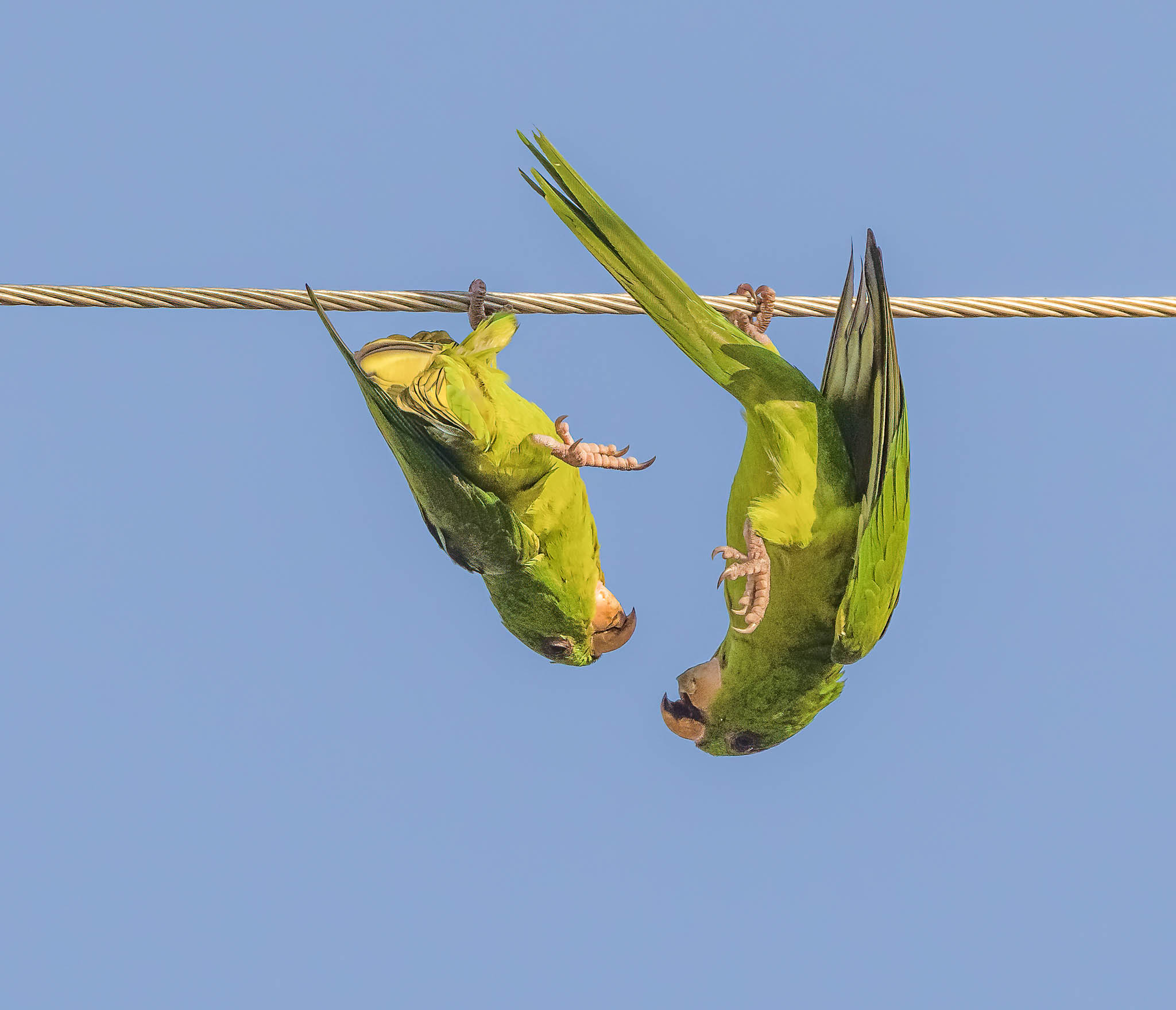
Hey Thats My Spot
Green Parakeet
Two Green Parakeets in Arizona clung upside down to a wire, squawking and flapping as if they were having a very serious—but very funny—bird argument.
- Upside-down pros: Green Parakeets love hanging, swinging, and climbing—wires are like playgrounds!
- Very chatty: They squawk and chatter a lot, especially when excited or annoyed.
- Team builders: These parrots build big stick nests where many families live together, like bird apartments.
Just Wondering......
What would you say if your friend was hanging next to you like this?
Do You Want to Dance?
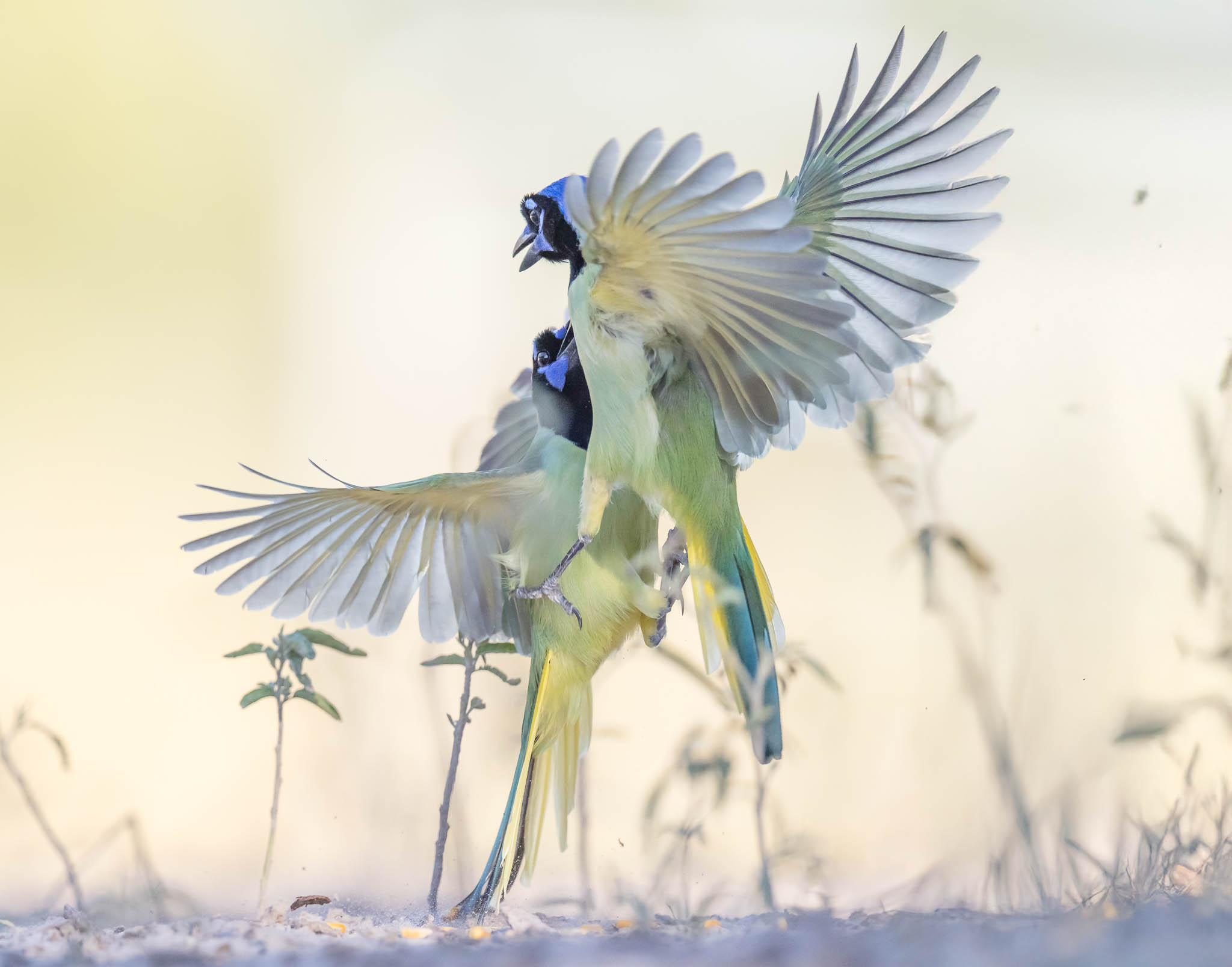

Dance Time
Green Jay
Two Green Jays stood together in the desert, and suddenly—whoosh!—they jumped into the air, flapping their wings like they were dancing or play-fighting in the sky.
- Dance or debate? Green Jays sometimes jump, flap, and face off to show who's boss—or just to show off!
- Super colorful: Their green, blue, and yellow feathers make them look like flying crayons.
- Very smart birds: Green Jays are clever and curious, just like their jay cousins.
Just Wondering......
Do you think these birds are dancing or arguing?
Look at my long, pointy tail!
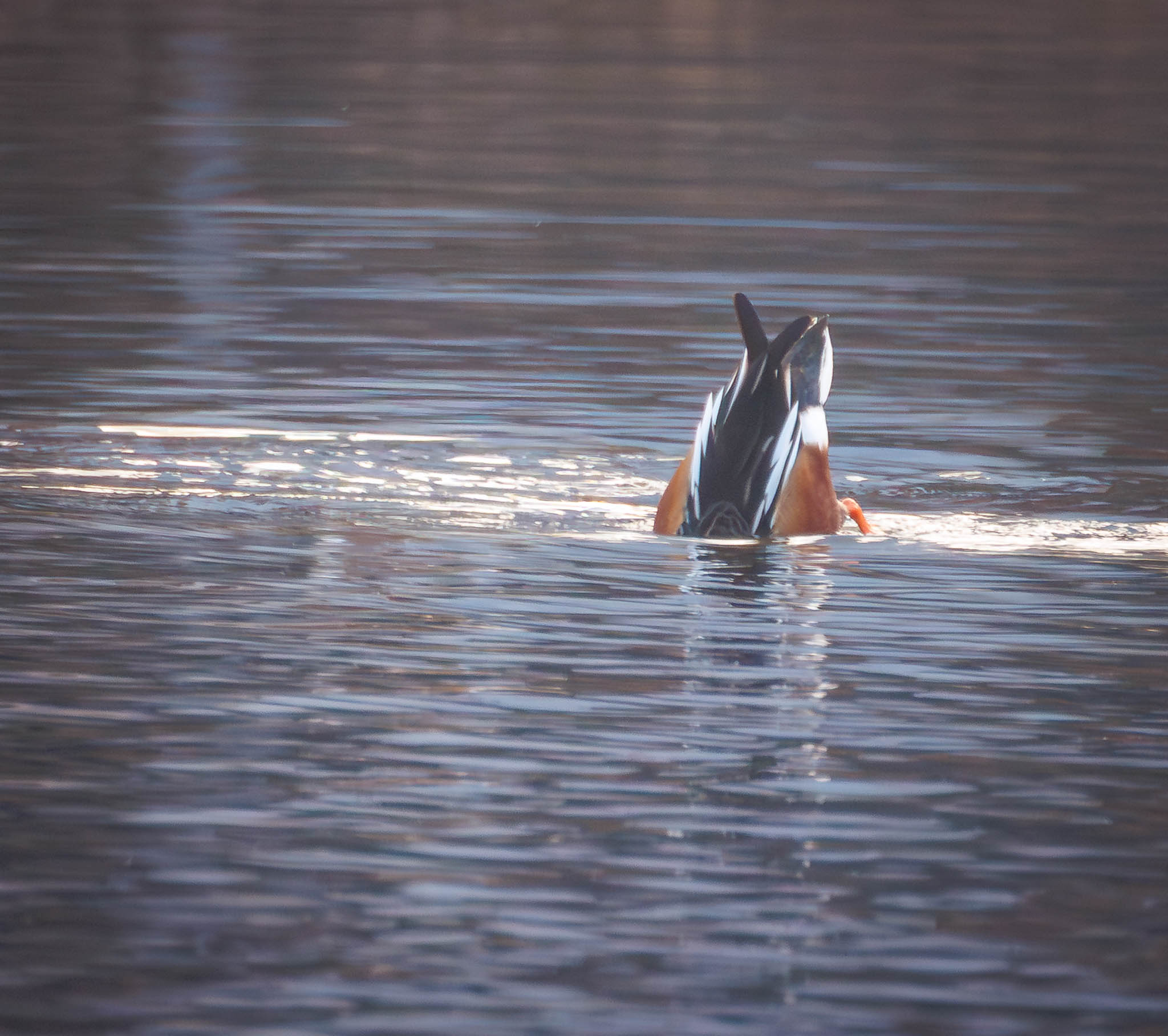
Heads Down Tails Up
Northern Pintail
This Northern Pintail flipped upside down, bottom in the air, while it searched the water for tasty treats below the surface.
- Bottoms-up feeders: Dabbling ducks tip forward so they can reach food underwater without diving.
- Long, fancy tails: Northern Pintails are named for their long, pointy tail feathers.
- Team snackers: Ducks often feed near each other so they can find food faster and stay safe.
Just Wondering......
Why do you think this duck is upside down?
Do you like my fancy mask?
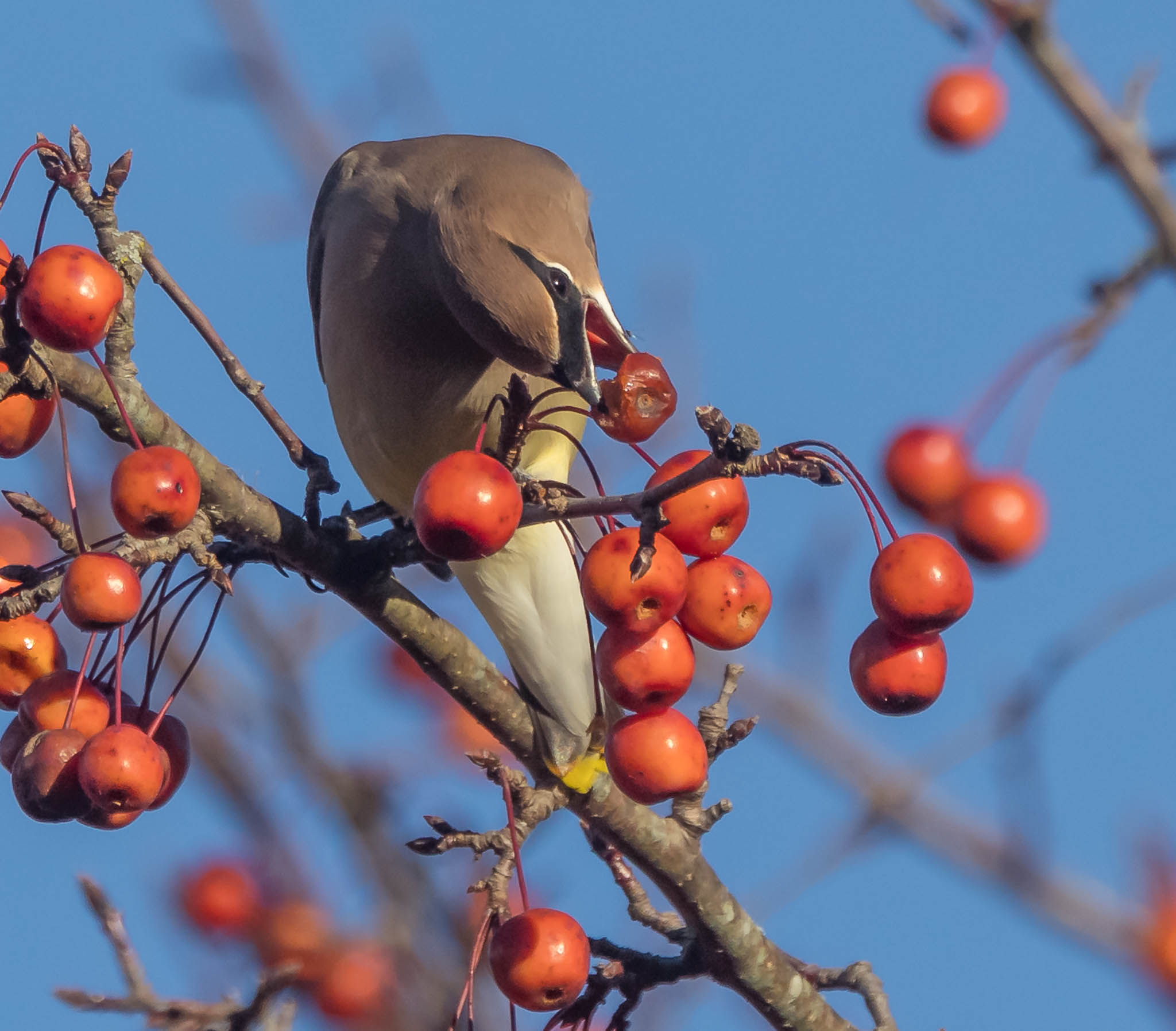
Berry Bendy Bird
Cedar Waxwing
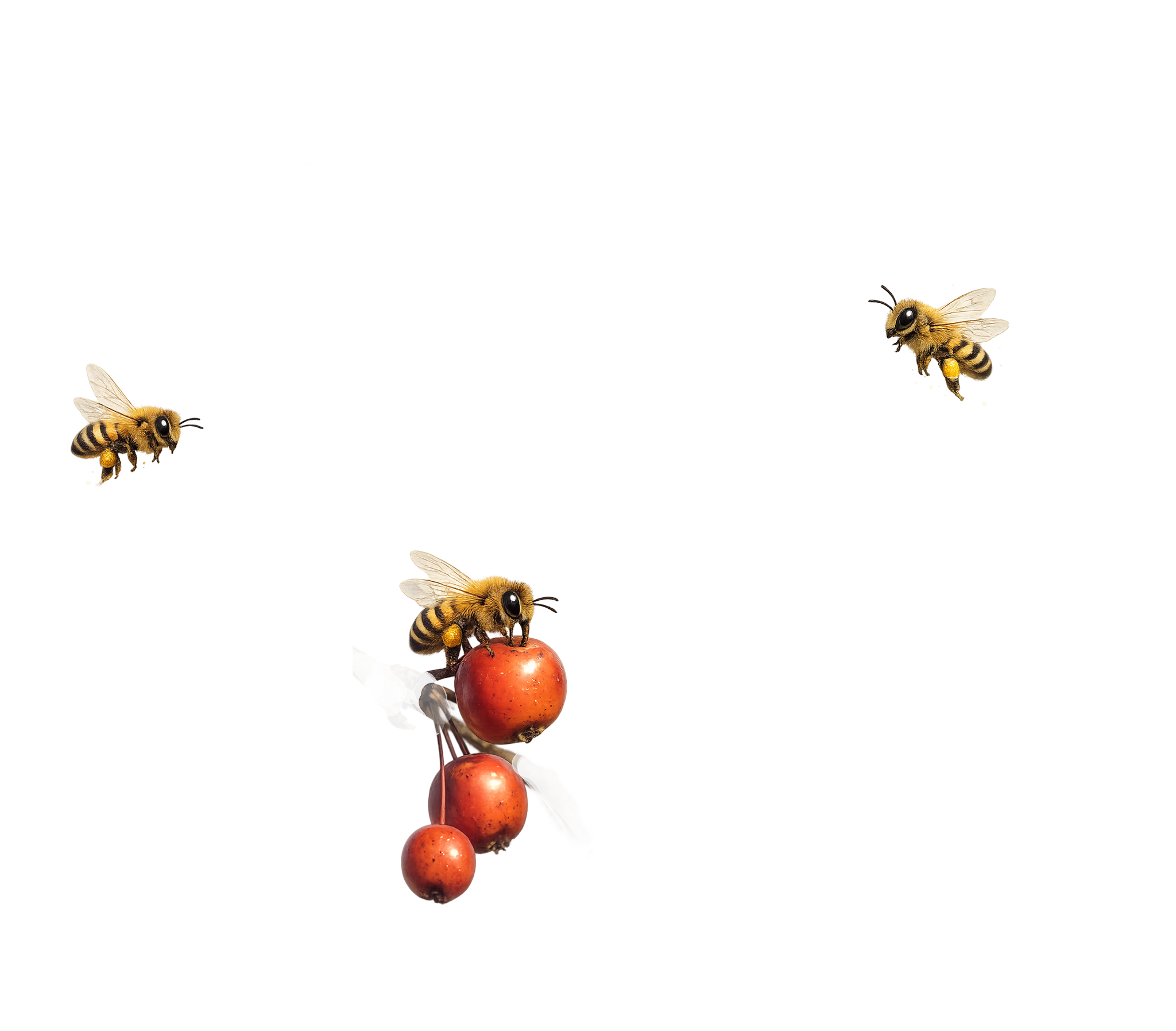
This Cedar Waxwing twisted and stretched like a little gymnast just to grab a bright red winter crabapple.
- Fruit lovers: Cedar Waxwings love berries so much that fruit is their favorite food!
- Fancy feathers: They have tiny red 'wax drops' on their wings that look like melted candle wax.
- Sharing birds: Sometimes they pass berries to each other like a game of catch.
Just Wondering......
Do you think this bird is quiet… or likes to chatter? If you had wings, would you fly alone or with friends?
Do you see my red eyes?
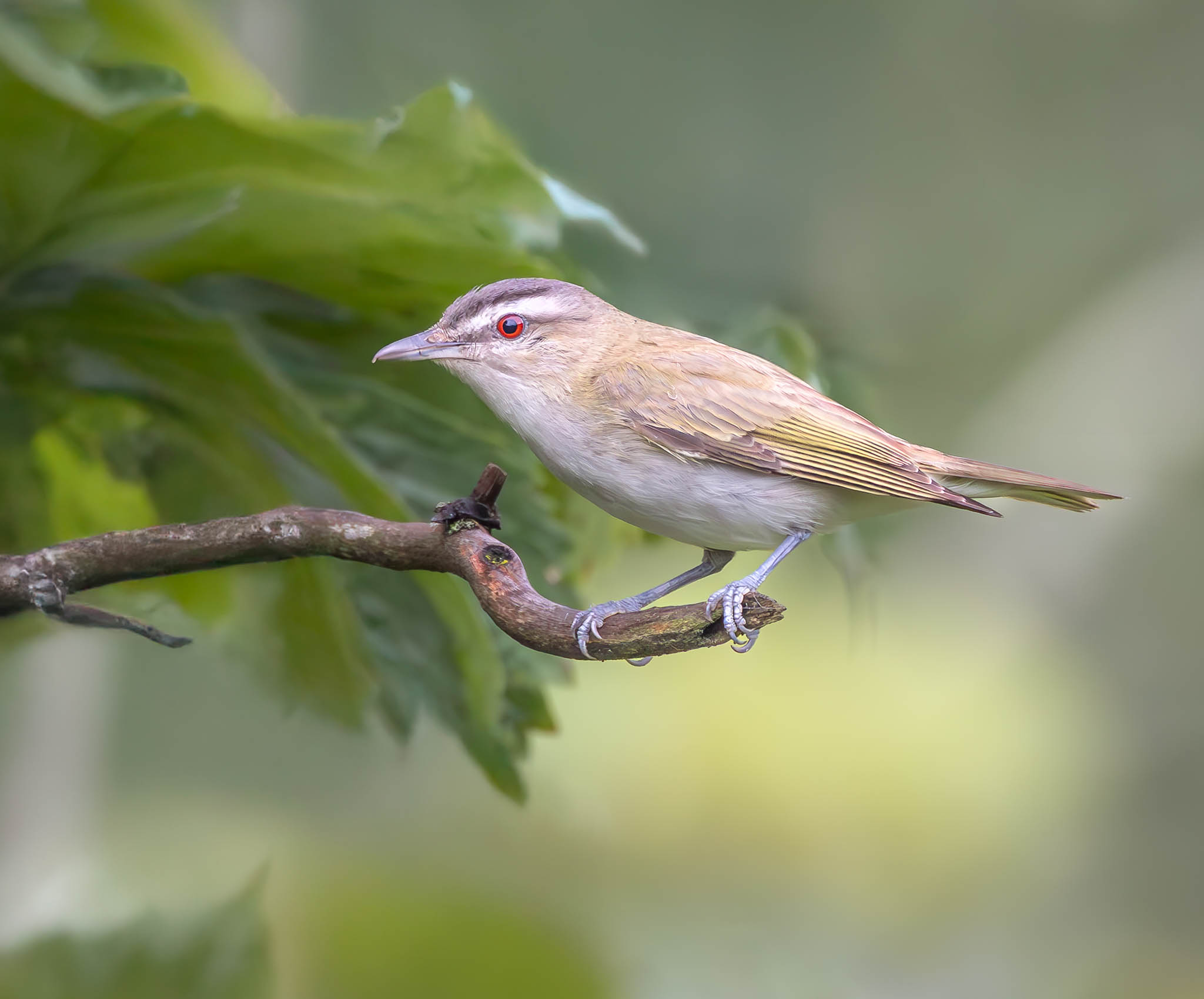
Little Bird Big Red Eye
Red-eyed Vireo
Perched quietly on a leafy branch, a Red-eyed Vireo watched the forest with its bright ruby eye, looking calm, curious, and perfectly named.
- Name Match: The Red-eyed Vireo gets its name from its bright red eyes—just like a tiny jewel!
- Song Machine: It is one of the most talkative birds in the woods and can sing hundreds of different songs in a day.
- Bug Hunter: Red-eyed Vireos love to eat insects, helping keep forests healthy and balanced.
Just Wondering......
Can you point to the bird's beak and guess what it might eat?
Ooo… jelly AND oranges? Fancy!
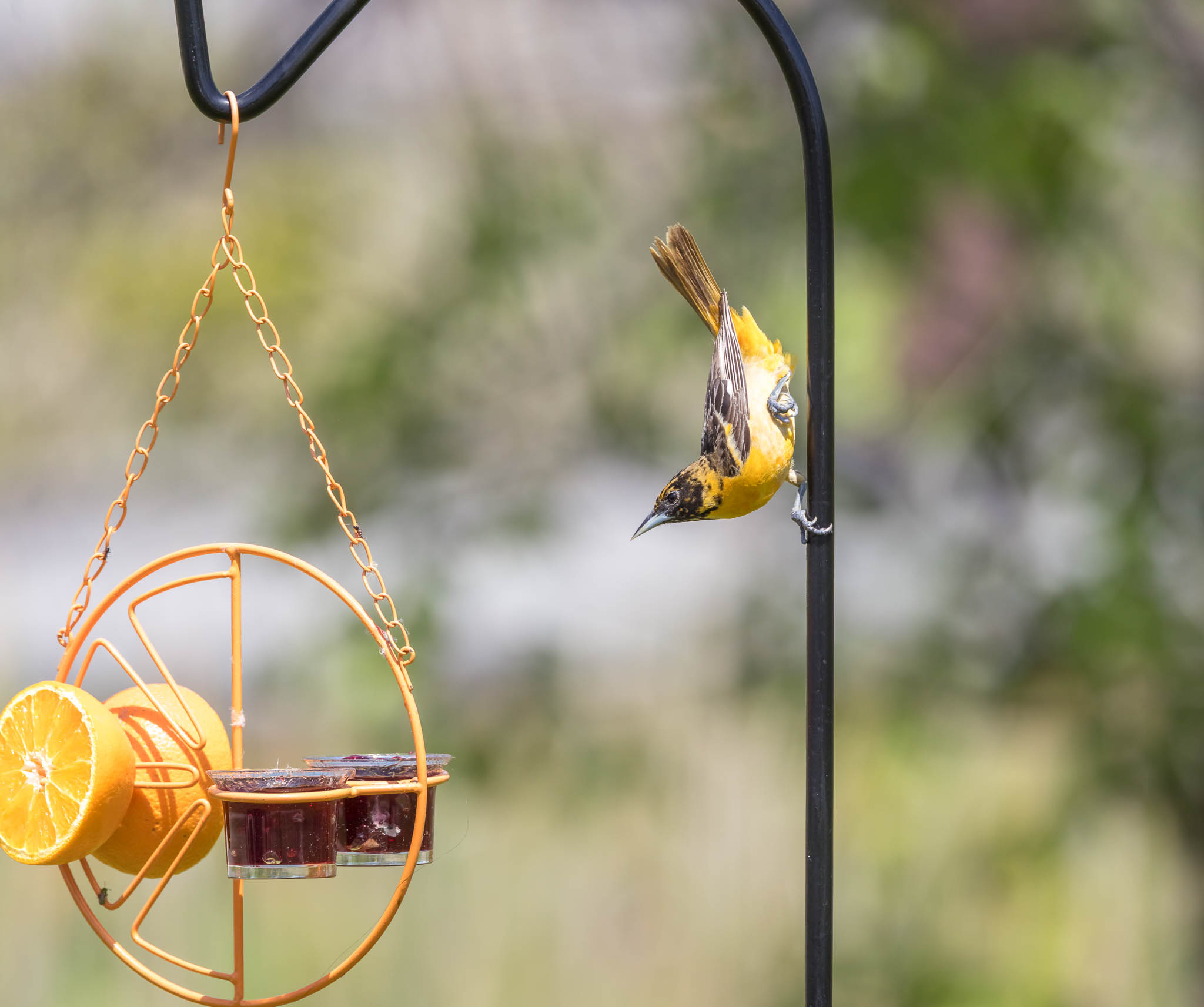
The Upside Down Taste Test
Baltimore Oriole
Hanging upside down like a tiny gymnast, a bright Baltimore Oriole peeked at the orange and grape jelly, as if deciding which sweet treat to try first.
- Sweet Tooth Bird: Baltimore Orioles love fruit, nectar, and jelly—just like a birdie dessert!
- Upside-Down Experts: They can hang upside down while eating, just like little feathered acrobats.
- Orange Fashion: Their bright orange feathers help them stand out like a flying sunset.
Just Wondering......
What snack do you think the oriole likes best—orange or jelly? If you made a bird feeder, what food would YOU put out?
Do you like my fancy necklace?
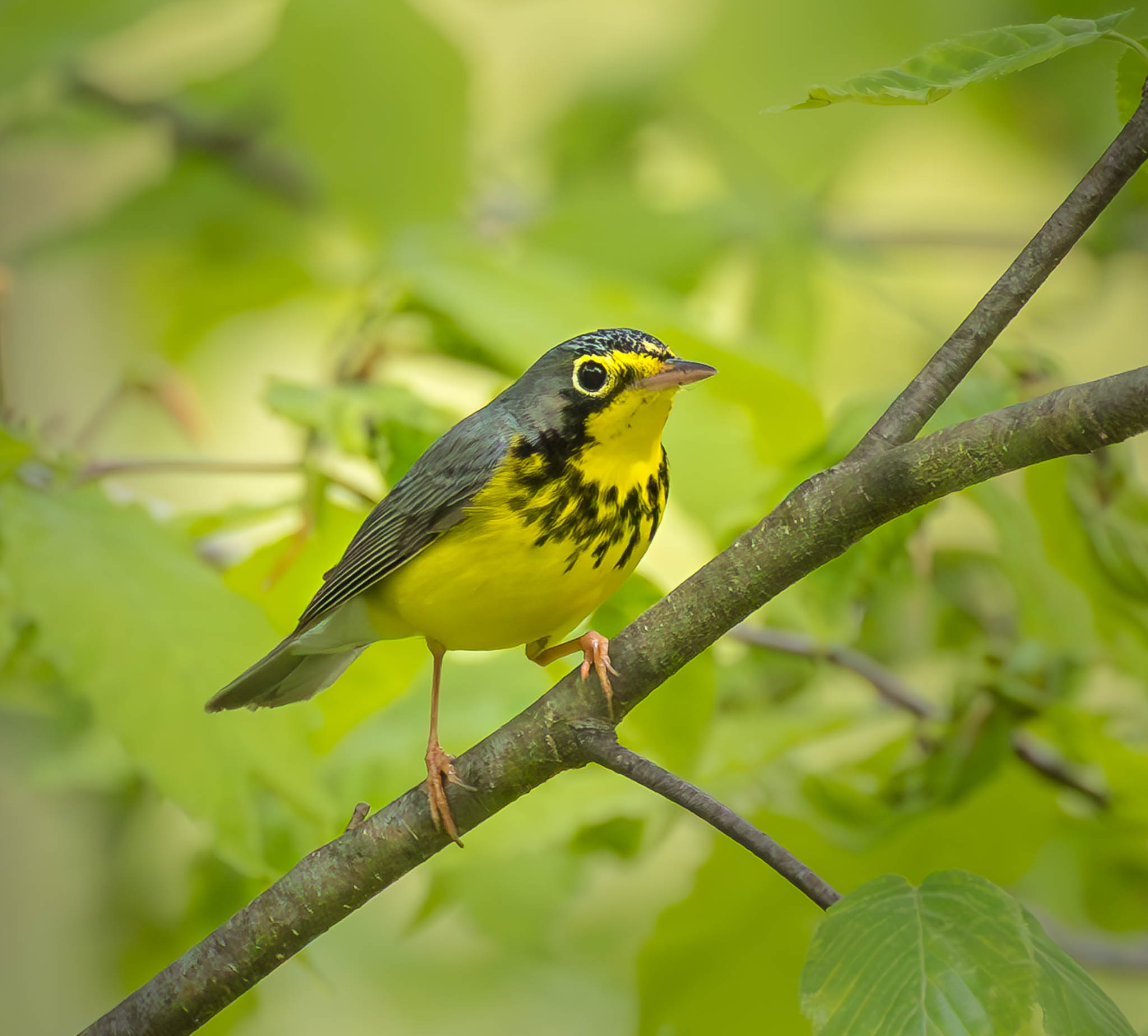
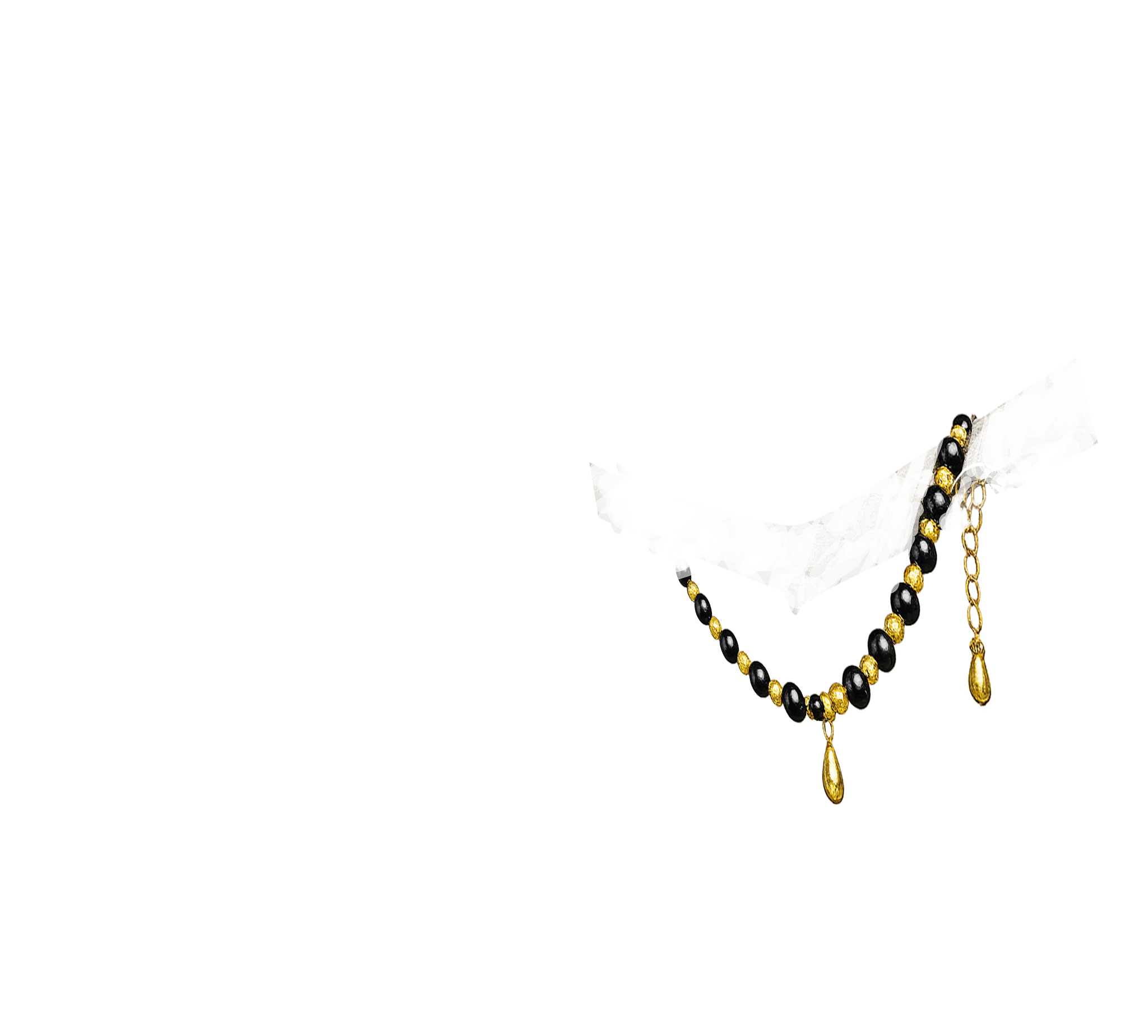
Natures Necklace
Canada Warbler
This Canada Warbler looks like it's wearing a fancy feather necklace made just for the forest runway.
- Necklace Bird: The dark stripes on its chest look like a tiny feather necklace!
- Bug Hunter: Canada Warblers love to eat insects—mosquitoes, beetles, and caterpillars are on the menu.
- Super Traveler: Even though it's small, this bird flies all the way from South America to North America every spring!
Just Wondering......
Would you rather be bright like this bird, or camouflaged?
Hey! I found this snack first!
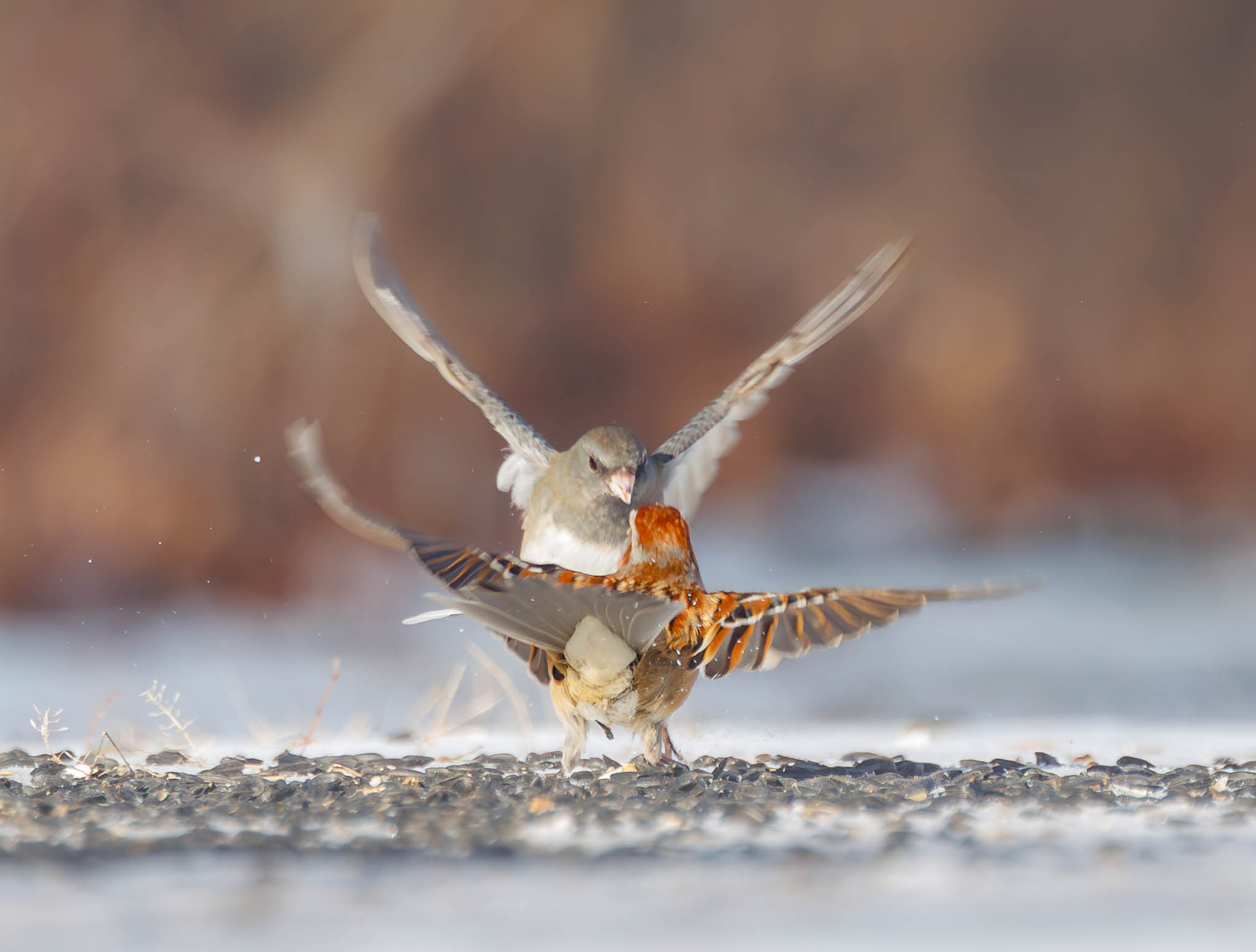
Mine Not Yours
American Tree Sparrow & Dark-eyed Junco
In a flurry of wings and feathers, an American Tree Sparrow boldly chased a Dark-eyed Junco away from a tiny treasure of seeds in the snow.
- Snow Lovers: American Tree Sparrows don't mind cold weather—they actually like winter!
- Tiny but Tough: Even though they're small, they can be brave when protecting food.
- Travelers: These sparrows fly all the way from the Arctic to spend winter in places like Pennsylvania.
Just Wondering......
Do you think winter makes sharing harder?
Run!!! The wave is coming!
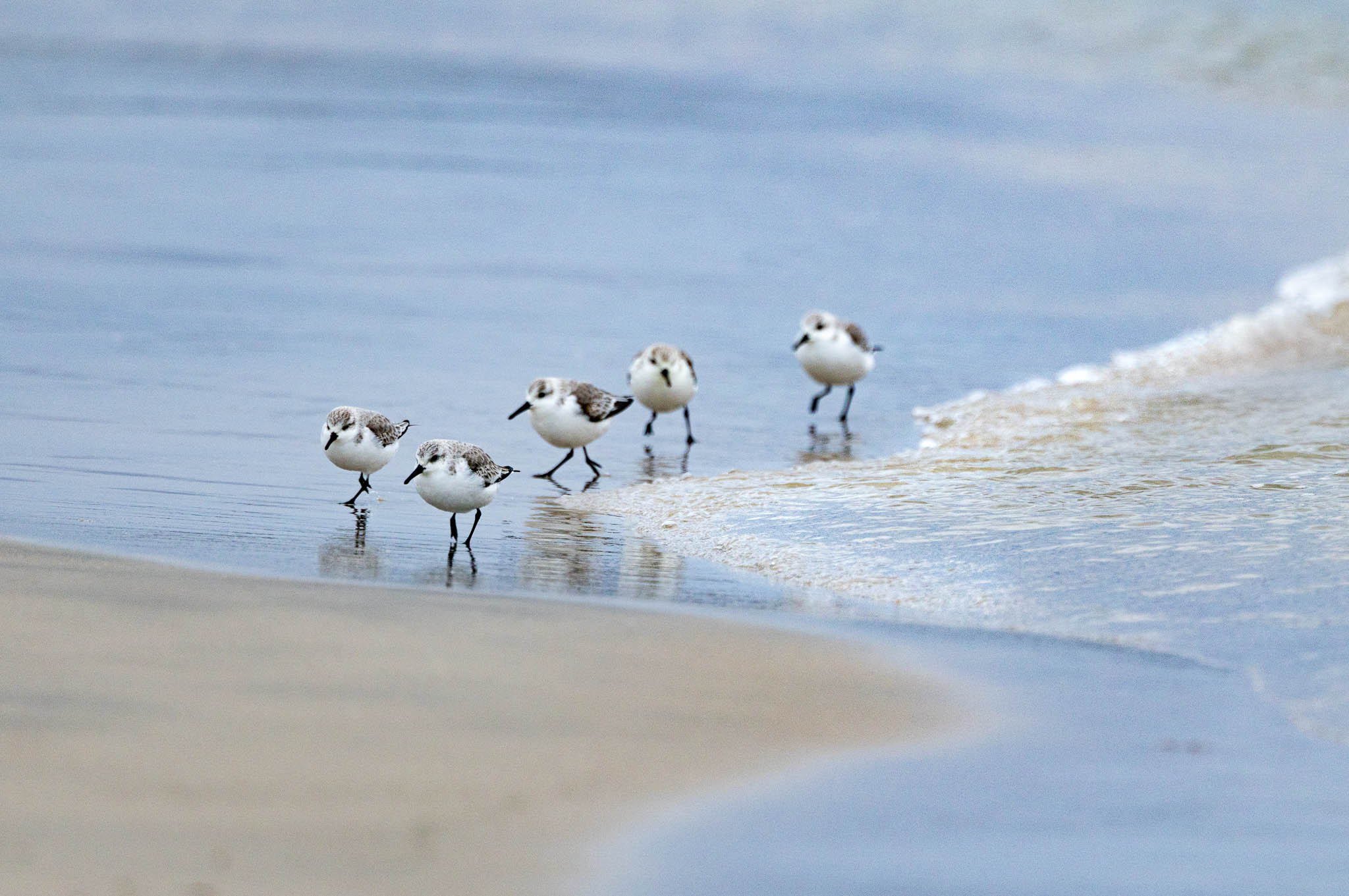
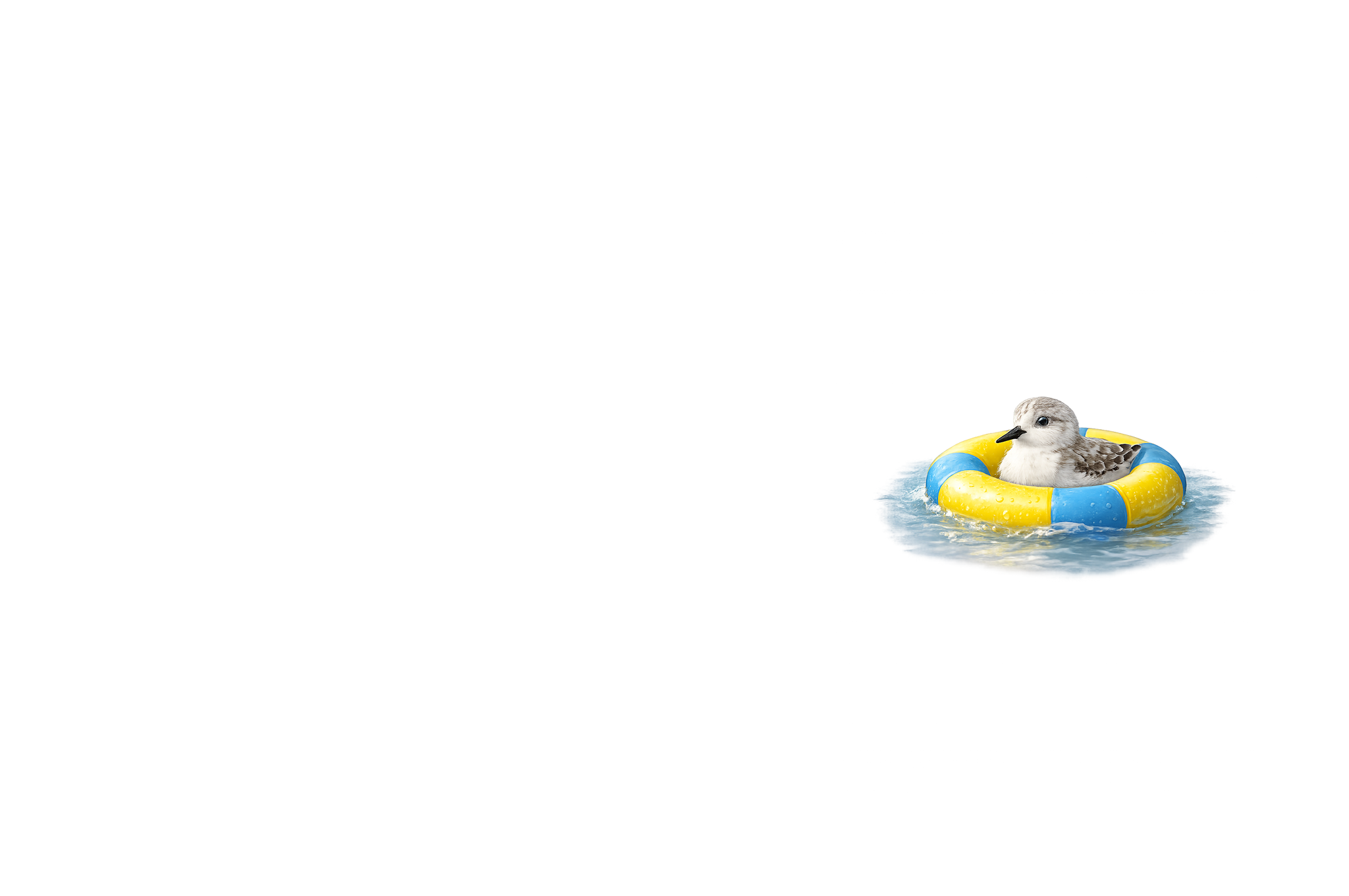
Tiny Wave Runners
Sanderlings
Like tiny wind-up toys, Sanderlings sprinted from the crashing waves and then dashed right back as the surf pulled away.
- Beach Sprinters: Sanderlings are famous for running super fast along the shore—just like tiny beach racers!
- Wave Chasers: They run away from waves and then zoom right back to look for food in the wet sand.
- World Travelers: Some Sanderlings fly thousands of miles every year, traveling from the Arctic to warm beaches!
Just Wondering......
Do these birds look scared, excited, or playful to you?
Did you see my orange crown?
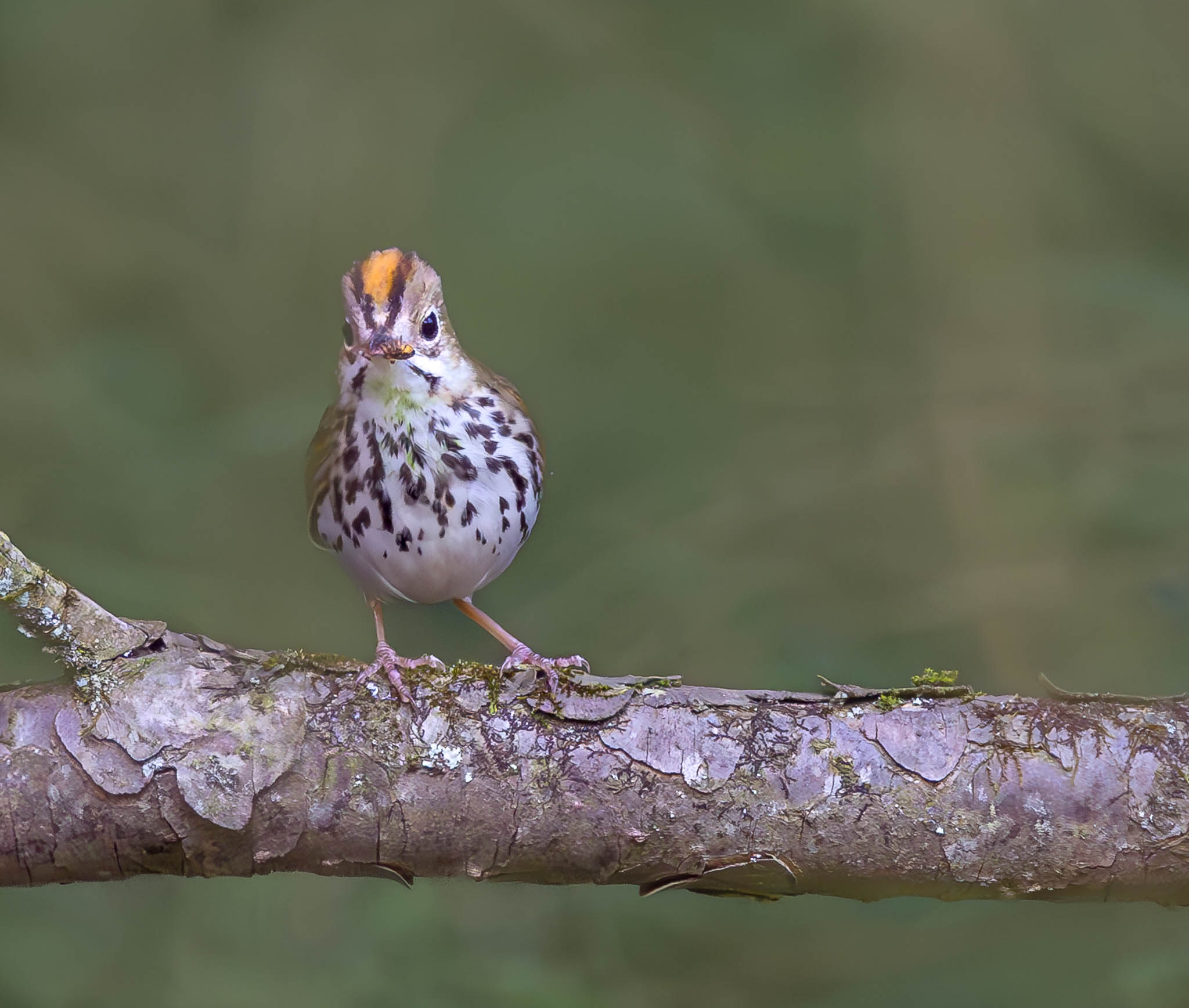

A Flash of Orange
Ovenbird
This little bird looks curious—and if you look closely, you can see its tiny orange crown!
- Secret crown: The Ovenbird has a hidden orange stripe on its head that it only shows sometimes.
- Funny name: It's called an Ovenbird because its nest looks like a tiny oven made of leaves.
- Loud singer: Even though it's small, its song is one of the loudest in the forest!
Just Wondering......
Why do you think this bird likes walking on the ground instead of flying?
Do my feathers look fluffy enough?
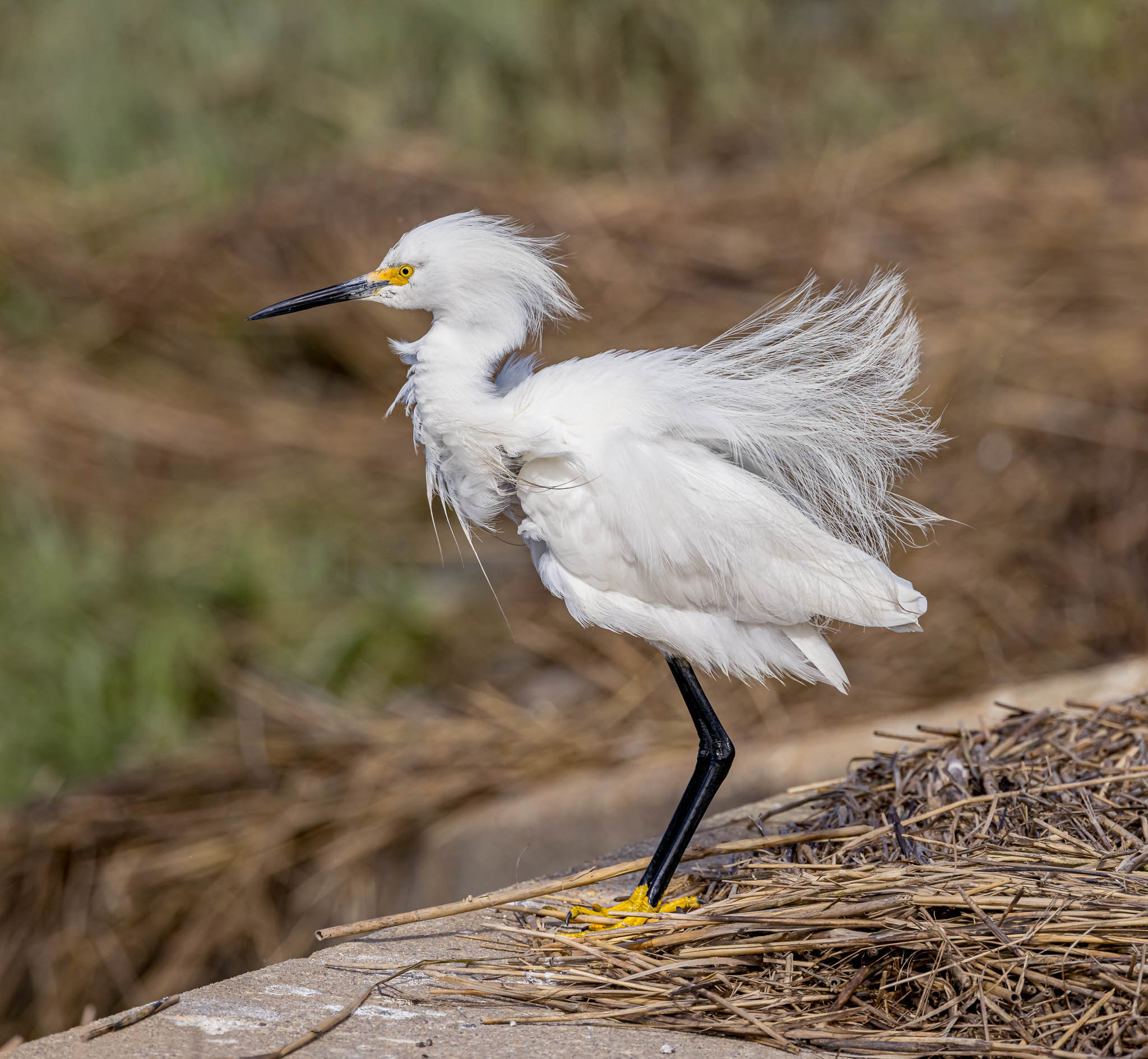
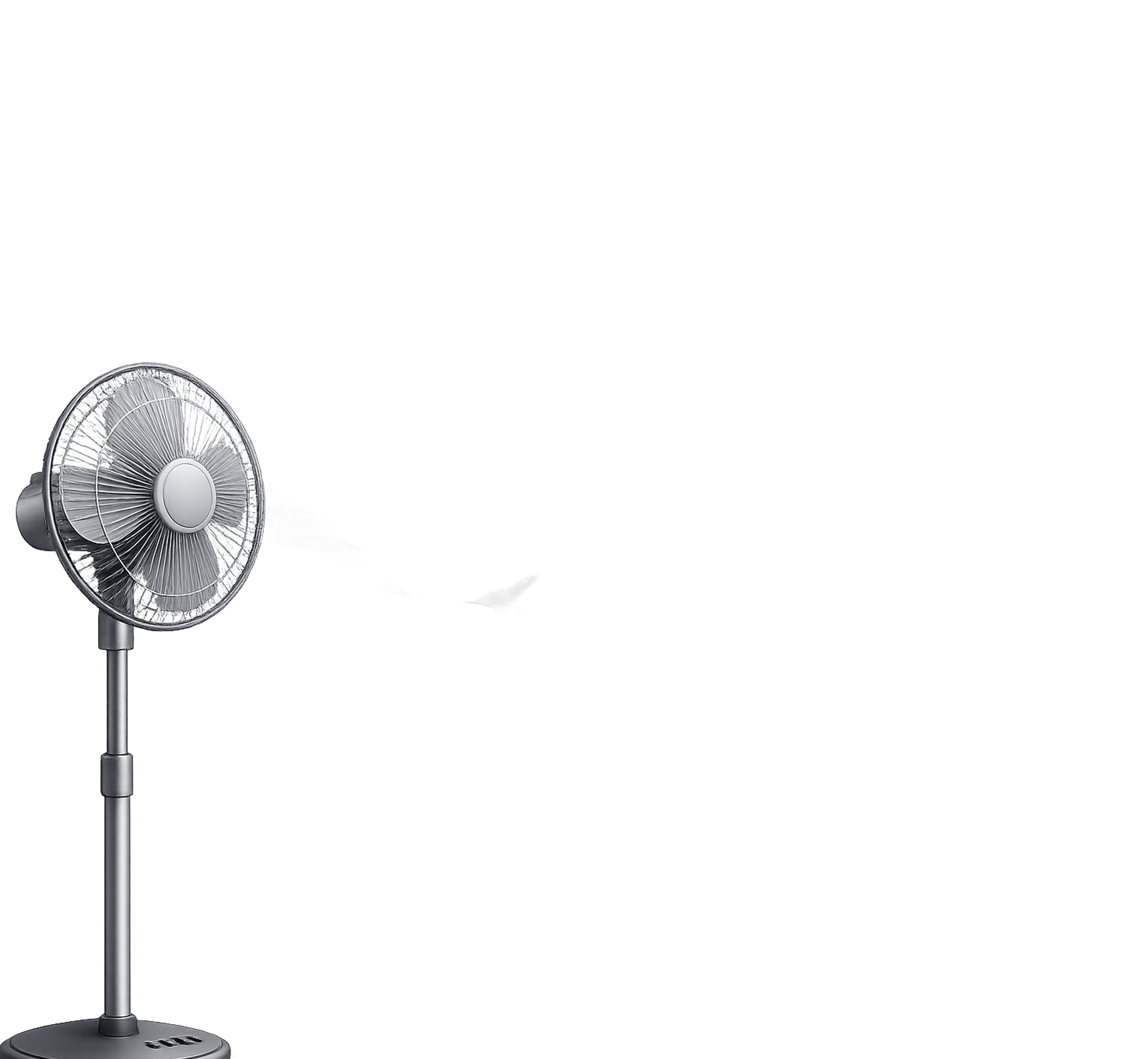
Golden Feet Silvery Feathers
Snowy Egret
The wind lifted the Snowy Egret's feathers, but its long black legs and bright yellow feet kept it firmly in place.
- Yellow feet: Snowy Egrets use their bright feet to stir up fish and scare prey into moving.
- Fancy feathers: During nesting season, they grow long, wispy feathers called plumes.
- Fast hunters: They run, jump, and even spin in circles to catch fish!
Just Wondering......
Do you think this bird moves slowly or quickly when it hunts?
I'm Right Out of a Coloring Book!
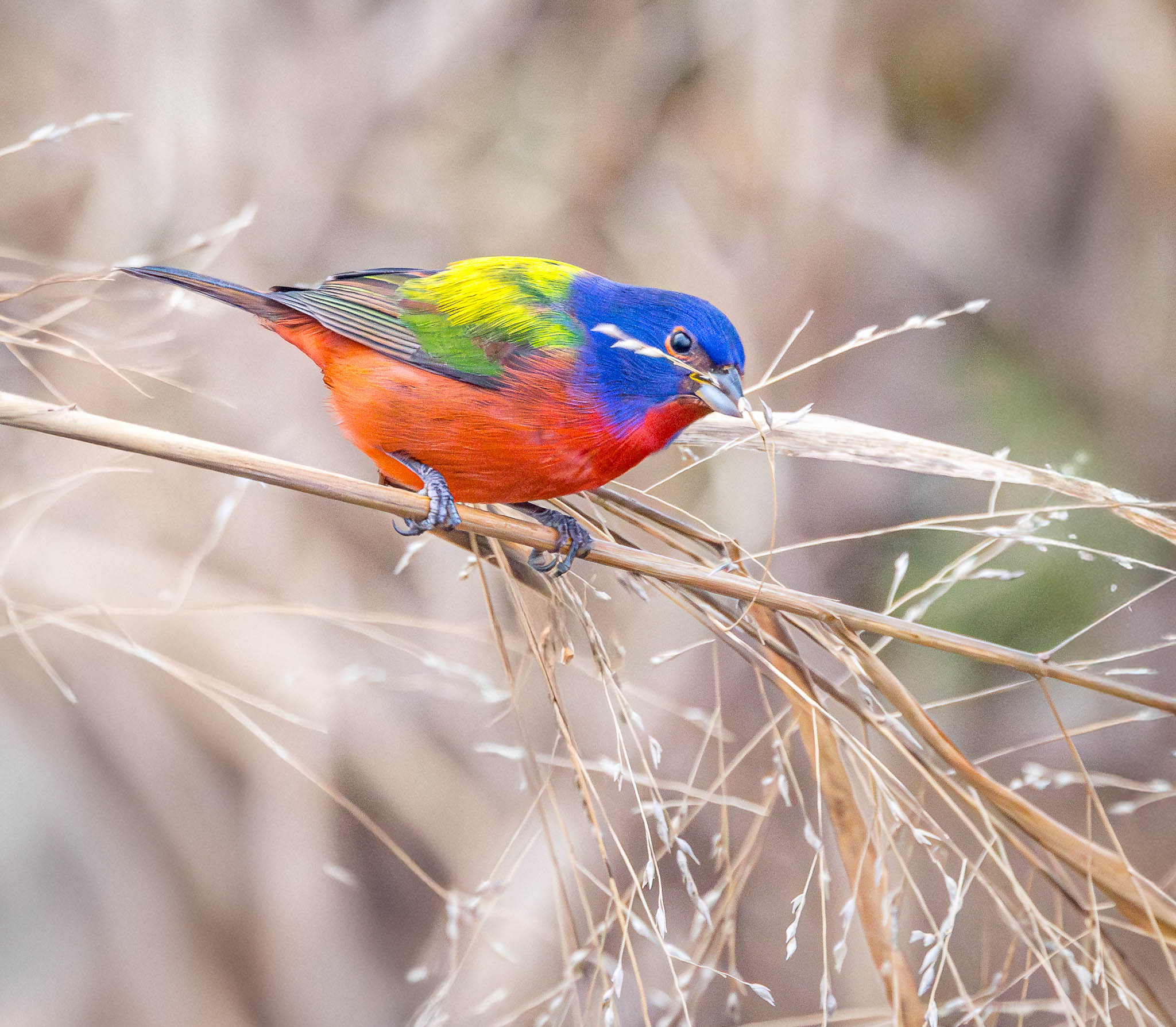
Crayon Bird
Painted Bunting
When I saw this bird, I thought, if kids could color a bird with crayons, it might look exactly like this!
- Super colorful: Male Painted Buntings are some of the brightest birds in North America.
- Seed lovers: They eat seeds, berries, and tiny insects.
- Travelers: Many Painted Buntings migrate long distances between summer and winter homes.
Just Wondering......
If you could color a bird any way you wanted, what colors would you choose?
American Flamingo
- Pink from food: Flamingos aren't born pink! They turn pink because they eat shrimp and tiny creatures with natural orange pigments.
- Upside-down eating: Flamingos often eat with their heads upside down, using special bills to filter food from the water.
- Super-long legs: Their long legs help them wade into deeper water where other birds can't reach their favorite snacks.
An American Flamingo dips its long neck into the water, searching for tiny treats that help paint its feathers a brilliant pink.
I know there's something tasty in the mud…
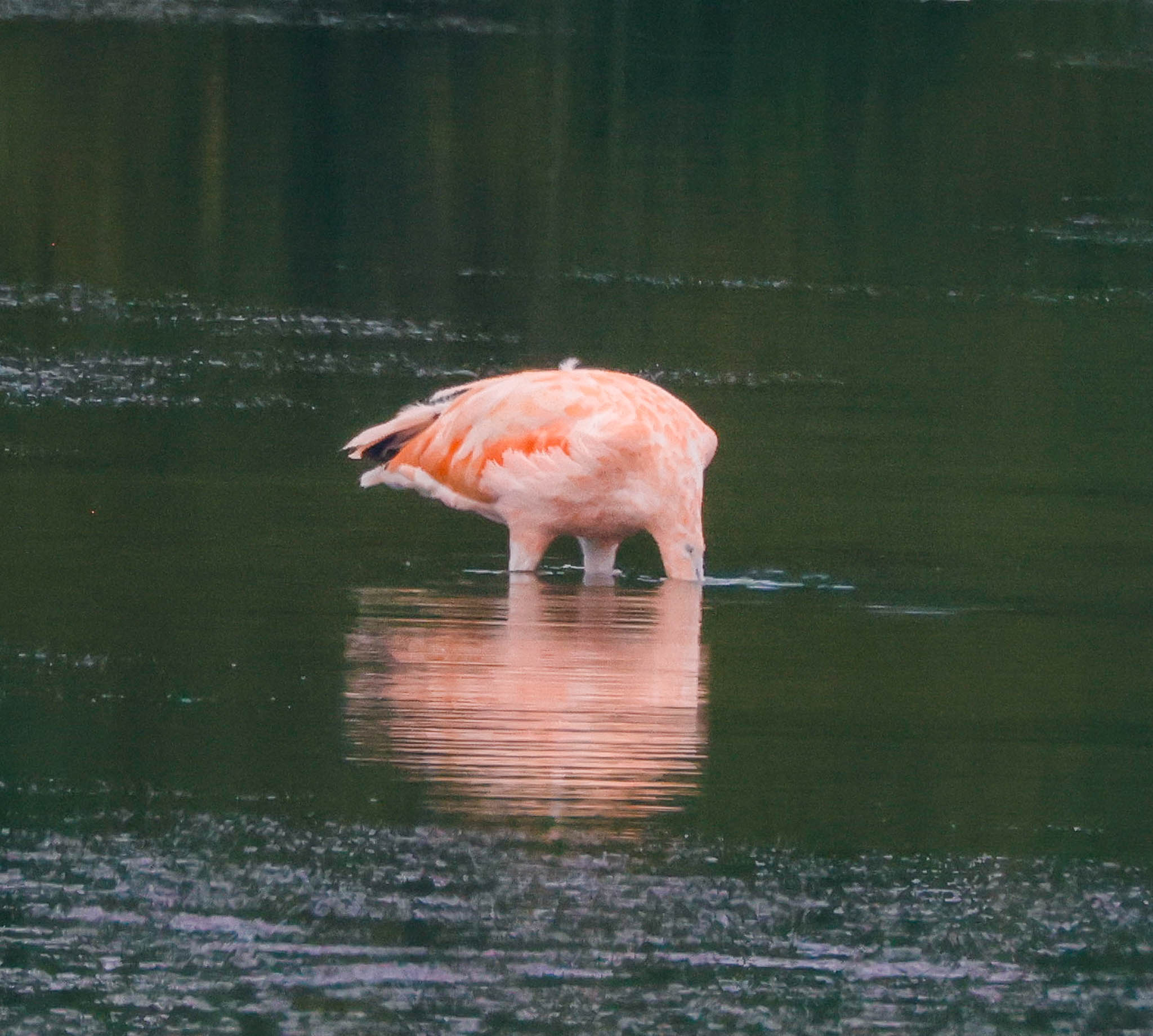
Pretty in Pink

Head First Hunter
Just Wondering......
Which flamingo would you rather be right now — the eater or the watcher?
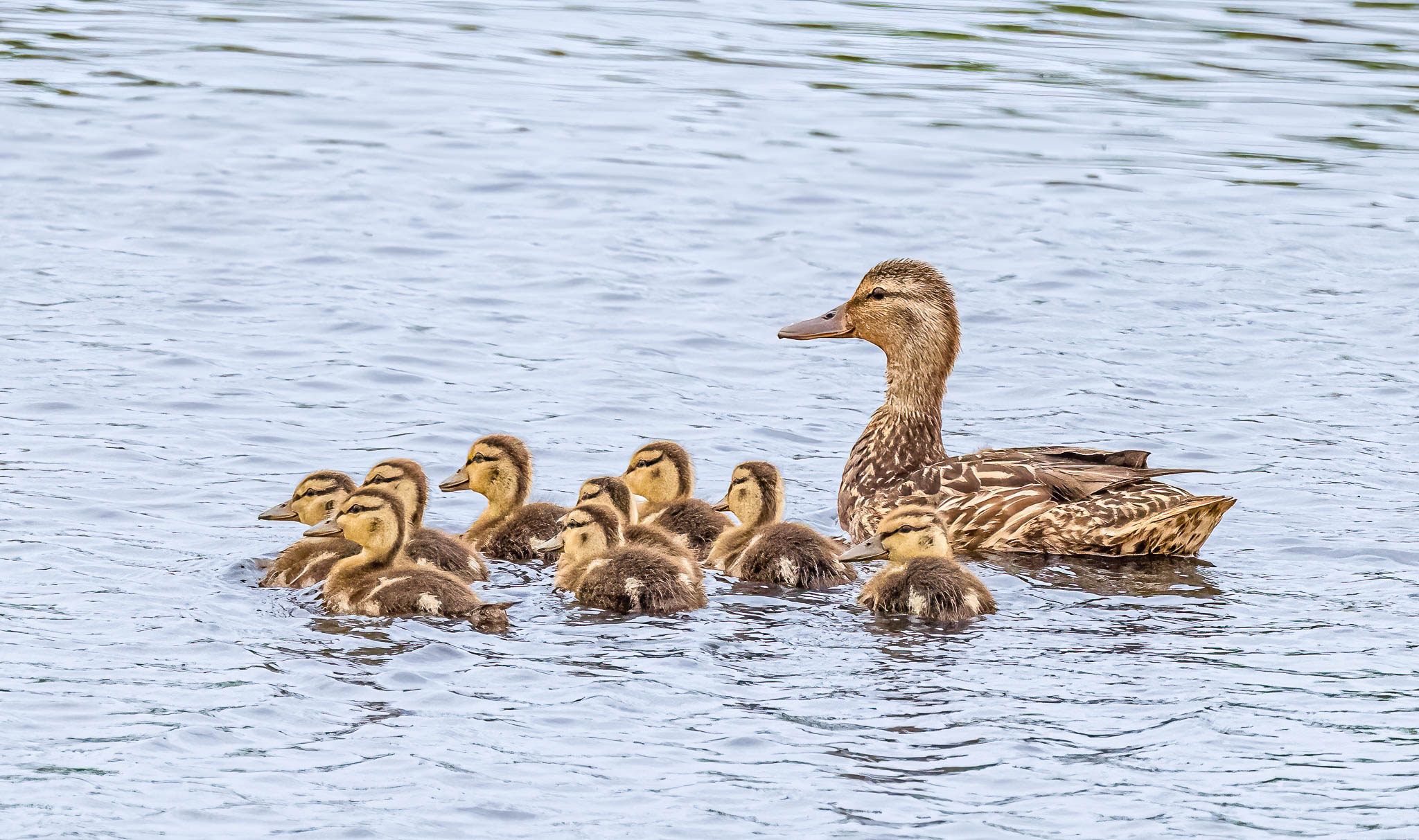
Being a mom is a big job!
Mom's Floating Family
Mallard
A mother Mallard gently guides her nine fluffy ducklings across the water, keeping them close and safe in a perfect little floating family.
- Big families: Mallard moms can have lots of babies—sometimes more than ten ducklings at once!
- Stay together: Ducklings follow their mom everywhere, like a tiny parade on the water.
- Water babies: Ducklings can swim just hours after they hatch because their fluffy feathers help them float.
Just Wondering......
Why do you think the ducklings stay so close to their mom?
Mom said stay inside!

Owlets Forest Hide and Seek
Barred Owl
Two Barred Owl owlets peek from their tree-cavity nest—one curious and bold, the other quietly shy—watching the world from their hidden woodland home.
- Tree homes: Barred Owls often nest inside holes in old trees instead of building nests.
- Big eyes: Owlets have huge eyes that help them see in the dark when they grow up.
- Different personalities: Even baby owls can act differently—some are curious, and some are shy!
Just Wondering......
Would you peek out or stay inside if this was your nest?
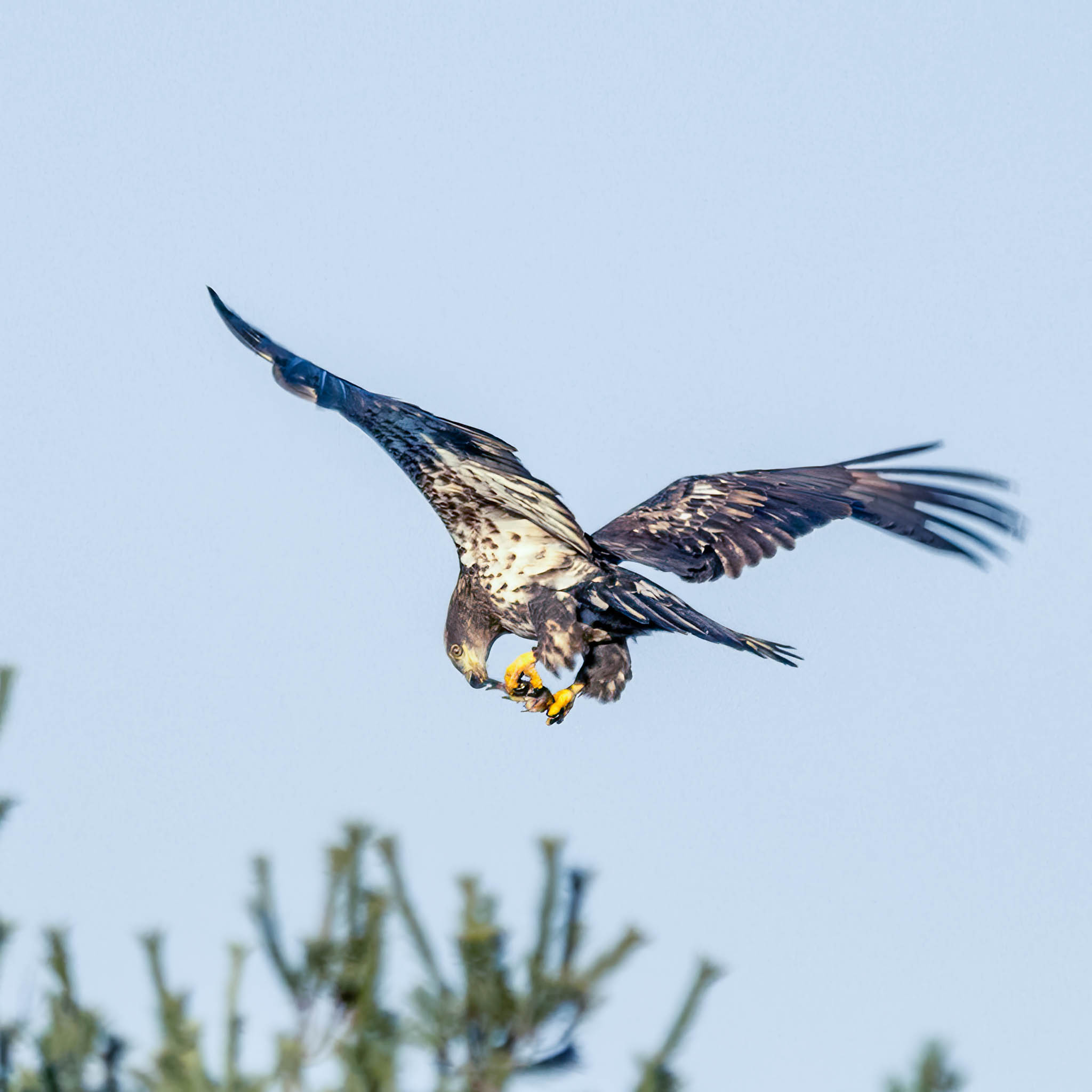
Snack time… on the go!
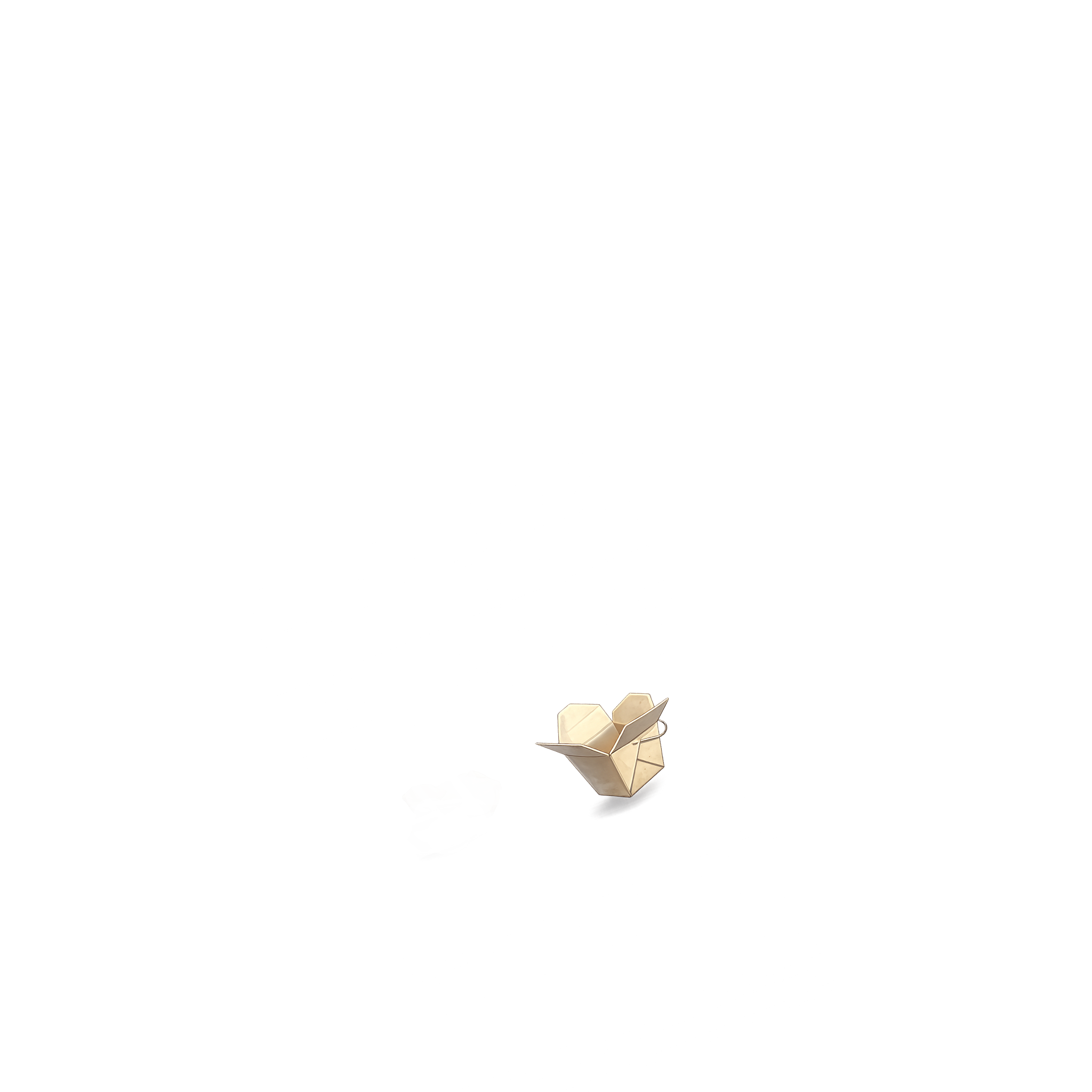
Fast Food, Eagle-Style
Juvenile Bald Eagle
A juvenile Bald Eagle streaks across the sky, gripping its prey and calmly eating lunch in mid-flight—an impressive feat of balance and power.
- Super grip: Bald Eagles have incredibly strong talons that help them carry food while flying.
- Young look different: Juvenile Bald Eagles are brown and mottled—they don't get the famous white head and tail until they're about 4-5 years old.
- Sky hunters: Eagles can spot prey from very far away, even while soaring high in the air.
Just Wondering......
Have you ever tried to eat while walking or running? What do you think would happen if it dropped its food?
I think I can… I think I can!
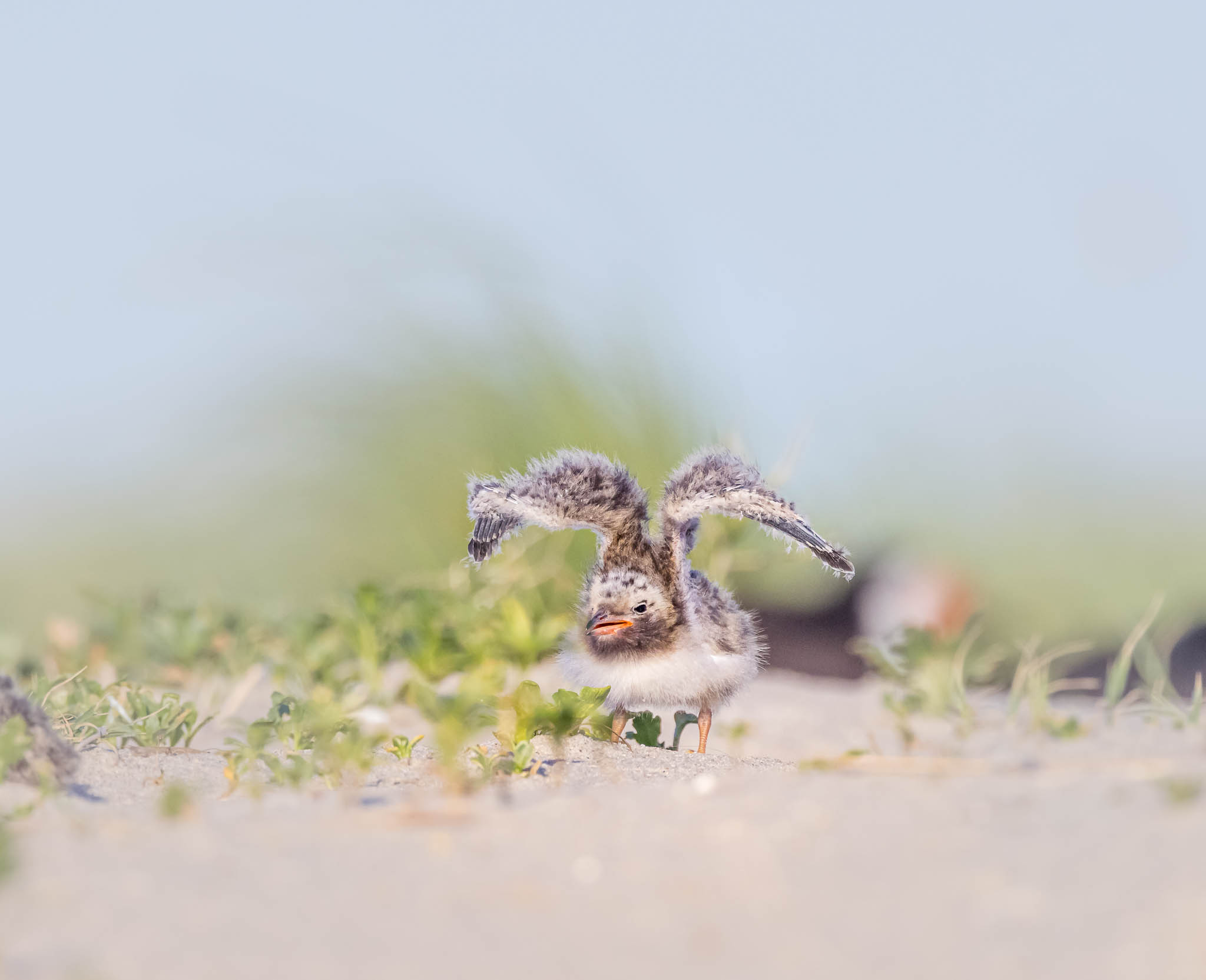
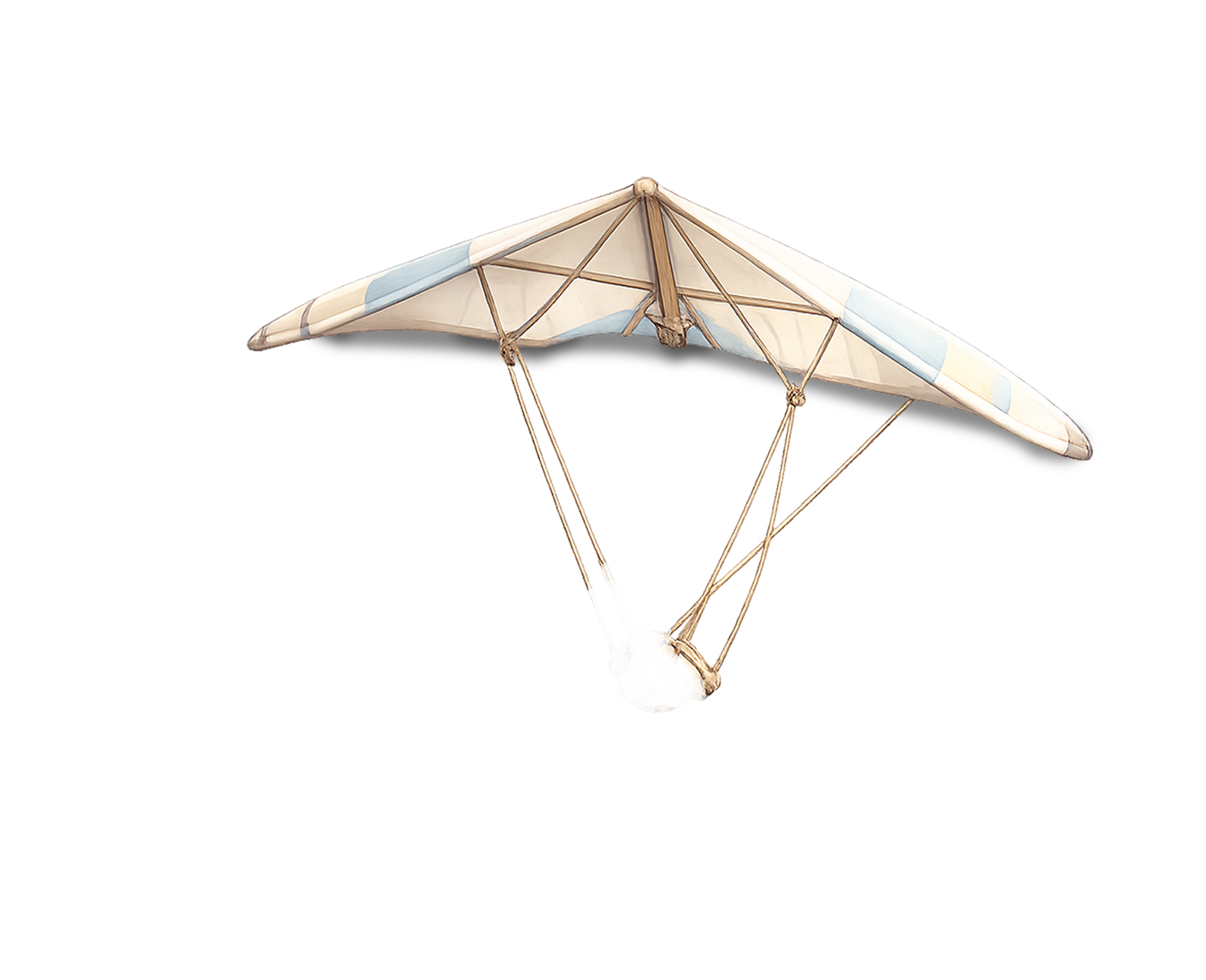
Did It Work? Nope, Try Again
Common Tern
This two-day-old Common Tern chick flapped its tiny wings with all its might—trying to fly, but not quite getting off the sand yet!
- Born fluffy: Common Tern chicks hatch covered in soft down that helps keep them warm.
- Practice early: Even before they can fly, baby terns flap their wings to build strength.
- Fast learners: In just a few weeks, they grow strong enough to fly and follow their parents.
Just Wondering......
What do you think the chick wants to do? What would you say to cheer this chick on?
Wheeee! Flying is FUN!

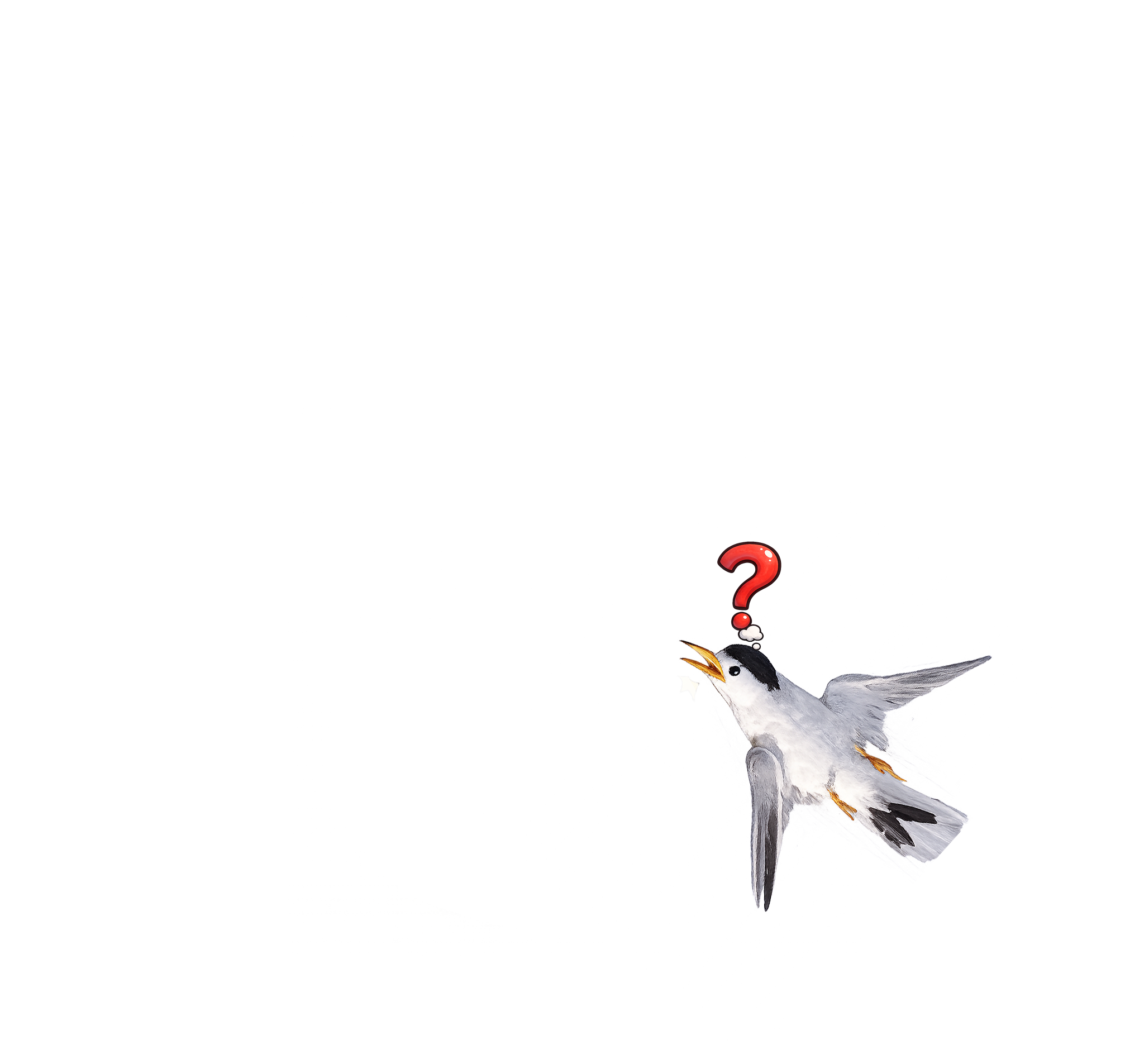
Look! I Can Fly Upside Down!
Least Tern
For a split second, this Least Tern twisted in the air and looked like it was flying upside down—like a tiny feathered acrobat!
- Tiny but fast: Least Terns are one of the smallest seabirds, but they are super speedy flyers.
- Diving experts: They plunge into the water to catch tiny fish with their sharp bills.
- Beach babies: Least Terns lay their eggs right on sandy beaches, where their speckled eggs blend in like camouflage.
Just Wondering......
What would you say if you could fly like this?
Mom said SHARE… right?
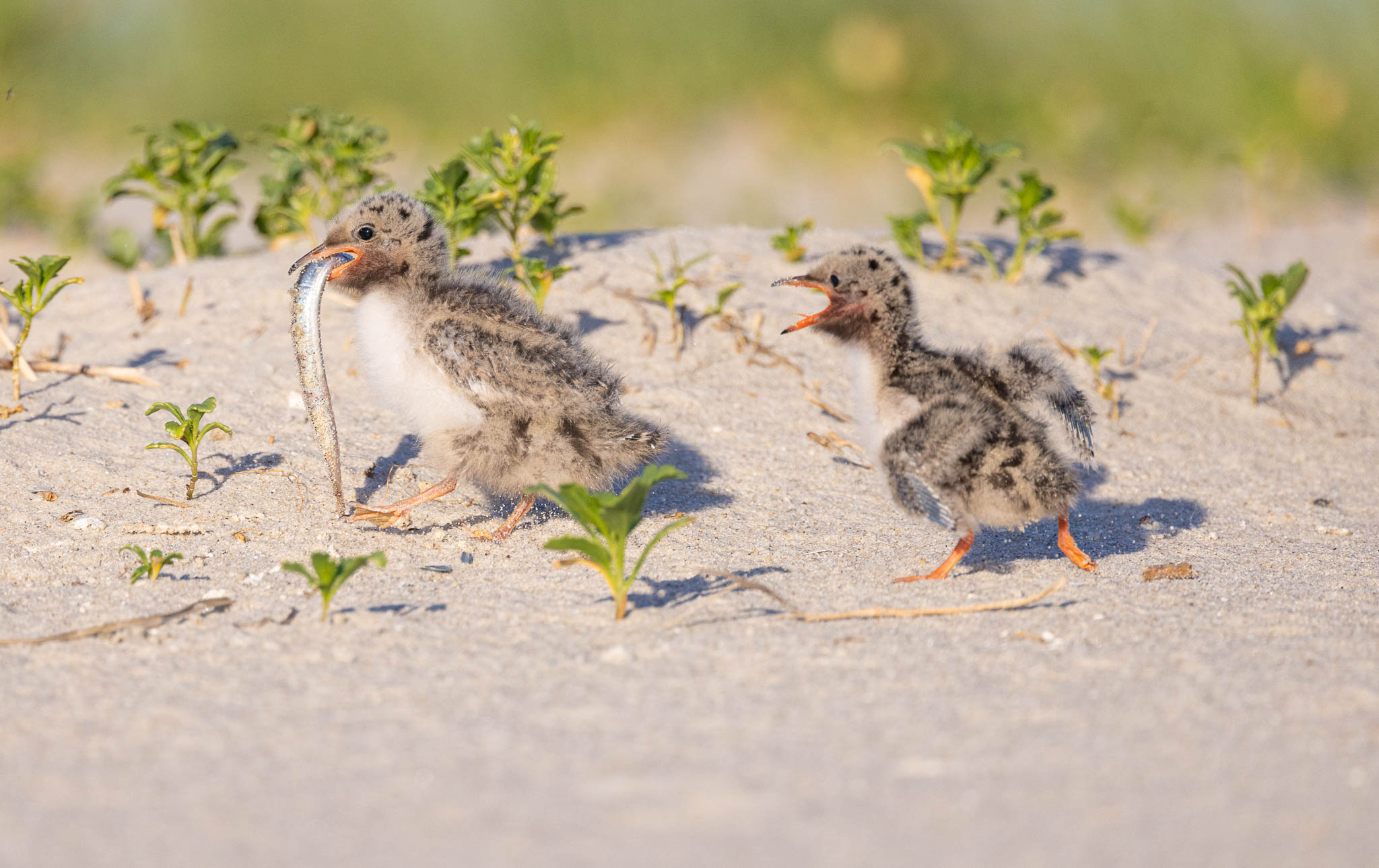

Sharing? Maybe…
Common Terns
Two-day-old Common Tern chicks race across the sand—one proudly carrying a fish, the other chasing close behind, hoping for a bite!
- Baby runners: Tern chicks can walk and run just hours after they hatch.
- Fish flyers: Adult terns dive from the air to catch fish in the ocean.
- Family teamwork: Both parents help feed and protect their chicks.
Just Wondering......
Why do you think the other chick is chasing?
I can carry it all… watch me!
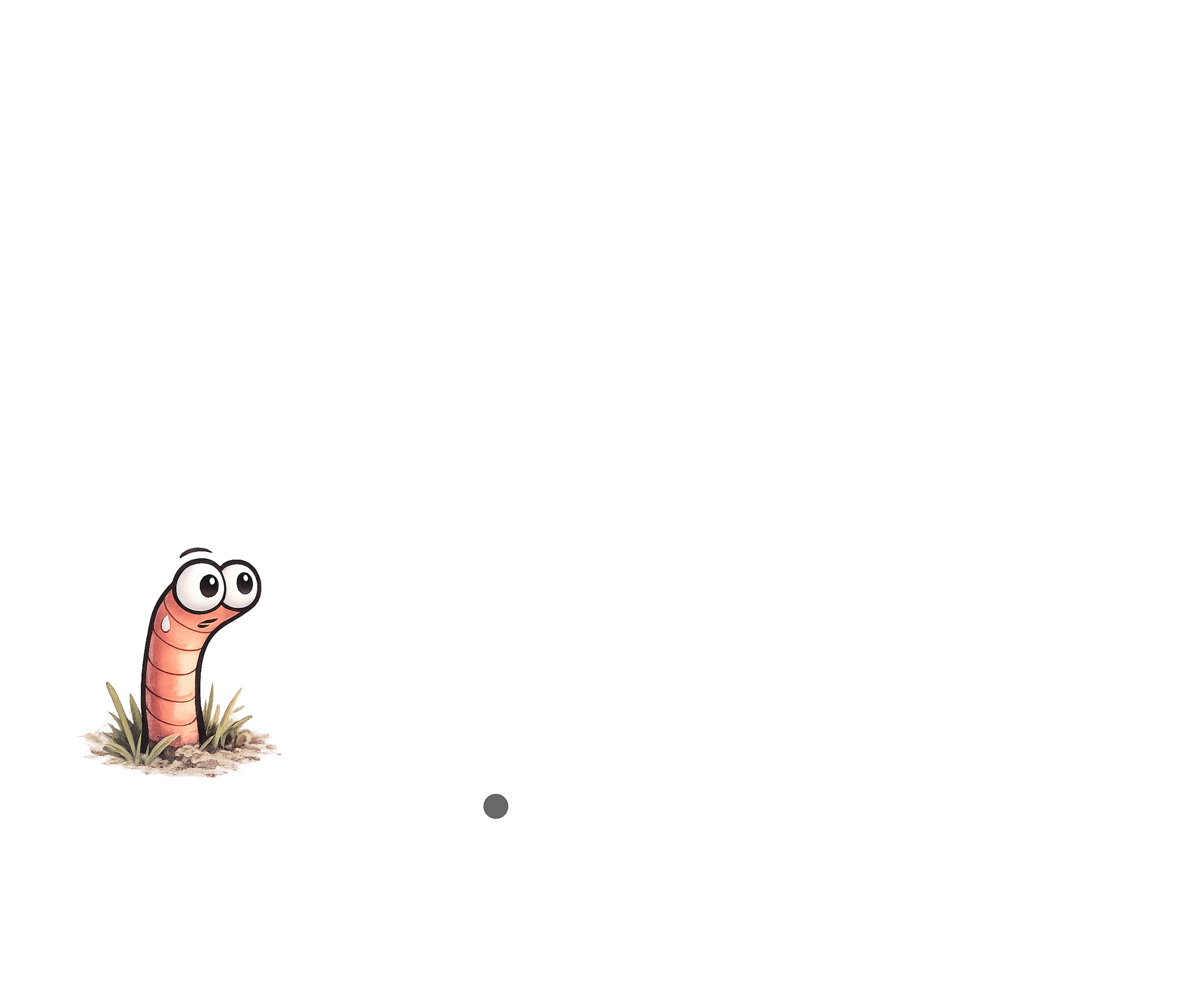
Nest-Building Mom
American Robin
An American Robin gathers an impressive bundle of grass and twigs, working tirelessly to build a safe nest for her future chicks.
- Mom builders: Female robins do most of the nest-building, carefully weaving grass, twigs, and mud into a cozy cup.
- Super strong beaks: Robins can carry surprising amounts of nesting material all at once!
- Fast families: Robin eggs usually hatch in about two weeks after being laid.
Just Wondering......
Who do you think uses the nest when it's finished? What would you put in a bird nest to make it comfy?
Wheee… look at me!
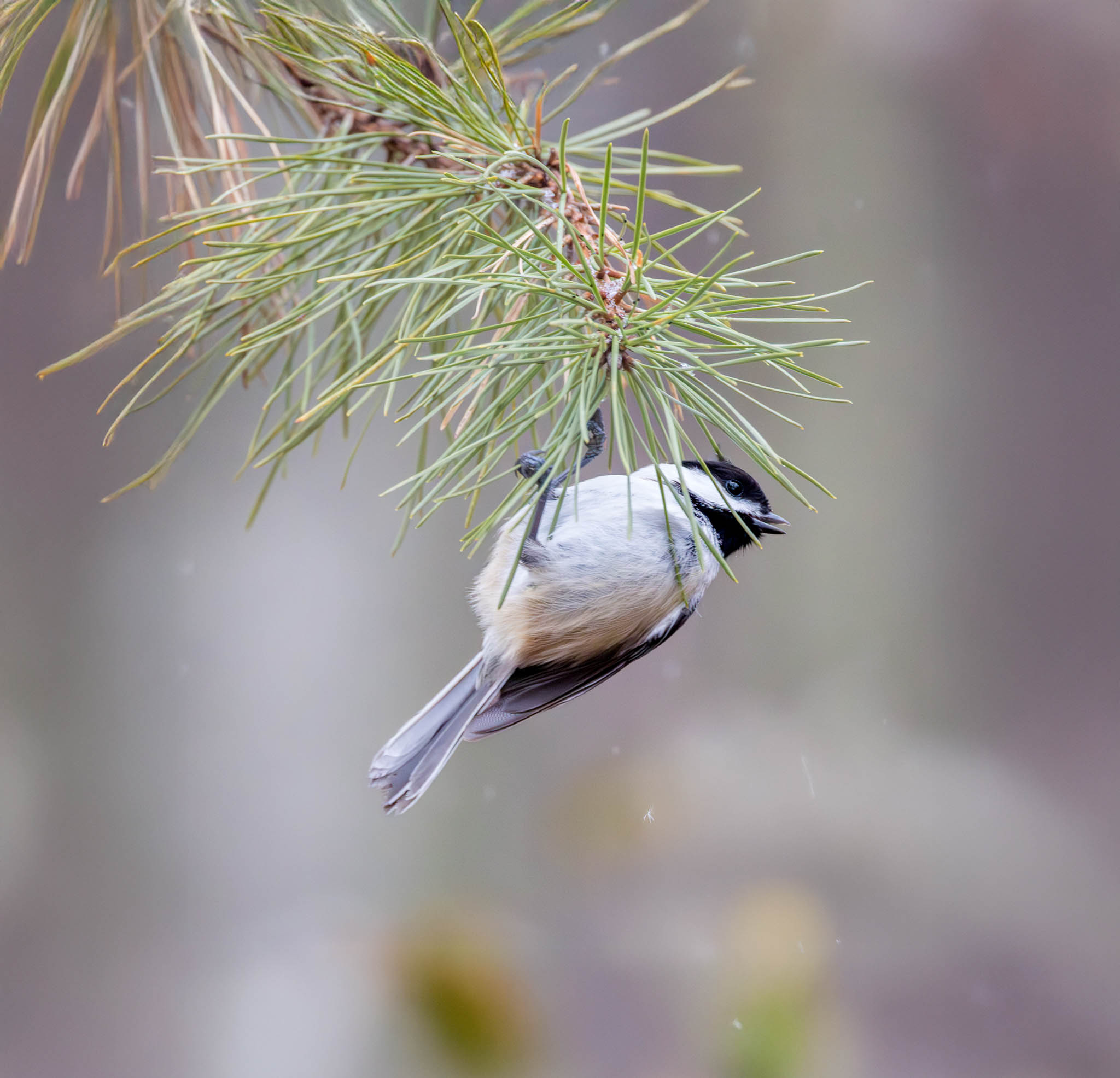
The Pine Needle Acrobat
Black-capped Chickadee
A Black-capped Chickadee flits through the pine branches, so light and delicate that it can perch on a single needle without bending it.
- Super light: Chickadees weigh about as much as a handful of paper clips!
- Memory masters: They hide hundreds of seeds and remember where they put them.
- Cold-weather champs: Chickadees can lower their body temperature at night to save energy in winter.
Just Wondering......
Why do you think birds have such strong feet?
Hey! Stay close!

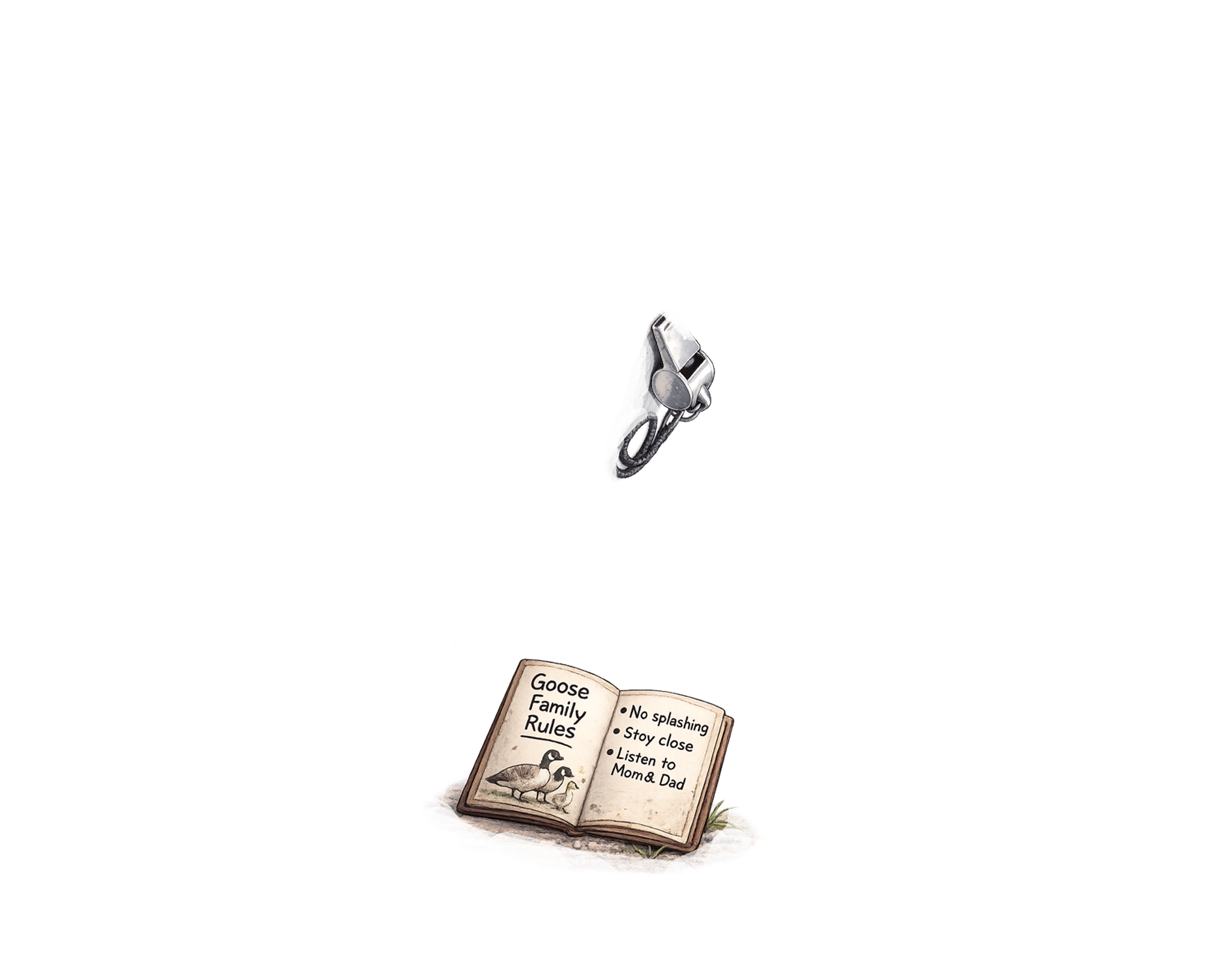
Mom and Dad Lay Down the Rules
Canada Goose
One gosling gets a gentle scolding while the other two pretend they did nothing at all.
- Family travelers: Goose parents lead their babies together, and the whole family stays close.
- Strong swimmers: Goslings can swim just hours after they hatch.
- Protective parents: Mom and Dad geese work as a team to keep their babies safe.
Just Wondering......
Why do you think mom and dad geese watch their babies so carefully? Have you ever been reminded to stay close?
Just a little scratch right here.
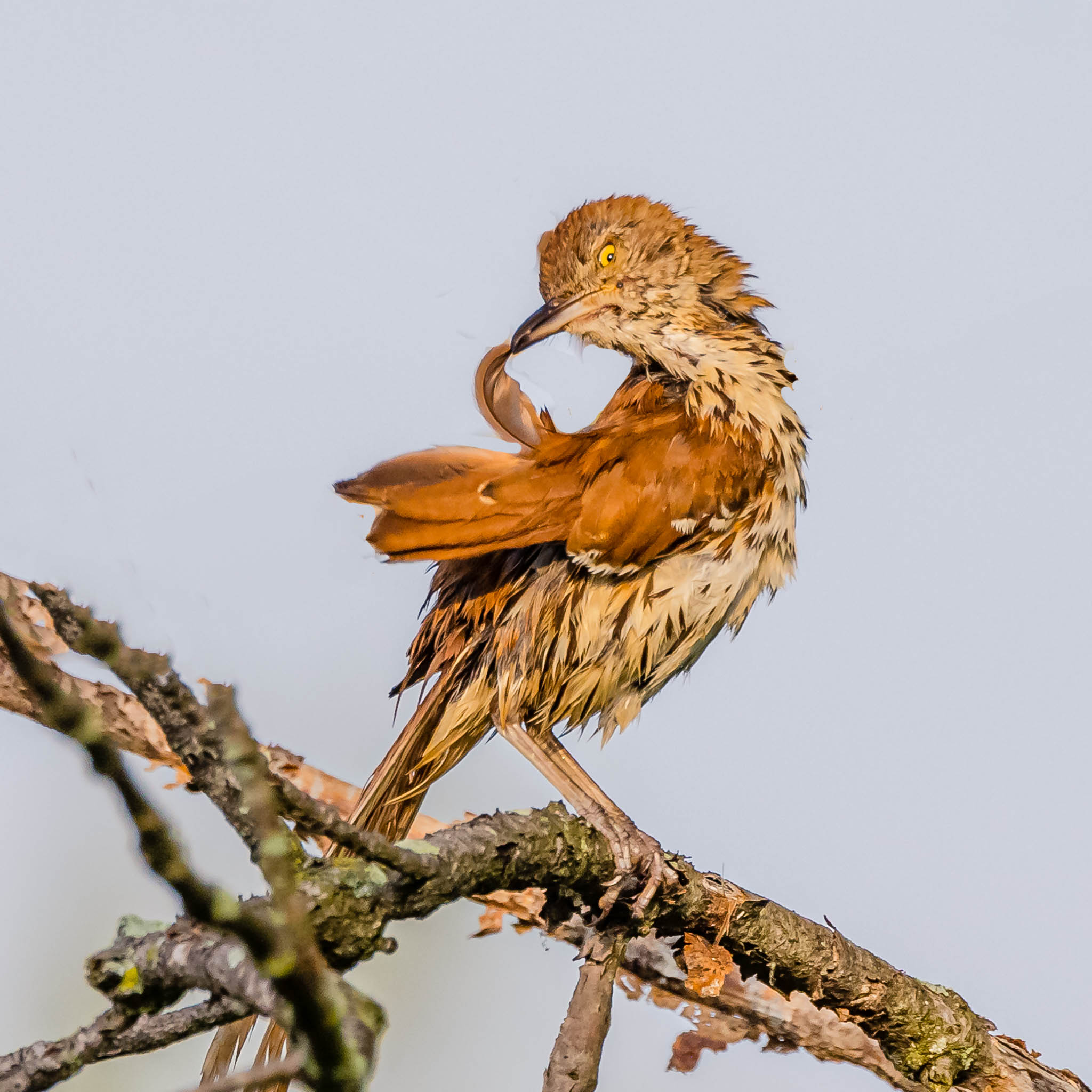

When Your Back Feather Itches…
Brown Thrasher
This Brown Thrasher twisted into a funny pose while preening—cleaning and fixing its feathers like a bird getting ready for the day.
- Feather cleaners: Birds preen to keep their feathers clean, smooth, and ready for flying.
- Oil magic: They spread special oil from a gland near their tail to make feathers waterproof.
- Flexible bodies: Birds can twist their necks and bodies in amazing ways to reach hard-to-get feathers.
Just Wondering......
What do you do to get ready in the morning, like this bird?
Tree Swallow
- Fast flyers: Tree Swallows can catch insects in midair while zooming like tiny jets.
- Cozy homes: They often nest in tree holes or birdhouses, making soft beds for their babies.
- Big appetites: Baby swallows eat hundreds of insects a day to grow strong and ready to fly!
From deep inside the tree, a hungry baby Tree Swallow calls loudly—and just seconds later, a parent arrives with a perfectly timed meal.
FOOD! FOOD! FOOD!

Feed Me Please!
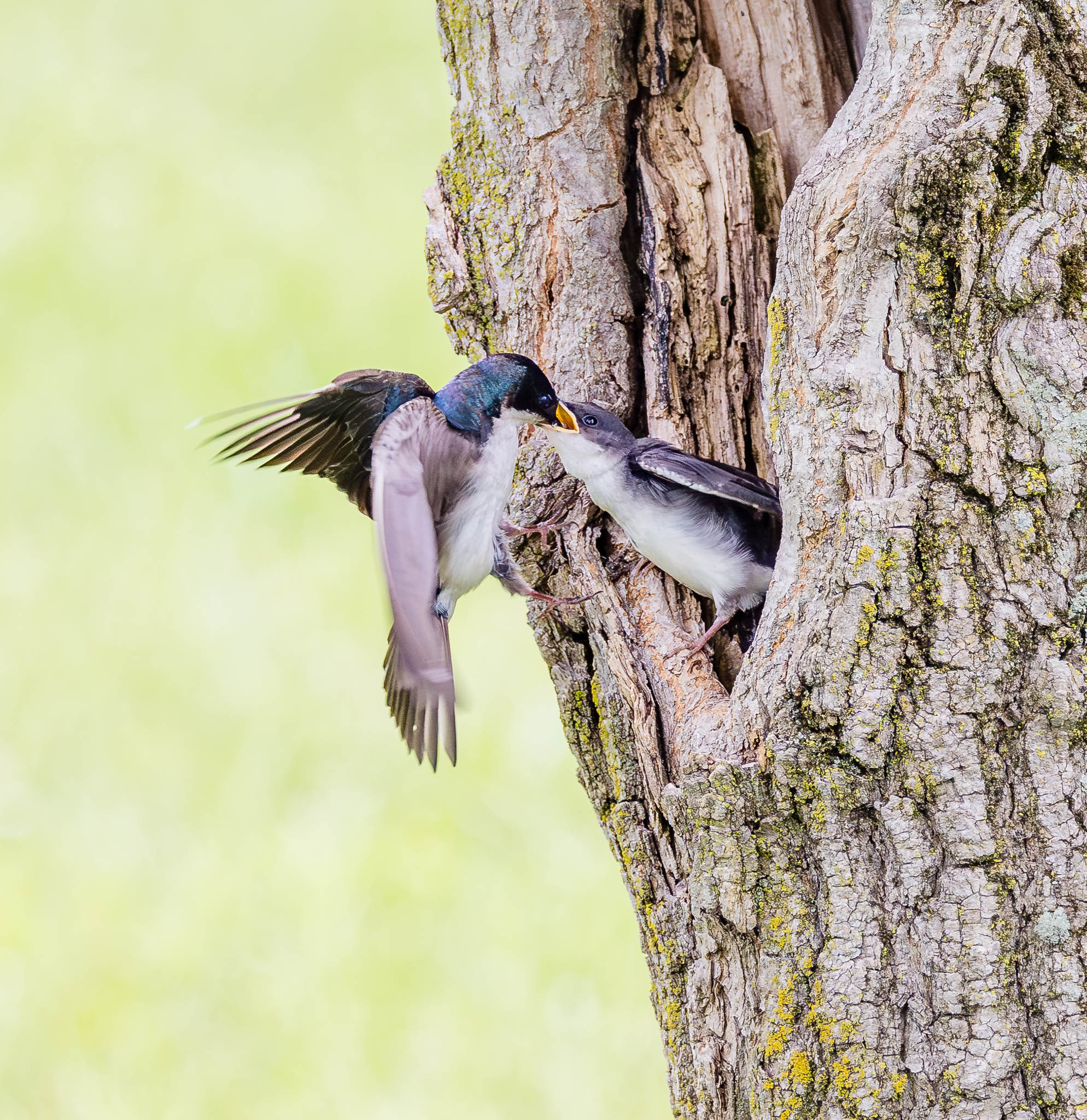
Dinner Delivery
Just Wondering......
How do you think the parent knows when the baby is hungry? Do you think feeding babies is hard work?
Whoa… this fish is HEAVY!
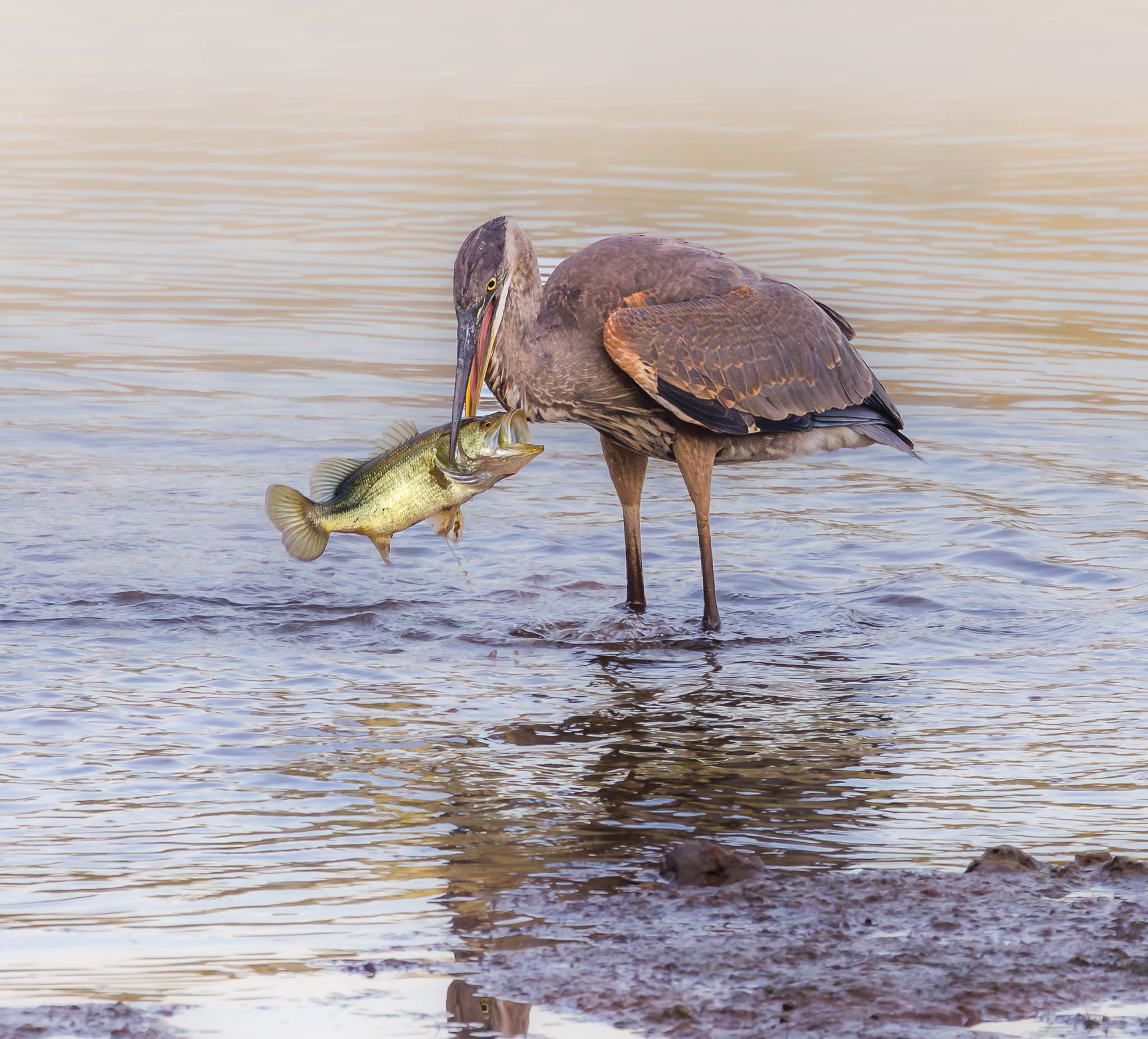
Big Bite, Bigger Surprise
Great Blue Heron
A Great Blue Heron wrestles with a fish that looks far too big to swallow—yet, moments later, it disappears in one incredible gulp.
- Super swallowers: Great Blue Herons can swallow surprisingly large fish whole!
- Patience hunters: They can stand perfectly still for minutes, waiting for the right moment to strike.
- Spear beaks: Their long, sharp bills work like spears to catch slippery fish.
Just Wondering......
What would YOU be thinking if you were this bird?
Mom: Okay… playtime, but stay close!
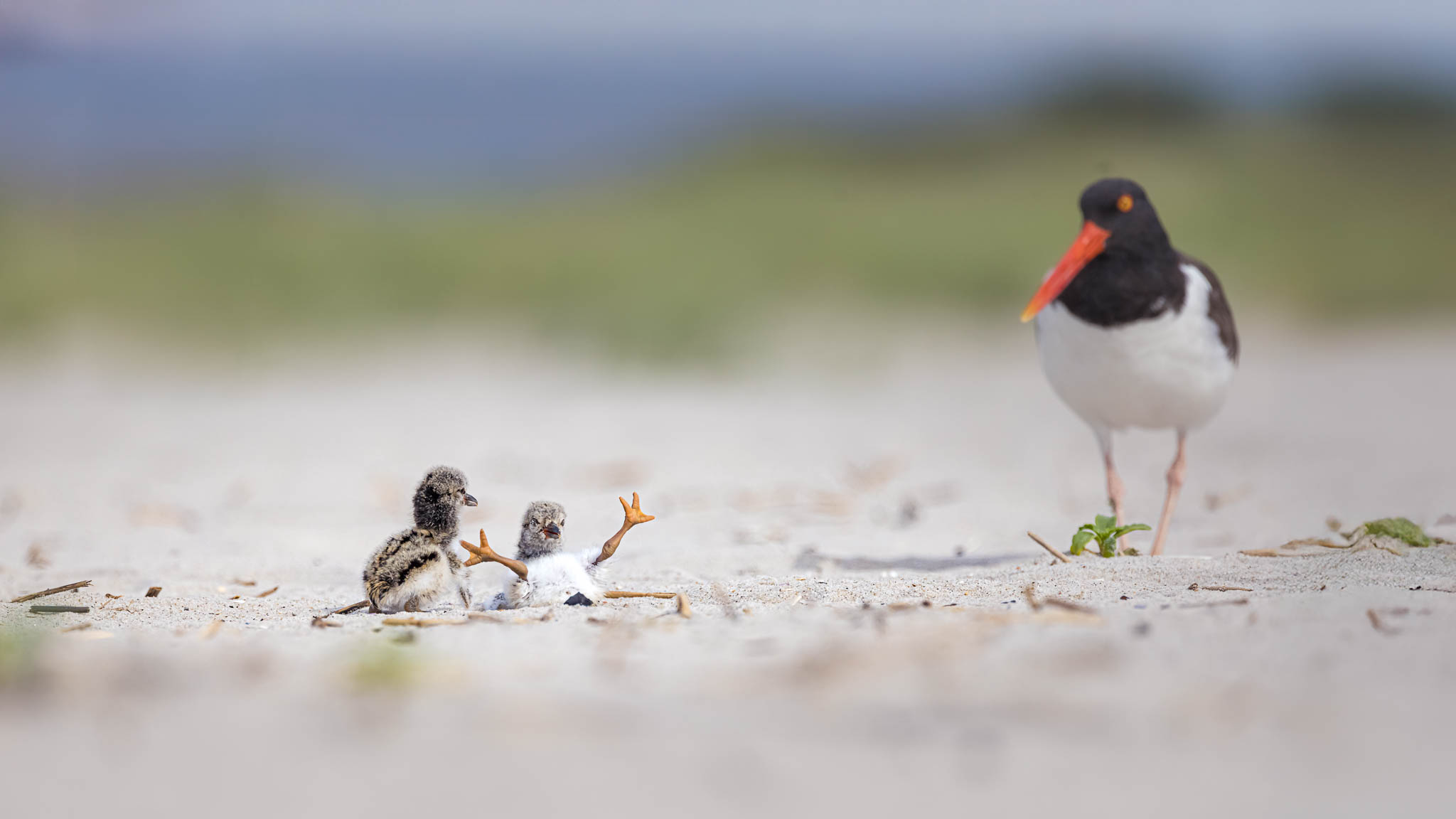
Tiny Beach Explorers
American Oystercatcher
On their very first day in the world, two fluffy American Oystercatcher chicks wobble across the sand while their watchful mom stands nearby, ready to protect them.
- Bright orange beaks: American Oystercatchers have bright orange beaks that help them open shells like clams and oysters.
- Beach babies: Their chicks hatch right on sandy beaches and can walk around just hours after they are born!
- Super parents: Mom and dad take turns guarding their chicks and warning them when danger is near.
Just Wondering......
Do you think Mom will step in if things get wild?
Mommmm… I'm STARVING!

I'm Hungry Mom!
Great Egret
Beak to beak, the chick tugs at its parent's bill—an urgent, awkward, and heartfelt request for food, revealing the raw intensity of life inside the nest.
- Snow-white superstar: Great Egrets are big, beautiful white birds that look like they're wearing a fancy feather coat!
- Patient hunters: They can stand very still for a long time, waiting to surprise a fish—like a bird statue that suddenly comes to life.
- Tall bird, long legs: A Great Egret can be taller than some kids, with super-long legs made for walking in shallow water.
Just Wondering......
Why do you think the baby is biting Mom's beak? How do you ask for food when you're really hungry?